



Share This Article
Article Summary
Cincinnati has hired New Orleans-based AH Datalytics to review years of Cincinnati Police Department contact-card data. The review will also examine the methodology used by Campaign Zero, which reported significant racial disparities in Cincinnati police stops. The city expects preliminary findings and recommendations from the contractor in mid-October.
The City of Cincinnati’s police stop data will undergo an outside review as the city responds to a report alleging significant racial disparities in police stops.
The review will examine Cincinnati Police Department (CPD) contact cards and the methodology behind a controversial analysis released earlier this year.
The city signed a contract in early September with AH Datalytics, a New Orleans-based analytics firm, Assistant City Manager John Brazina announced Sept. 11, according to WVXU.
The company will review years of data collected through CPD contact cards, which officers use to document certain traffic, pedestrian and investigative stops.
Moreover, the review will examine the methodology used by Campaign Zero, the police-reform advocacy group that analyzed the data and reported racial disparities.
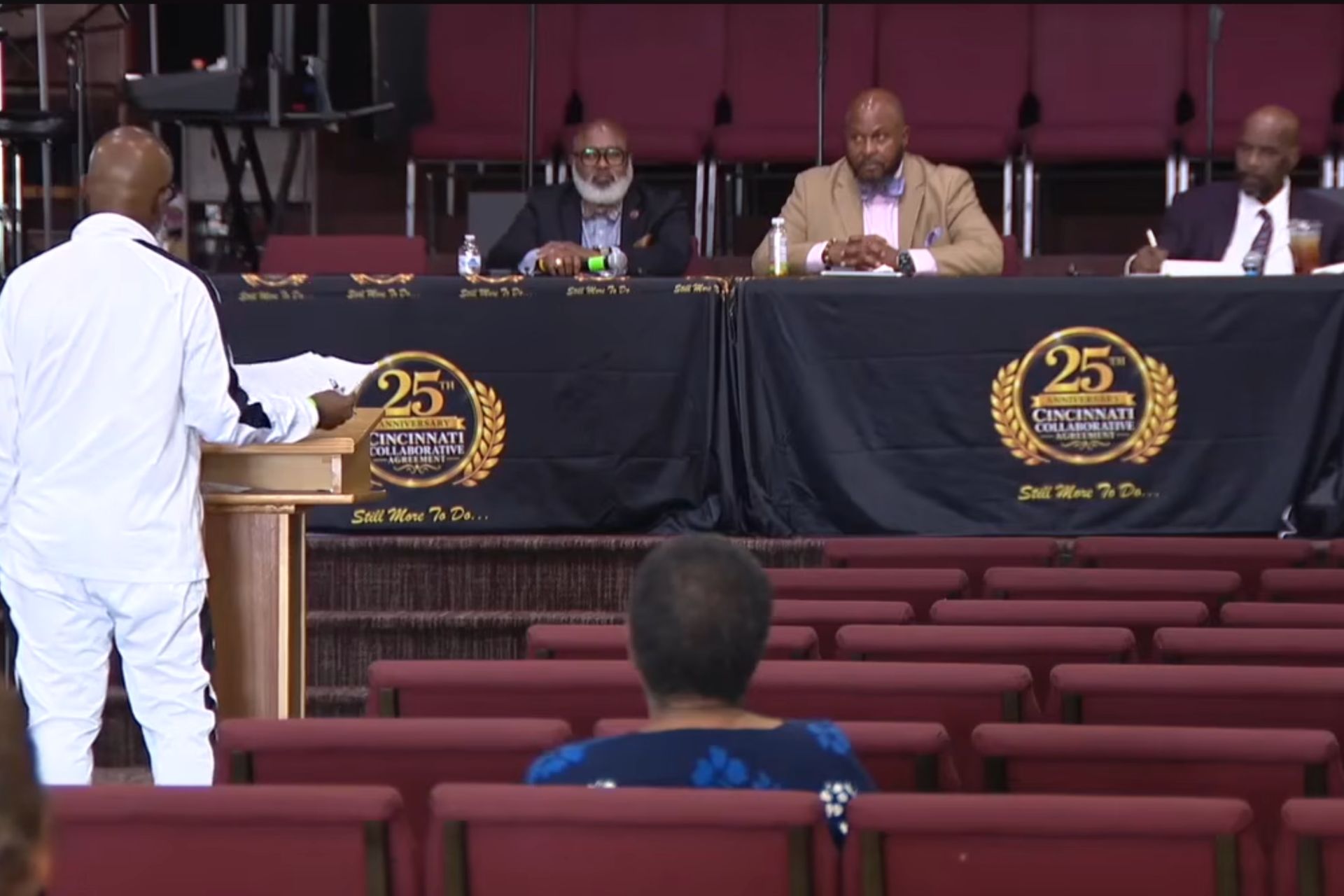
Brazina announced the contract during a conference marking the 25th anniversary of Cincinnati’s police reform efforts. He said AH Datalytics will have 30 days to conduct its analysis and provide preliminary findings and recommendations to City Manager Sheryl Long.
The city expects the preliminary results in mid-October, according to WVXU.
READ MORE:
Campaign Zero recommendations call for Cincinnati police reforms after racial bias report
Community forums on police disparities draw residents into debate over Campaign Zero report
Campaign Zero’s Cincinnati Report Leaves Too Many Questions Unanswered
Police stop data review follows Campaign Zero report
The police stop data review comes after Campaign Zero released its analysis June 11. The organization examined more than 472,000 Cincinnati police contact cards covering 2009 through 2025.
Campaign Zero reported that Black people were stopped by Cincinnati police at higher rates than white people. Its analysis found that Black people were stopped 3.4 times more often than white people in 2025.
The organization also reported differences in searches, use of force and arrests after stops. Campaign Zero said its analysis examined stop rates across neighborhoods and different types of police encounters.
According to the group’s report, Black pedestrians were stopped 5.4 times more often than white pedestrians in 2025. Black motorists were stopped 3.2 times more often than white motorists.
Campaign Zero said its analysis used public records obtained by the Hamilton County Public Defender’s Office. The organization published the findings along with an online database allowing users to examine police stops by location and other characteristics.
Campaign Zero’s full contact-card analysis provides additional information about the methodology and findings.
The organization has argued that the disparities cannot be explained simply by differences in neighborhood crime rates. Campaign Zero said its statistical analysis found the racial disparity persisted across neighborhoods and stop types.
Those findings remain allegations or conclusions of the advocacy group’s analysis, rather than a determination by the city or the new outside contractor.
Methodology faces city scrutiny
City officials have questioned aspects of the Campaign Zero analysis while acknowledging the importance of examining potential racial disparities in policing.
In a June 11 memo to Cincinnati Mayor Aftab Pureval and City Council, City Manager Sheryl Long said the city was not consulted during the analysis or before the report’s release.
The city said it planned to examine the report’s methodology and compare it with other available data. Long also said the city takes allegations of bias seriously and wants accuracy and accountability to guide decisions.
The city then issued a request for proposals June 12, one day after Campaign Zero released its report. The RFP closed June 22.
WVXU reported that a selection committee chaired by Citizen Complaint Authority Director John Kennedy Jr. reviewed multiple applicants and interviewed two before selecting AH Datalytics.
The city did not initially disclose the cost of the review or the number of applications received, according to WVXU.
The new contractor will therefore have two related tasks: review the underlying contact-card data and evaluate how Campaign Zero analyzed that information.
That distinction is important because the review could provide an independent assessment of both the data and the conclusions drawn from it.
How Cincinnati’s police stop data system works
Cincinnati’s police stop data system dates back to the Collaborative Agreement, a landmark police reform agreement that followed litigation and community unrest over policing.
CPD officers use contact cards to document information about certain stops. The cards include demographic and location information as well as the outcome of the interaction.
The city’s public traffic-stop data dashboard says CPD officers record traffic stops involving motor vehicles through contact cards. The dashboard also notes that the cards are manually entered and may experience delays in data entry.
The system was created as part of broader efforts to improve transparency and evaluate racial differences in policing.
A 2017 city review of bias-free policing and officer accountability also examined contact-card data from 2009 through 2016. That review included analysis of traffic stops, pedestrian stops and arrests.
The city’s Collaborative Agreement framework has continued beyond the original agreement. Cincinnati later conducted a voluntary refresh process intended to evaluate reforms, identify gaps and develop additional recommendations.
City officials say the current review fits into those continuing police-accountability efforts.
Stop data tied to 25 years of reform
The new review comes as Cincinnati marks 25 years since the events that led to major changes in its police-community relations.
In 2001, the Cincinnati Black United Front and the American Civil Liberties Union of Ohio pursued federal litigation alleging racial discrimination and excessive force by Cincinnati police. The death of Timothy Thomas, a 19-year-old Black man killed by a Cincinnati police officer that year, intensified protests and demands for police reform.
The resulting Collaborative Agreement took effect in 2002. It established a framework for community-oriented policing, accountability, bias-free policing and civilian oversight.
The City of Cincinnati’s Collaborative Agreement materials describe the agreement and its later refresh process.
The Citizen Complaint Authority also emerged from that reform framework. The agency provides independent civilian oversight of Cincinnati police and reports directly to the city manager.
The current review does not replace those existing oversight mechanisms.
Instead, city officials describe the AH Datalytics analysis as one part of a broader response to the Campaign Zero report.
Data review will inform next steps
The city is pursuing additional community involvement alongside the outside analysis.
WVXU reported that the Citizen Complaint Authority will lead a separate problem-solving process involving community input. Kennedy and Iris Roley, a city consultant who has worked on the Collaborative Agreement, will lead that effort.
Roley said the new analysis represents only one part of the broader police-accountability work.
City officials also say they remain committed to the Collaborative Agreement and to equity in policing regardless of what AH Datalytics finds.
The city reported that 35 recommendations from the Collaborative Agreement refresh have been completed or are in progress. Some involve changes to contact-card procedures, including requirements that officers complete every field and use standardized location information.
Campaign Zero has separately called for regular independent analysis of contact-card data and improvements to the system.
Its recommendations include analyzing racial disparities in stops, searches, use of force and arrests, as well as examining differences among neighborhoods and individual officers.
The upcoming review could provide city officials with a new baseline for evaluating those issues.
What happens next
AH Datalytics is expected to complete its initial analysis within 30 days of beginning its work. The city expects preliminary findings and recommendations in mid-October.
The review could help determine whether the disparities identified by Campaign Zero remain evident when the data and methodology receive an independent examination.
It also could identify limitations in the contact-card system itself, including issues involving data collection, coverage or analysis.
Until the contractor releases its findings, the Campaign Zero report remains an independent analysis rather than a final city determination about racial bias in Cincinnati police stops.
The city is expected to use the outside review, along with community input and existing police-accountability efforts, to determine what additional changes may be necessary.
The outcome will be closely watched because contact-card data has been central to Cincinnati’s efforts to measure and address potential racial disparities in policing for more than two decades.
FAQs
What is Cincinnati reviewing?
The city is reviewing contact-card data generated during certain Cincinnati Police Department stops. AH Datalytics will also examine the methodology used in Campaign Zero’s analysis of the data.
What did Campaign Zero find?
Campaign Zero reported that Black people were stopped 3.4 times more often than white people in Cincinnati in 2025. It also reported disparities in searches, use of force and arrests following stops.
When will the outside review be completed?
AH Datalytics has 30 days to conduct its analysis and provide preliminary findings and recommendations. The city expects those preliminary results in mid-October.
Why does Cincinnati use contact cards?
Contact cards were developed through Cincinnati’s Collaborative Agreement and are used to document information about certain police stops. The data supports efforts to evaluate policing practices and potential racial disparities.


