
Share This Article
Article Summary
Campaign Zero has issued nine recommendations for the Cincinnati Police Department after releasing a report that alleges racial disparities in police stops, searches, arrests, and use of force. Cincinnati officials have ordered an independent review of the report’s methodology before deciding whether to adopt any policy changes. The recommendations focus on increasing transparency, strengthening accountability, and expanding oversight of police practices.
Campaign Zero recommendations are driving renewed discussion about police accountability and transparency in Cincinnati.
Campaign Zero recommendations come after a report that alleges racial disparities in Cincinnati Police Department traffic and pedestrian stops. As a result, city leaders decided to launch an independent review.
Campaign Zero has released a series of policy proposals aimed at the Cincinnati Police Department (CPD). This followed a report that claims Black residents experience disproportionate rates of police stops, searches, arrests, and use of force. The recommendations come as Cincinnati officials continue reviewing the findings through an independent analysis. They chose not to immediately adopt the group’s conclusions.
The advocacy organization analyzed more than 500,000 police contact cards dating from 2009 through 2025. Campaign Zero argues the data shows persistent racial disparities that warrant changes to policing policies, oversight, and accountability measures. Meanwhile, city leaders say they want outside experts to evaluate the report’s methodology before determining whether policy changes are necessary.
According to Local 12 News and FOX19 NOW, the recommendations expand on Campaign Zero’s earlier report, which sparked public discussion over racial disparities in police enforcement throughout Cincinnati.
Campaign Zero recommendations focus on transparency and accountability
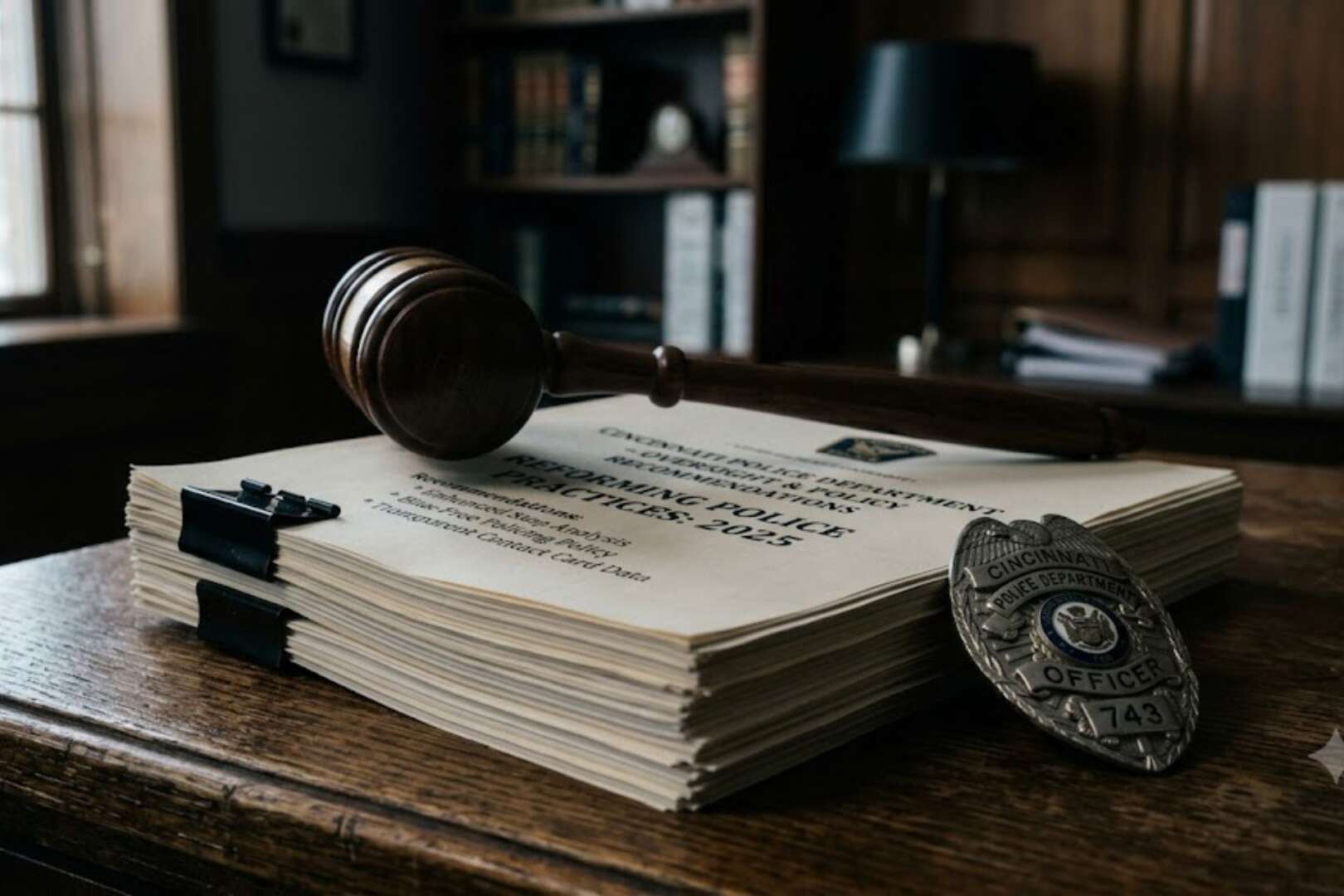
Campaign Zero outlined nine recommendations that it says would improve transparency, strengthen accountability, and reduce racial disparities in policing.
The proposals include:
- Reinstate a police stop analysis and early warning system.
- Restore the city manager’s advisory group on police accountability.
- Publish all police contact card data for public review.
- Require annual independent evaluations of stop data.
- Reduce enforcement of selected low-level offenses, including jaywalking, loitering, and certain window tint violations.
- Strengthen Cincinnati’s bias-free policing policy.
- Allow anonymous complaints against police officers.
- Review enforcement practices within specialized police task forces.
- Renegotiate portions of the police union contract that Campaign Zero says limit accountability.
Campaign Zero said the recommendations are intended to improve public trust while ensuring police practices remain consistent with constitutional policing standards. The organization argues that increased transparency would help residents and city officials better understand enforcement patterns over time.
The recommendations also call for stronger civilian oversight and more frequent public reporting of police stop data. Campaign Zero believes routine analysis could help identify trends before they become systemic concerns.
Report claims racial disparities in police stops
The recommendations follow Campaign Zero’s report examining Cincinnati Police Department contact card data collected over a 16-year period.
According to Campaign Zero, Black residents were approximately 3.4 times more likely than white residents to be stopped by police in 2025. The report also states that Black residents were about twice as likely to be searched after a stop. Moreover, they were nearly twice as likely to experience force or an arrest following police contact.
Campaign Zero further argues that neighborhood crime rates alone do not explain the disparities observed in the data. The organization said the largest differences appeared in neighborhoods with predominantly white populations.
The findings have generated significant public attention because Cincinnati has long promoted community-oriented policing and police reform efforts following the 2001 civil unrest. Campaign Zero says its analysis suggests additional reforms are still needed despite previous changes.
The organization’s report is publicly available through Campaign Zero’s research website. Readers can review its methodology and supporting data there.
City orders independent review before making decisions
Cincinnati officials have not accepted or rejected Campaign Zero’s conclusions.
Instead, City Manager Sheryl Long announced that the city will commission an independent review of the report and its methodology. According to city officials, outside experts will evaluate the statistical analysis. Only then will they recommend any policy changes.
The city also plans to use Cincinnati’s existing citizen oversight process to gather community input once the independent review is complete.
Interim Police Chief Adam Hennie has acknowledged the concerns raised by the report while expressing confidence in CPD officers. City leaders have emphasized that reviewing the findings independently is necessary to ensure any future decisions are based on objective analysis.
According to FOX19 NOW, officials questioned several aspects of Campaign Zero’s methodology and said additional review would help determine whether the conclusions accurately reflect policing practices.
Other news organizations report growing public debate
Multiple Cincinnati media outlets have covered the ongoing discussion surrounding Campaign Zero’s report and recommendations.
Local 12 reported that Campaign Zero’s latest recommendations build upon its earlier findings. The group urged city leaders to adopt reforms addressing accountability and transparency. In addition, FOX19 reported that Cincinnati’s administration intends to proceed with an independent review before considering policy changes.
The issue has also attracted attention because Cincinnati has previously served as a national example of police reform following the Collaborative Agreement established more than two decades ago. Community organizations, elected officials, and law enforcement leaders continue debating whether additional reforms are needed to address present-day concerns.
While Campaign Zero argues its analysis demonstrates measurable racial disparities, city officials have stressed that the independent review remains an essential step before drawing final conclusions. The outcome of that review could influence future discussions involving police oversight. This might also affect community relations and enforcement policies across Cincinnati.
Residents and advocacy groups are expected to continue monitoring the review process as city officials determine whether any of Campaign Zero’s recommendations should be implemented.
FAQs
Why did Campaign Zero release these recommendations?
Campaign Zero released the recommendations after analyzing more than 500,000 Cincinnati Police Department contact cards from 2009 through 2025. The organization says the data shows racial disparities in police stops and believes policy changes could improve accountability and transparency.
How has the City of Cincinnati responded?
City officials have not adopted the recommendations or accepted the report’s conclusions. Instead, the city has commissioned an independent review of the report’s methodology and plans to gather community input before considering any policy changes.
What changes is Campaign Zero proposing?
The recommendations include restoring police stop analysis, publishing contact card data, strengthening bias-free policing policies, allowing anonymous complaints, and conducting annual independent reviews of police stop data. The organization also recommends reviewing specialized task forces and portions of the police union contract related to accountability.
Does the report prove racial bias by the Cincinnati Police Department?
Campaign Zero argues that its analysis found significant racial disparities in police enforcement data. Cincinnati officials have said they want an independent evaluation of the methodology before determining whether the findings support changes to department policies.