
Share This Article
Article Summary
Community members gathered in Cincinnati on Tuesday to discuss a Campaign Zero report that found significant racial disparities in police stops based on an analysis of Cincinnati Police Department contact card data. The public forum followed the report’s release earlier in June and gave residents an opportunity to ask questions and discuss potential policy changes. City officials have questioned parts of the report’s methodology while conducting their own review, and a second community meeting is scheduled for July 14.
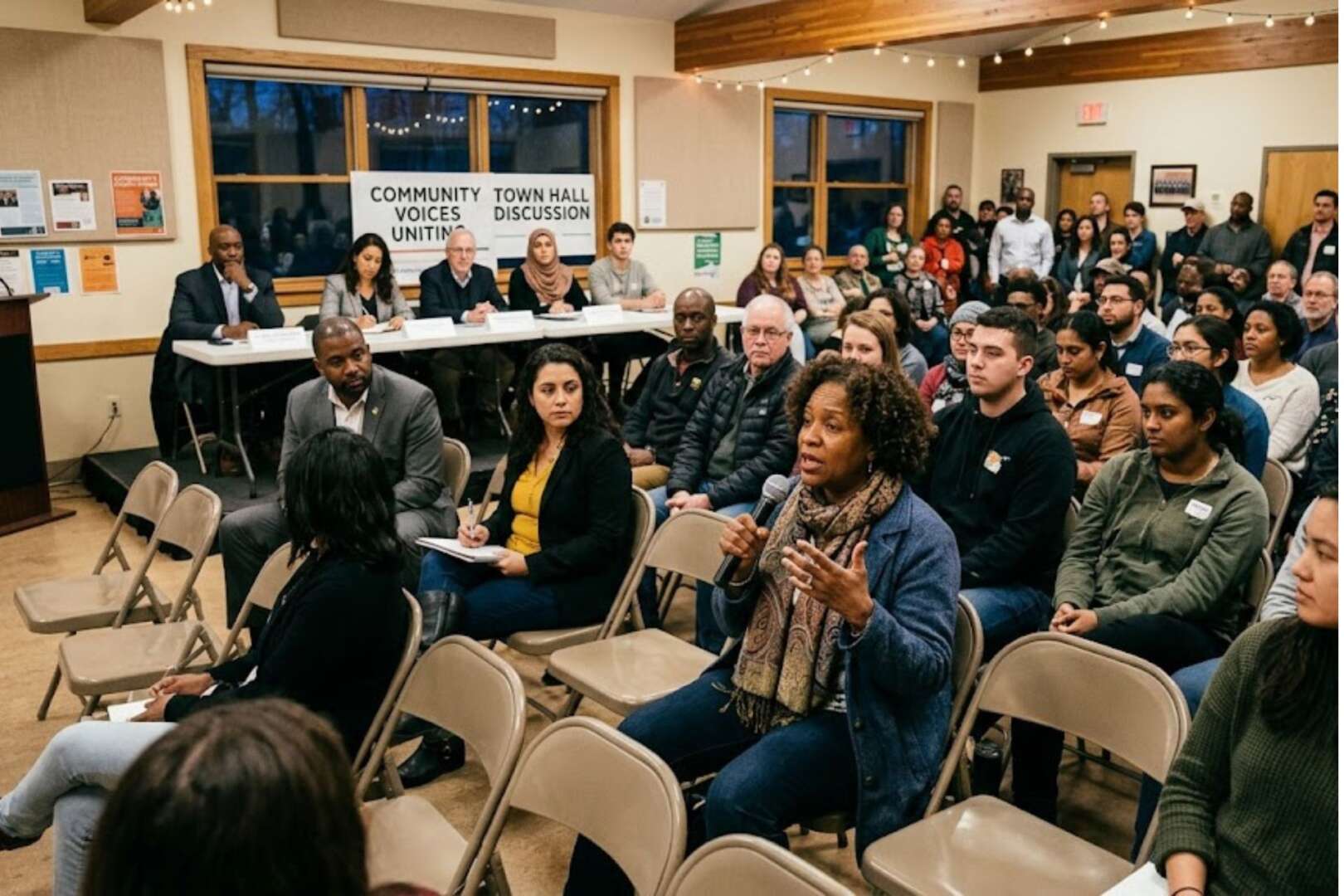
Community members gathered Tuesday evening to discuss a recent report that found significant racial disparities in Cincinnati police stops.
This adds another chapter to the city’s ongoing conversation about policing and public accountability.
The public forum followed the release of a Campaign Zero analysis that examined more than 472,000 Cincinnati Police Department contact cards. The contact cards were collected between 2009 and 2025.
The discussion took place at Truth and Destiny Covenant Center in Mount Airy and was organized by community groups, including the Urban League of Greater Southwestern Ohio and the Cincinnati NAACP. Organizers encouraged residents to review the report’s findings and ask questions about police practices. They also urged people to share personal experiences with law enforcement.
Campaign Zero’s report concluded that racial disparities in police stops have increased over time despite an overall decline in the number of police stops. The organization analyzed contact card data obtained by the Hamilton County Public Defender’s Office through public records requests.
According to the report, Black residents accounted for 80% of pedestrian stops and 66% of traffic stops in 2025. However, Black residents make up roughly 40% of Cincinnati’s population. Campaign Zero reported that Black pedestrians were stopped 5.4 times more often than White pedestrians. Meanwhile, Black motorists were stopped about 3.4 times more often than White motorists.
Readers can review the complete findings through the Campaign Zero report and explore Cincinnati’s own Police Traffic Stops Dashboard.
Community forums on police disparities focus on accountability
Residents attending Tuesday’s meeting discussed what the findings could mean for policing across Cincinnati neighborhoods. Many participants called for greater transparency from city officials and continued public engagement as the report receives additional review.
The event marked the first of two planned public forums intended to gather community feedback. A second meeting is scheduled for July 14 at the Urban League of Greater Southwestern Ohio in Avondale. Organizers said the sessions are designed to give residents an opportunity to discuss the report. This will happen before policymakers determine whether changes are necessary.
Campaign Zero also recommended several policy changes, including:
- Reducing low-level investigative stops that have limited public safety value.
- Restoring early warning systems that monitor racial disparities in police stops.
- Reviving oversight committees established under Cincinnati’s Collaborative Agreement.
- Increasing public reporting and transparency around stop data.
- Expanding community oversight of policing practices.
The report argues that neighborhood crime rates alone do not explain the disparities. Campaign Zero researchers concluded that Black residents were more likely to experience disproportionate stops in neighborhoods with larger White populations, even after accounting for crime data included in their analysis.
Community forums on police disparities follow city response
City officials have questioned several aspects of Campaign Zero’s methodology while emphasizing their commitment to fair policing. Officials said they received the report shortly before its public release. Therefore, they were not able to fully review the analysis before publication.
According to reports from WVXU and FOX19, Cincinnati leaders said they support examining police practices but believe additional context is needed before drawing firm conclusions from the data. City Manager Sheryl Long ordered further review of the findings after the report’s release.
Officials also noted that differences in population calculations and officer deployment patterns could influence how the data is interpreted. Campaign Zero later updated portions of its online analysis after receiving more detailed geographic information from the city. Even with these updates, it maintained that its overall conclusions remained unchanged.
The Cincinnati Police Department has continued publishing public dashboards showing traffic and pedestrian stop data. City leaders say these dashboards provide ongoing transparency into policing trends.
Community forums on police disparities revisit Cincinnati’s reform history
The latest discussions also renewed attention to Cincinnati’s long history of police reform following the 2001 civil unrest and the creation of the Collaborative Agreement.
The agreement established new accountability measures, including mandatory contact cards documenting traffic, pedestrian, and investigative stops. Those records became the foundation for Campaign Zero’s analysis. They also remain one of the country’s largest publicly available datasets on police stop activity.
Supporters of the report say the findings demonstrate the need to strengthen oversight mechanisms created under the Collaborative Agreement. Others argue additional review should occur before policymakers implement reforms based on the analysis.
The public discussions come as Cincinnati continues evaluating its policing strategies under Interim Police Chief Adam Hennie following recent leadership changes within the department. City officials have said they remain committed to reviewing the findings alongside community feedback. This will happen before considering future policy decisions.
FAQs
What did the Campaign Zero report find?
Campaign Zero analyzed Cincinnati Police Department contact card data from 2009 through 2025 and reported that Black residents were stopped at disproportionately higher rates than White residents. The organization said the disparities persisted even as the total number of police stops declined over time.
Why were community forums organized?
The forums were created to give residents an opportunity to discuss the report’s findings, ask questions, and share their experiences with policing. Organizers also want to gather public feedback before city leaders consider any policy changes.
How has the City of Cincinnati responded?
City officials have said they support reviewing policing data but have raised concerns about parts of the report’s methodology and interpretation. The city is conducting its own review while working with Campaign Zero to better understand the findings.
What happens next?
A second public forum is scheduled for July 14 at the Urban League of Greater Southwestern Ohio in Avondale. Community feedback and the city’s ongoing review are expected to help inform future discussions about policing policies and oversight in Cincinnati.