



Share This Article
Article Summary
Cincinnati Public Schools’ proposed five-year, 7-mill property tax levy is drawing support and opposition ahead of the November 3, 2026, election. Issue 4 would generate an estimated $66.3 million annually, with an estimated cost of $245 per $100,000 in home value. Supporters say the funding would help preserve educational programs and student services, while business organizations and an opposition campaign have raised concerns about affordability and spending transparency. The outcome will determine whether CPS receives the proposed additional revenue to address its financial challenges.
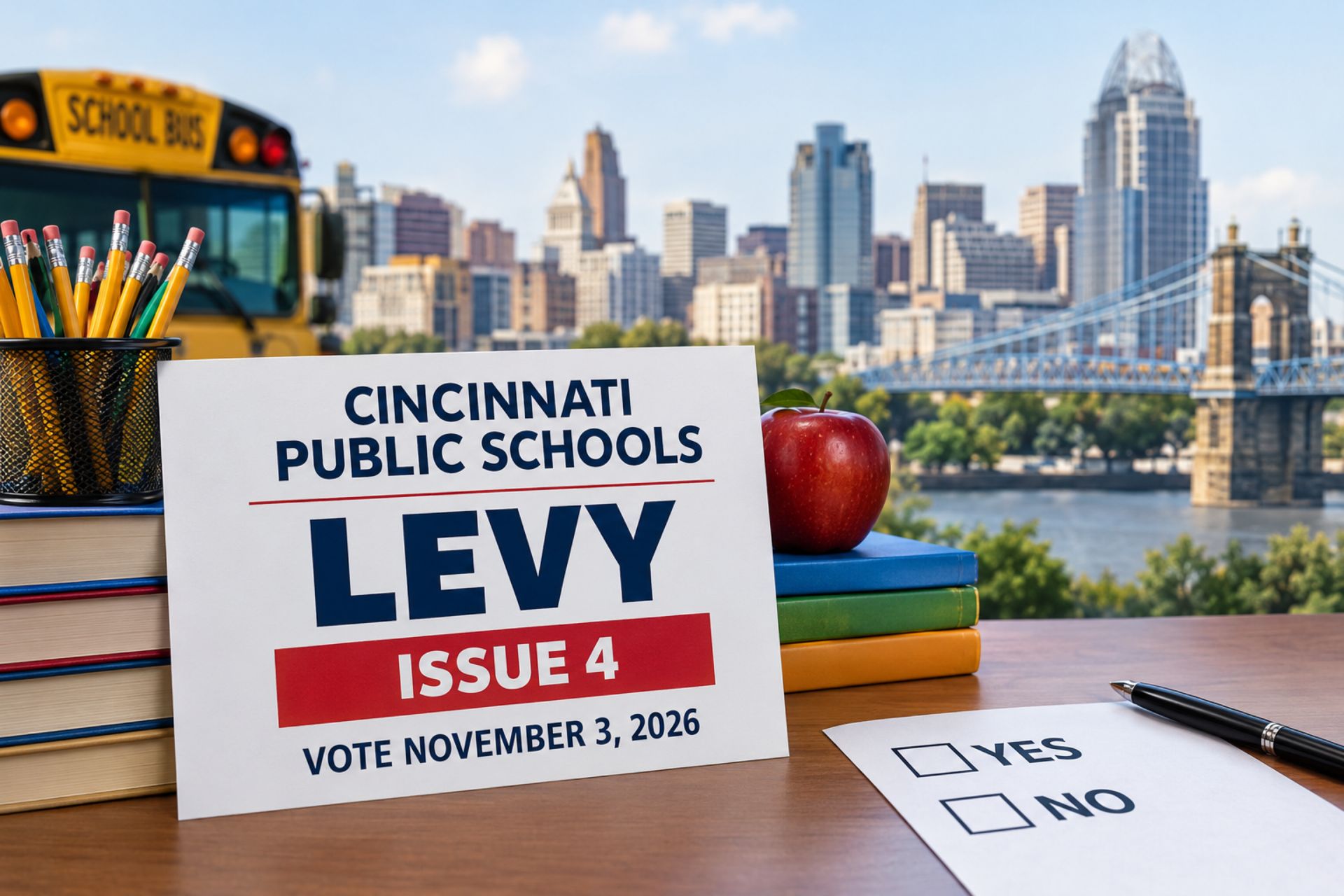
Cincinnati Public Schools’ proposed levy is drawing support and opposition as voters prepare to decide Issue 4 on November 3, 2026.
The five-year, 7-mill property tax proposal would generate an estimated $66.3 million annually for the district, but concerns about affordability, spending transparency and the timing of the request have fueled opposition.
Issue 4 would raise $66.3 million annually
The proposed Cincinnati Public Schools levy would provide additional recurring revenue to address the district’s financial challenges and maintain educational programs.
If approved, the measure would cost property owners approximately $245 annually for every $100,000 in home value, according to the district. The proposed levy would last five years.
District officials say the additional funding is necessary to preserve academic offerings and student services. Without the revenue, CPS warns it could face further school consolidations, transportation reductions and additional fees for student athletics.
The district has already implemented significant cost-cutting measures to address its budget shortfall. Earlier reductions included approximately 110 job cuts and five furlough days as officials worked to close a projected budget gap of nearly $59 million.
Education supporters back the proposed levy
Issue 4 has received endorsements from the Hamilton County Democratic Party, Cincinnati Mayor Aftab Pureval, the Cincinnati Federation of Teachers and other local organizations.
Supporters argue that the district needs a stable source of additional revenue to maintain educational opportunities for students. They also contend that continued cuts could affect classroom instruction, transportation, athletics and other extracurricular activities.
Cincinnatians Active to Support Education, a political action committee supporting CPS levies, has raised money for the campaign. Financial disclosures reported by WVXU in October showed contributions from teachers, school employees, education advocates and district administrators.
The campaign reported raising more than $200,000 by late October, according to the public radio station.
Supporters also point to the district’s recent improvement on Ohio’s state report card, which raised its overall rating from 2.5 to three stars. They argue that maintaining educational progress requires reliable funding.
Business organizations question the levy
The Cincinnati Regional Chamber and Cincinnati Business Committee have opposed Issue 4, citing concerns about the proposed tax increase and the district’s plans for spending the additional money.
In September, business leaders urged CPS to pause its levy campaign and provide a clearer spending plan before seeking additional taxpayer funding. They reiterated their opposition in October following discussions with district leadership.
The organizations have argued that residents should understand how the district intends to use the new revenue and how spending would improve student outcomes.
They have also raised concerns about the levy campaign’s timing, particularly because Hamilton County voters will consider a separate children’s services levy during the same election. Business leaders have expressed support for that measure and warned that competing tax requests could complicate efforts to secure funding for both initiatives.
The opposition does not center solely on the proposed tax amount. Business leaders have also called for stronger financial planning, measurable educational goals and a capital plan addressing the district’s facilities needs.
CPS Board President Brandon Craig has defended the proposal, arguing that additional recurring revenue is critical to the district’s future.
Opposition campaign raises affordability concerns
A separate political action committee, the Coalition for an Affordable Cincinnati, has launched a campaign urging voters to reject Issue 4.
The campaign has emphasized the potential financial burden on homeowners and questioned the district’s spending priorities.
Former Cincinnati school board member Ozie Davis has appeared in advertisements opposing the levy. In one advertisement, Davis argues that the district’s budget has grown while enrollment has declined, raising questions about the need for a property tax increase.
Campaign finance records cited by WVXU and the Cincinnati Business Courier show that the Greater Cincinnati Opportunity Alliance contributed $50,000 to the opposition campaign. The organization was established by political consultants Cameron Sagester and Natalie Baur shortly before the opposition political action committee launched. (WVXU, NPR Cincinnati)
The campaign’s funding and messaging have become part of the broader debate over the levy. Supporters have questioned the interests behind the opposition effort, while opponents maintain that affordability and financial accountability deserve greater consideration.
These competing arguments reflect a larger disagreement over how CPS should address its budget challenges and whether additional property taxes are the appropriate solution.
What happens if voters reject Issue 4?
CPS officials have warned that rejecting the levy could force the district to consider additional spending reductions.
Potential consequences identified by district officials include school consolidations, fewer transportation services and fees for participation in athletics. The district has also warned that its financial position could deteriorate without additional recurring revenue.
Opponents, meanwhile, want CPS to provide more detailed spending commitments and demonstrate how new revenue would improve educational outcomes before seeking additional taxpayer support.
The final decision will rest with voters, who must weigh the district’s stated funding needs against concerns about property taxes and financial oversight.
Cincinnati voters will decide on November 3
Issue 4 will appear on the November 3, 2026, ballot. The proposed five-year, 7-mill levy would provide CPS with an estimated $66.3 million in additional annual revenue if approved.
The election comes amid competing concerns about school funding, household expenses and public accountability. The result will determine whether the district receives the proposed revenue or must consider other ways to address its financial challenges.
As Election Day approaches, supporters and opponents continue to make their cases to voters across Cincinnati.
FAQs
Why does Cincinnati Public Schools want the levy?
The district says it needs additional recurring revenue to maintain educational programs and student services while addressing its budget challenges. Officials have warned that rejecting the measure could lead to further cuts, school consolidations and additional fees for athletics.
Why are business groups opposing the CPS levy?
The Cincinnati Regional Chamber and Cincinnati Business Committee have raised concerns about the tax increase, the timing of the proposal and the lack of a detailed spending plan. They have called for clearer financial planning and measurable goals before the district seeks additional taxpayer funding.
How does Issue 4 relate to Hamilton County’s children’s services levy?
Both measures are on the November 3 ballot and would generate additional property tax revenue for different public services. Business organizations supporting the children’s services levy have expressed concern that competing tax requests could complicate efforts to secure voter approval for both measures.