
Share This Article
Article Summary:
New sentencing details in the Cincinnati downtown beatdown case are drawing renewed attention to violence, accountability, and public safety concerns in the city’s urban core. The courtroom proceedings highlighted the legal consequences tied to the highly publicized assault while also reigniting broader debate about disorder, enforcement, and the perception of safety downtown.
The Cincinnati Downtown Beatdown Sentencing Has Reignited Public Frustration
Two defendants in the viral July 26, 2025 mob assault received relatively light outcomes today in Hamilton County Common Pleas Court.
The brutal group attack near 4th and Elm was captured on multiple videos showing victims being punched, kicked, and stomped, including a woman who intervened and was knocked unconscious. Now, the Cincinnati downtown beatdown sentencing is raising new questions about accountability.
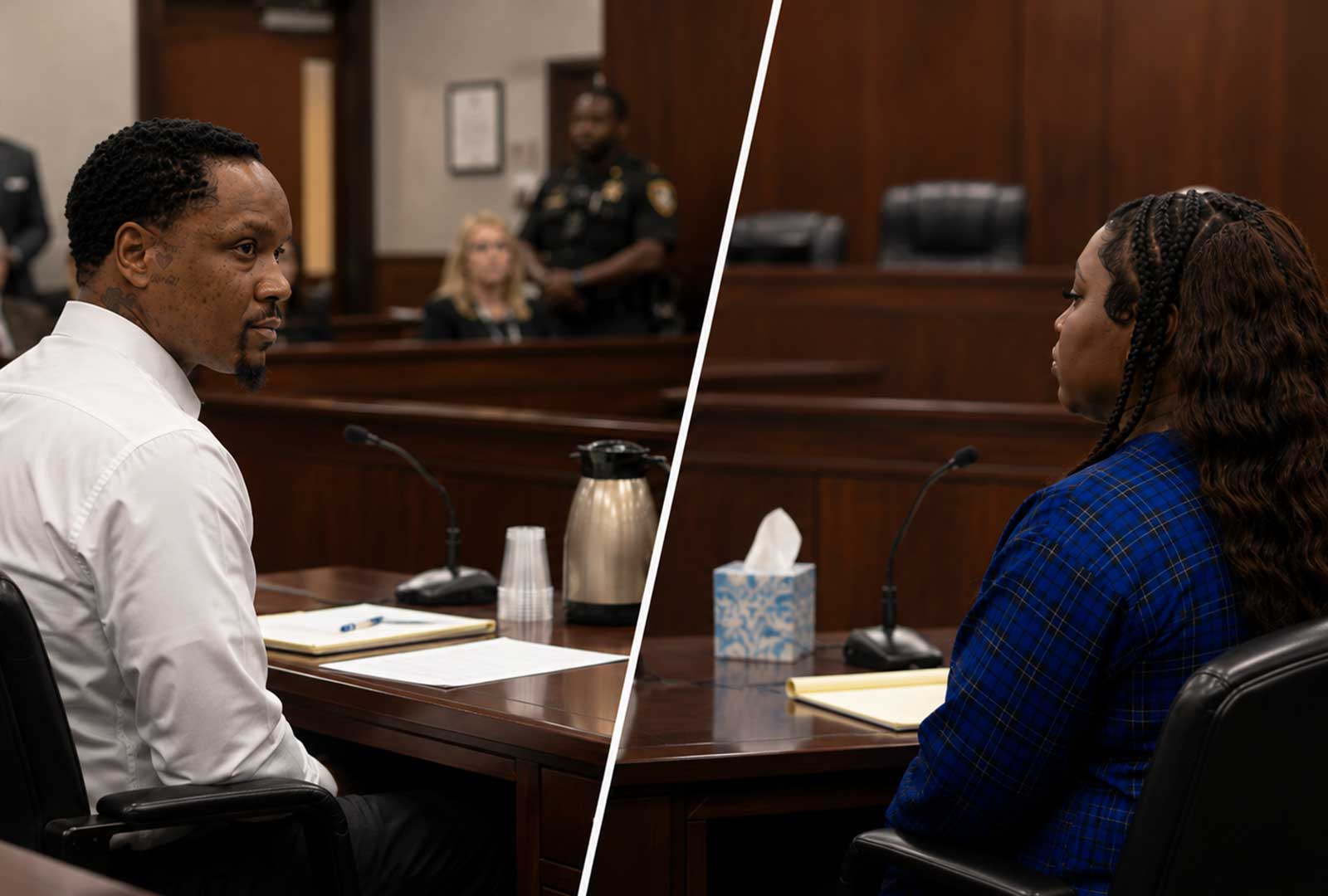
Today’s Cincinnati Downtown Beatdown Sentencing
- Montaniez Merriweather, 34, of South Cumminsville: Pleaded guilty to aggravated riot and aggravated assault. He received 10 months in prison. Merriweather had a prior armed robbery conviction and was out on bond for felony gun charges at the time of the incident. He also faces a pending federal firearms case.
- DeKyra Vernon, 25, of Evanston: Pleaded guilty to disorderly conduct and assault, both misdemeanors. She received two years of probation. Prosecutors described her as one of the least involved participants based on video evidence.
Remaining defendants Jermaine Matthews, Aisha Devaughn, and Gregory Wright are scheduled for sentencing on June 10. The original charges carried the possibility of decades in prison.
Read our earlier report: Five Plead Guilty in Cincinnati Downtown Brawl
Public Reactions on X to the Cincinnati Downtown Beatdown Sentencing
The case went viral last summer and drew renewed attention after today’s sentencing news. Reactions on X were overwhelmingly critical.
This is heartbreaking:
The Victim in brutal Cincinnati beatdown has spoke. out:
“Judges are just letting people out with a slap.”
“The man who attacked me should never have been on the streets.”
— Graham Allen (@GrahamAllen) August 7, 2025
The Viral Cincinnati Downtown Beatdown Incident
The assault erupted shortly after 3 a.m. on July 26, 2025, outside the LoVe on Fourth nightclub at 4th and Elm. Multiple bystander videos showed a verbal dispute turning into a chaotic group beating. Several people punched, kicked, and stomped victims on the ground.
One woman, identified as Holly, tried to intervene and was knocked unconscious. At least six people were injured.
Senator Bernie Moreno was instrumental in pushing back on city leaders.
In his address to the people of Cincinnati from Canada, the Mayor touts their “safety plan.” It wasn’t a good plan for Holly. Do better. pic.twitter.com/CdJ4eiSpDm
— Bernie Moreno (@berniemoreno) July 31, 2025
The footage went viral nationwide, drawing comments from high-profile accounts including Elon Musk. Cincinnati Police body camera video later confirmed the severity of the attack.
While citywide shooting victims dropped roughly 20%, from 353 in 2024 to 283 in 2025, downtown shootings doubled from 10 to 20 victims. Cincinnati Enquirer reporting connected the trend to declining foot traffic, a 6% drop in streetcar ridership, and businesses seeing fewer customers after dark.
As a former Price Hill resident, I’ve seen the impact firsthand. Many locals now avoid downtown nightlife because of safety concerns.
Read: Cincinnati Public Safety & Accountability Report
Plea Deals Dominate in Hamilton County
Hamilton County resolves roughly 76% of criminal cases through pleas, with only about 3% going to trial. That is consistent with Ohio’s statewide average of 76% to 78%. High caseload volume drives much of this plea-heavy system.
Comparison to Other Ohio Counties
| County | Population | Violent Crime Rate Per 100k | Plea Pressure |
|---|---|---|---|
| Hamilton County | 830,000 | ~464 | High |
| Cuyahoga County | 1.2 million | ~615 | Very High |
| Franklin County | 1.3 million | Elevated | High |
| Butler County | 390,000 | ~165 | Lower |
| Clermont County | 210,000 | ~99-111 | Lowest |
Recidivism Statistics in Hamilton County
Ohio’s three-year recidivism rate measures the percentage of inmates released from state prison who return within three years for a new crime or technical violation. According to the Ohio Department of Rehabilitation and Correction’s 2021 Recidivism Report, that rate stood at approximately 32.7% for the 2016 release cohort.
Hamilton County performed slightly better than the statewide average, with a recidivism rate around 30.6% to 30.8% across 1,764 releases. Cuyahoga County sat higher at roughly 35.7%, while Franklin County was around 35.5%.
Even though Hamilton County’s rate came in slightly lower, the raw numbers remain sobering. Hundreds of offenders released from Hamilton County commitments return to prison each year. Across thousands of releases, that creates the revolving door critics say undermines public safety in urban cores like Cincinnati and Cleveland.
Key breakdown from the 2016 cohort:
- Hamilton County: 69.4% no recidivism, 9.1% technical violations, and 21.4% new crimes.
- Statewide: Roughly one in three returned despite reentry programs, specialized dockets, and diversion efforts.
Hamilton County has invested in reentry initiatives through its Office of Reentry and programs like the Welcome Home Docket. These programs aim to connect returning citizens with jobs, housing, and treatment. Results, however, remain incremental.
Juvenile recidivism in Hamilton County has shown even sharper challenges. Older reviews indicated rates as high as 82% for Black youth compared with 57% for white youth within two years.
Cincinnati Police Chief Fired Amid Safety Concerns
The fallout from high-profile incidents like the 2025 downtown beatdown extended into 2026 with the controversial firing of Cincinnati Police Chief Teresa Theetge.
On April 23, 2026, City Manager Sheryl Long terminated Theetge after a five-month independent investigation concluded she “has not been an effective leader.” The 35-year veteran was cited for insubordination, inefficiency, unsatisfactory performance, and failure to adequately address street-level crime priorities.
Theetge’s attorney called the move politically motivated and scapegoating. Her legal team filed an appeal and planned lawsuits against the city, mayor, and city manager.
Many residents and conservative voices saw the firing as a direct response to persistent downtown safety failures, including the viral brawl and doubled shootings in the urban core during 2025. Critics argued leadership changes were overdue after repeated high-visibility violence. Supporters of Theetge pointed instead to staffing shortages and political pressure from City Hall.
The episode added fuel to public anger. Residents are tired of seeing serious incidents followed by plea deals for offenders and leadership upheaval at the top of the police department. Whether the change improves response times, deterrence, and downtown confidence remains an open question.
Broader Implications for Downtown Cincinnati
The Cincinnati downtown beatdown sentencing exposes a deeper problem in how Hamilton County approaches violent crime, repeat offenders, and public safety in the urban core. A high-profile mob assault caught on clear video ended with just 10 months in prison for a defendant with armed robbery priors. Another participant received probation. Those outcomes raise serious questions about deterrence.
Downtown Cincinnati absorbed real damage in 2025. While some violent crime categories fell citywide, shootings downtown doubled. Reported crime across the urban core climbed sharply during the first half of the year, and public confidence dropped with it.
Business owners reported weaker nighttime traffic. Streetcar ridership fell. Many residents now avoid parts of the entertainment district after dark. Incidents like the 4th and Elm brawl intensify those concerns and slow downtown recovery.
This Case Fits a Larger Pattern
Hamilton County leans heavily on plea deals. Prosecutors resolve more than 76% of felony cases through negotiated pleas. Courts often reduce serious charges during that process.
Recidivism remains a major problem. Roughly one in three offenders eventually returns to prison. Violent repeat offenders continue cycling through the system.
Critics point directly to defendants like Merriweather. They argue officials repeatedly hand lighter consequences to offenders with serious criminal histories.
Many Cincinnati residents, especially conservatives and longtime downtown visitors, say they have lost patience with the current approach. They believe officials now prioritize efficiency over deterrence and public safety.
Common demands include:
- Stronger mandatory minimum sentences for violent felonies involving prior convictions or firearms.
- More jury trials in cases supported by strong video evidence.
- Better public tracking of plea agreements and criminal histories.
- Faster punishment paired with accountability-focused reentry programs that produce measurable results.
Without meaningful reform, residents fear mob-style violence could become normalized downtown.
That fear carries economic consequences.
Downtown Cincinnati depends on people feeling safe enough to spend money there. When residents lose confidence in the justice system, they change their behavior. Many now avoid Over-the-Rhine, the Banks, and parts of the urban core after dark. Others stay home or spend their money elsewhere.
Many residents no longer view the Cincinnati downtown beatdown sentencing as an isolated case. They see a justice system struggling to deliver deterrence, accountability, and public confidence.
FAQs
What happened in the Cincinnati downtown beatdown case?
The Cincinnati downtown beatdown case involved a violent assault in the city center that drew widespread public attention and led to criminal charges, court proceedings, and sentencing hearings in Hamilton County.
What sentences were handed down in the Cincinnati downtown beatdown case?
The court issued sentencing decisions tied to the downtown assault after reviewing the severity of the attack, the defendants’ criminal histories, and arguments presented during the hearings.
Why did the Cincinnati downtown beatdown case receive so much attention?
The case sparked significant attention because the assault occurred in a busy downtown area and became part of a broader debate about public safety, violent crime, and accountability in Cincinnati.
How has downtown violence affected Cincinnati’s public image?
High-profile assaults and shootings downtown have increased concerns among residents, business owners, and visitors about safety, nightlife, policing, and the long-term health of Cincinnati’s urban core.
What does the Cincinnati downtown beatdown sentencing mean for public safety debates?
The sentencing hearings reignited debate over whether current policies are effectively deterring violent crime and maintaining order in Cincinnati’s entertainment and business districts.
This article was created with the support of our proprietary AI-powered newsroom tools and reviewed by our editorial team for accuracy and clarity. This article is based on court proceedings, publicly available records, and reporting available at the time of publication.