



Share This Article
Article Summary
A new Cincinnati Police Department audit identified multiple evidence tracking flaws inside the department’s property room. Auditors found missing documentation, incorrect case entries, incomplete inventories, and staffing shortages affecting evidence oversight. City officials said the department has already started implementing corrective measures and plans to invest additional funding into property room operations. The findings also renewed attention on similar concerns raised in a 2012 city audit.
A new audit of the Cincinnati Police Department found multiple deficiencies in how officers and staff manage evidence inside the department’s property room.
According to reporting from WKRC Local 12, auditors discovered 16 separate issues involving evidence tracking, labeling, and documentation.
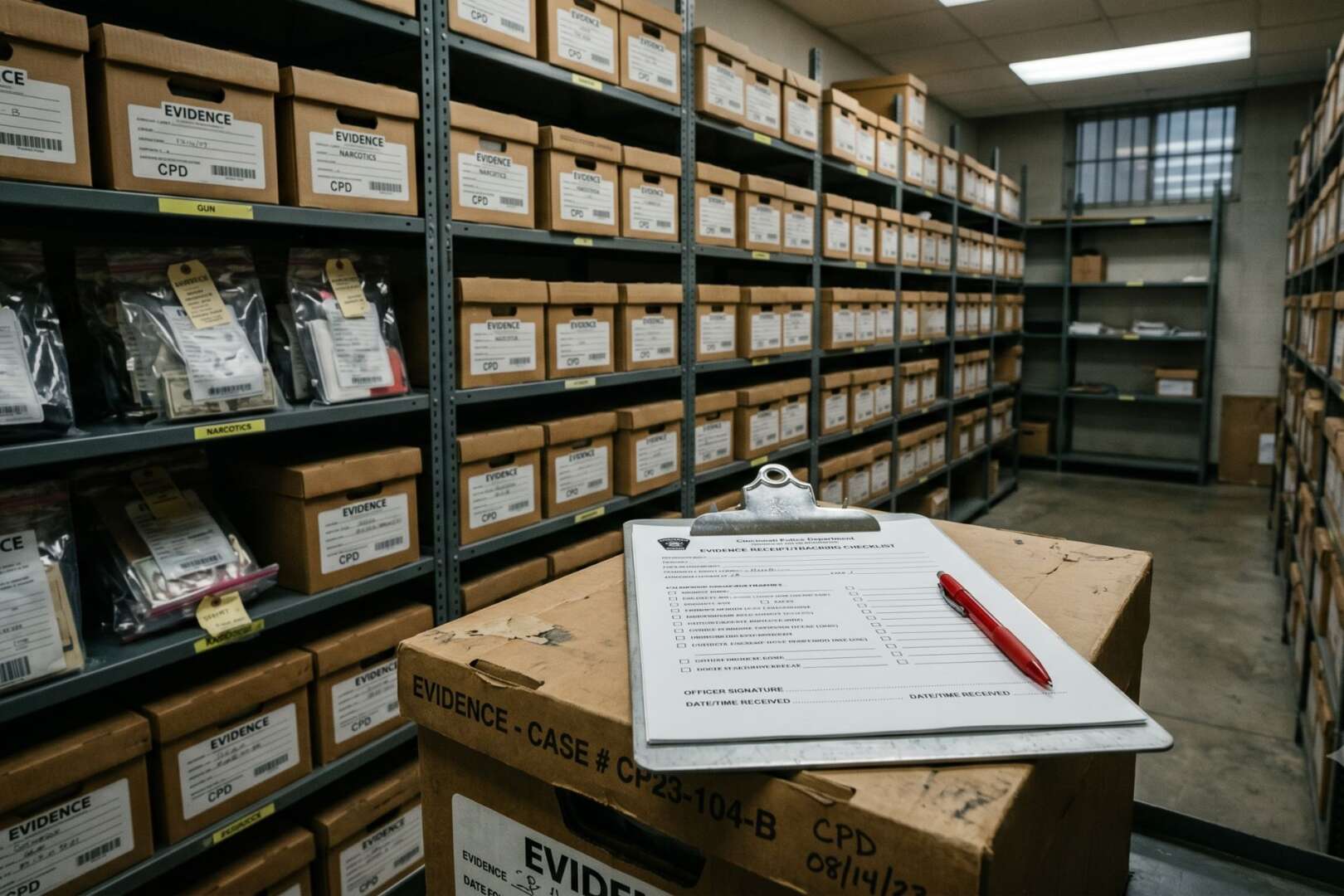
The audit reviewed evidence items including firearms, narcotics, shell casings, and cash. Investigators found that about 30 percent of sampled evidence lacked proper signatures, labels, or supporting records. The findings raised concerns about maintaining accurate chain-of-custody records in criminal investigations.
Evidence tracking flaws raise chain-of-custody concerns
The audit stated that some officers failed to correct improperly documented evidence after receiving requests from supervisors. Auditors also found evidence entered under incorrect case numbers and items with incomplete paperwork. Defense attorneys told Local 12 the missing documentation could create legal challenges during criminal proceedings. Chain-of-custody records help prosecutors prove evidence remained secure from collection through trial. Missing signatures or inaccurate records can weaken criminal cases and create doubt about evidence integrity.
The report identified several operational weaknesses inside the property room, including:
- Incomplete annual evidence inventories
- Limited surveillance camera retention
- Staffing shortages
- Inconsistent employee background checks
- Problems documenting evidence destruction
According to the audit, staffing shortages limited the department’s ability to complete regular inventory checks. Auditors also reported that surveillance footage retention periods may not provide enough coverage during investigations involving missing or mishandled evidence.
Previous audits identified similar evidence tracking flaws
The latest findings echoed concerns from an earlier city audit conducted in 2012. That report also identified weaknesses involving evidence storage and inventory procedures. The earlier audit remains publicly available through the City of Cincinnati Internal Audit Office. The recurrence of similar problems raised questions about whether previous recommendations were fully implemented. Auditors noted that several longstanding issues remained unresolved more than a decade later.
City officials said the Cincinnati Police Department has already started addressing some of the deficiencies. The audit stated that department leadership agreed with most recommendations and assigned additional property supervisors at district levels. According to Local 12, officials from City Manager Sheryl Long’s office said the city plans to dedicate additional funding toward improving property room operations in the upcoming budget cycle. The department has not announced a timeline for completing all corrective actions.
City leaders respond to evidence tracking flaws audit
Cincinnati City Council member Scottie Johnson said the findings themselves were not the only concern. He told Local 12 that accountability and follow-through would determine whether the department successfully fixes the issues. City leaders now face pressure to improve oversight and ensure evidence procedures meet legal standards. Accurate evidence management remains critical for criminal investigations, prosecutions, and public trust.
Other local outlets also reported on the audit findings. WCPO 9 News reported that auditors recommended stronger inventory controls and updated oversight procedures. The outlet noted that auditors emphasized the need for consistent compliance with evidence-handling protocols across the department.
How this affects Cincinnati
The audit findings could have broad consequences for Cincinnati’s criminal justice system and public trust in local law enforcement. Evidence rooms play a central role in criminal investigations because prosecutors rely on accurate records and secure storage to present evidence in court.
When documentation errors occur, defense attorneys may challenge whether evidence was handled properly. Those challenges can delay cases, weaken prosecutions, or create additional legal costs for the city.
The findings also place added pressure on Cincinnati officials to improve oversight and invest in department operations.
City leaders may need to approve additional funding for staffing, upgraded tracking systems, and expanded surveillance coverage inside evidence facilities. Taxpayers could ultimately bear the cost of corrective measures and potential legal disputes tied to mishandled evidence.
The audit may also influence public confidence in the Cincinnati Police Department. Community trust often depends on transparency and accountability, especially in high-profile criminal cases. Repeated audit findings over more than a decade could increase scrutiny from residents, attorneys, and advocacy groups demanding stronger oversight.
The issue may further affect ongoing court cases if attorneys request reviews of evidence handling procedures. Legal experts told local outlets that chain-of-custody problems can become a significant issue during trials. Prosecutors and defense lawyers could now examine whether documentation issues affected specific cases connected to the property room audit.
How this impacts criminal cases
The evidence tracking flaws identified in the audit could affect criminal cases by creating challenges around chain-of-custody procedures. Prosecutors must show that evidence remained secure, documented, and unchanged from the time officers collected it through its presentation in court. Missing signatures, incorrect case numbers, or incomplete records can raise questions about whether evidence was handled properly.
Defense attorneys may use documentation problems to challenge the reliability or admissibility of evidence during trials. In some cases, judges could limit or exclude evidence if chain-of-custody records appear incomplete or unreliable. Legal disputes over evidence handling can also delay court proceedings and increase workloads for prosecutors, defense lawyers, and judges.
The audit does not state that evidence was intentionally tampered with or stolen. However, experts told local outlets that inaccurate tracking systems can weaken confidence in investigations and create additional scrutiny in serious criminal cases involving firearms, narcotics, or forensic evidence.
The findings may also prompt attorneys to review past and ongoing cases connected to the Cincinnati Police Department property room. Defense teams could request additional documentation or file motions questioning how evidence was stored, transferred, or inventoried. Prosecutors may need to provide more detailed records to confirm evidence integrity in court.
FAQs
What did the Cincinnati police audit find?
The audit found 16 deficiencies involving evidence tracking, labeling, storage, and inventory procedures. Auditors identified missing signatures, incorrect case numbers, and incomplete documentation tied to evidence handling.
Why are evidence tracking flaws important in criminal cases?
Evidence records help establish chain of custody during investigations and court proceedings. If documentation is incomplete or inaccurate, defense attorneys may challenge whether evidence remained secure and properly handled.
Has Cincinnati faced similar issues before?
Yes. A 2012 city audit previously identified concerns involving evidence storage, security, and inventory management within the police department. The latest audit showed that several operational weaknesses continued more than a decade later.
What actions is the city taking after the audit?
City officials said the Cincinnati Police Department agreed with most audit recommendations. The department has added property supervisors and plans to seek additional funding to improve oversight, staffing, and evidence management systems.


