



Share This Article
Article Summary
A mass shooting at Riverfront Live has intensified concerns about Cincinnati public safety and whether city leadership’s violence-reduction strategies are delivering results. While officials point to long-term reforms and funding initiatives, many residents argue that repeat offenders, nightlife violence, and prosecution practices remain unresolved. This opinion reflects growing frustration that promises have not yet translated into measurable safety improvements.
A City Waking Up to Violence
Many Cincinnati residents awoke today to jarring international news and more troubling news regarding our own personal safety here at home.
A mass shooting left nine victims overnight at a birthday party for DJ Fresh with roughly 500 people in attendance. This tragic event has raised new questions about Cincinnati public safety, including how cincinnati public safety accountability can be improved. Increasing Cincinnati public safety accountability is now a central topic among officials and residents alike.
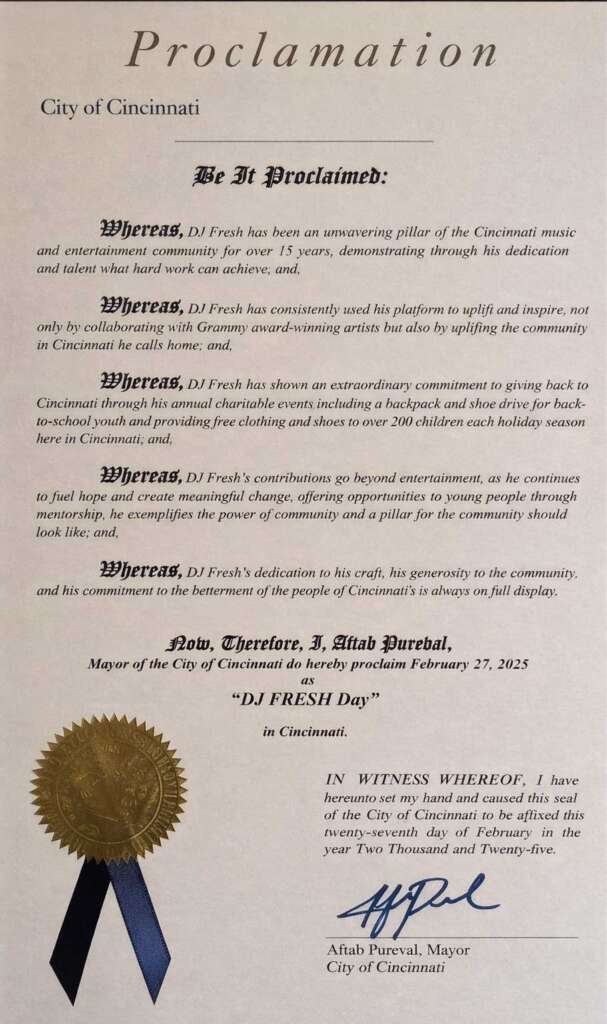
A City of Cincinnati proclamation recognizing “DJ Fresh Day,” signed by Mayor Aftab Pureval and dated February 27, 2025, has intensified debate about how the city publicly honors community figures connected to large public events while gun violence continues to erupt. The venue indicated patrons were patted down prior to entering the event, yet the firearm or firearms involved were not discovered before the shooting.
This is the latest in a series of incidents involving gun violence that are leaving residents demanding answers and consequences for violent offenders. Cincinnati public safety can’t be measured by statements alone. It has to be measured by outcomes that reflect Cincinnati public safety accountability standards.
Repeat Offenders and Prosecution Accountability
The March 1 press conference showed an attempt by the Mayor and City Manager to share in the community’s exhaustion regarding gun violence. However, many residents felt the focus centered on gun ownership and broader social conditions rather than the criminals and repeat offenders responsible for these acts.
Cincinnati residents continue to question whether repeat and violent offenders are being held fully accountable under the law. Failure to meaningfully address repeat violent behavior increases risk to citizens every time individuals cycle back into the community. Concerns about dismissed cases, reduced charges, and inconsistent consequences have become a recurring theme across neighborhoods.
When repeat offenders reappear in headlines, public trust weakens. And when public trust weakens, Cincinnati public safety becomes more than a statistic—it becomes a daily anxiety.
A Pattern of Nightlife Violence in Cincinnati
Spotlight Lounge returned to the news after four people were shot, leaving two casualties in Northside on February 15, 2026. That incident was widely reported as happening near the Spotlight Lounge, and it fueled renewed calls for change and accountability.
On February 17, a seven-year-old was shot in a separate incident that led to the arrest of Michael Walker. Walker had previously been arrested in October 2025 in connection with a shooting inside a residence in Winton Hills, but that case was dismissed.
The community is still seeking answers in the January 1, 2026 shooting that took the life of QueenEr’Re Reed. The ATF reward notice remains active, and residents have asked whether promised surveillance investments and enforcement follow-through are keeping pace with what’s happening on the ground.
When violence clusters around nightlife venues and public gathering spaces, it shapes how safe people feel in their own city—regardless of what broad trendlines may show. Cincinnati public safety is felt locally and personally. As a result, Cincinnati public safety accountability must become an everyday expectation.
Violence Reduction Plans vs. Real-World Results
This topic is not new for the Mayor. In July 2025, Mayor Pureval told WVXU: “We have a strong plan in place to mitigate the violence… It’s completely unacceptable. Enough is enough… we’re going to do everything we can to make sure that we get this under control.”
It is now March 2026, and many residents say they feel no measurable relief from violent crime. While officials reference long-term strategies and violence reduction initiatives, shootings tied to nightlife events and youth incidents continue to shape daily life in Cincinnati.
Public safety strategies must ultimately be judged by outcomes—not intentions. Cincinnati public safety can improve on paper and still feel unstable in the places residents actually live, work, and gather.
Public Safety Spending and Leadership Decisions
Residents have scrutinized city contracts and staffing decisions impacting violence reduction efforts. Questions have been raised about administrative staffing, consultant relationships, and how resources are prioritized in a city that continues to experience high-profile incidents.
Communication and community engagement matter. But communication alone does not prosecute violent offenders or deter repeat criminal behavior. There is clearly a need for focused, measurable enforcement and consistent accountability—especially when public confidence remains low.
What Residents Are Demanding
Public safety is not a political talking point. It is a basic standard.
Residents have demanded cameras. We have demanded proper prosecution and justice for violent offenders. We have demanded policy reform and oversight. Yet many of us still feel unsafe.
When shootings continue, when cases involving violent offenders are dismissed, and when communities see repeated patterns of violence, frustration grows. Cincinnati public safety should not depend on luck, timing, or which neighborhood is in the headlines that week. Above all, Cincinnati public safety accountability is what residents want to see in practice.
Cincinnati’s leadership controls budgets, enforcement priorities, and policy direction. At some point, measurable results must follow public promises. Residents are not asking for rhetoric. We are asking to feel safe in our own city.
Read More
FAQs
Are shootings in Cincinnati increasing or decreasing?
According to Cincinnati Police data and recent media reporting, overall shootings have declined compared to peak years like 2023. However, incidents involving youth and nightlife-related violence remain ongoing concerns for residents.
What is the ACT for Cincy public safety plan?
ACT for Cincy is a violence reduction blueprint launched by the city in 2025. It emphasizes prevention, community investment, and a public health approach to gun violence, with goals including reducing gun-related injuries and increasing youth engagement programs.
What changes did Cincinnati City Council make regarding federal immigration cooperation?
In February 2026, City Council voted to limit the use of city resources for federal civil immigration enforcement without a warrant or court order. Supporters say it protects immigrant communities, while critics argue it could strain federal partnerships.
Has Cincinnati increased spending on public safety?
Yes. In 2025, the city approved additional funding for police overtime, surveillance technology, and lighting improvements. Federal funds were also allocated for public safety initiatives and mental health support.
Why are some residents questioning city leadership on crime policy?
While overall shooting numbers have declined, some residents argue that repeat offender concerns, nightlife violence, and certain policy decisions have not fully addressed public safety challenges.
This is an opinion piece submitted by a contributor. The views expressed are solely those of the author. The Cincinnati Exchange does not assert or imply factual findings beyond publicly reported information. Readers are encouraged to consult primary sources and official statements for full context.