



Share This Article
Article Summary:
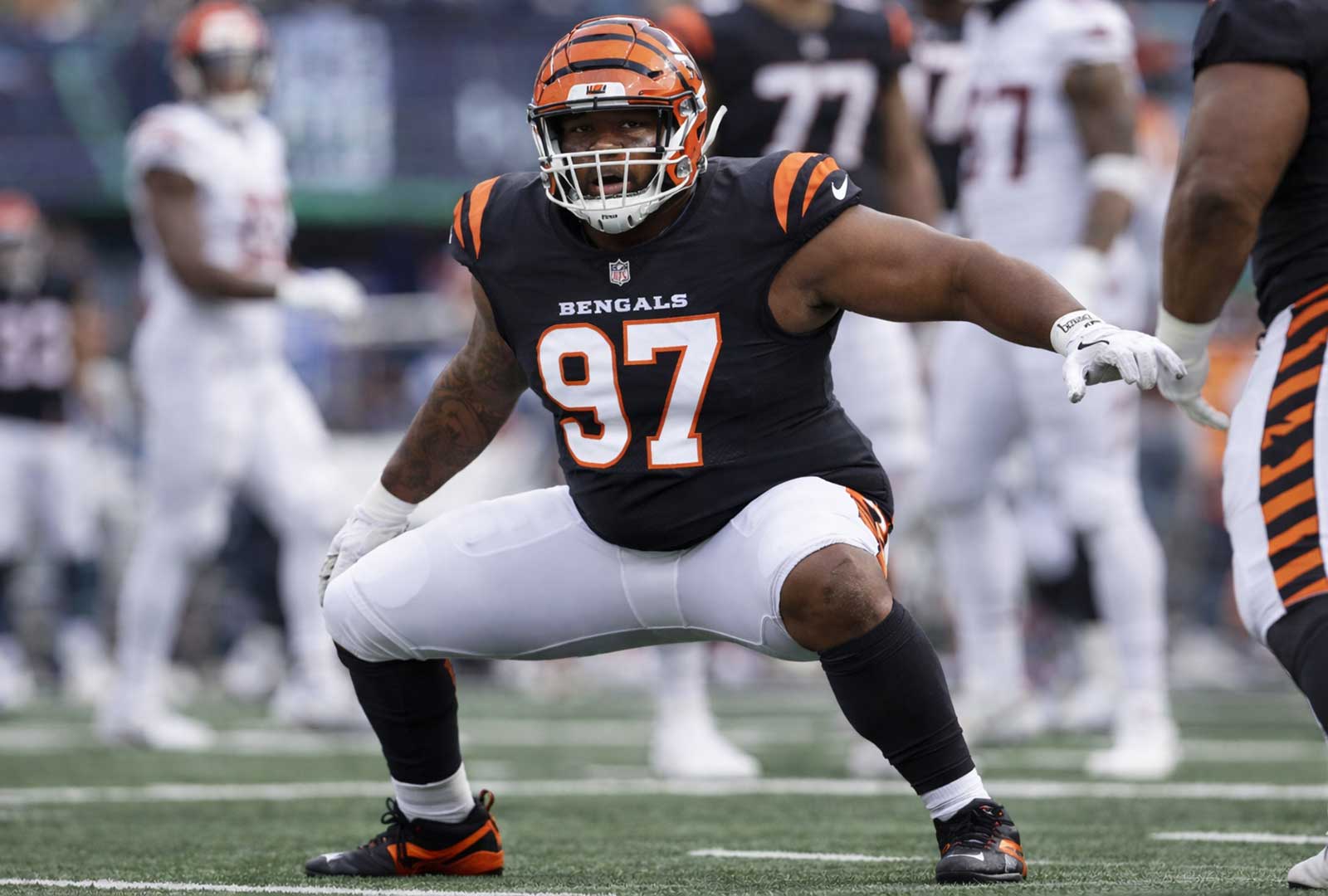
The Cincinnati Bengals trade for Dexter Lawrence represents something rarer than a blockbuster deal—it’s an admission of panic. By surrendering the 10th overall pick to acquire a three-time Pro Bowl defensive tackle from the Giants, Cincinnati is betting its defensive future on a player who posted just 0.5 sacks last season, the worst of his career. The Bengals’ run defense allowed 147.1 yards per game in 2025, worst in the NFL. That’s not a scheme problem; it’s a personnel crisis that demanded immediate action, even at premium cost.
The Bengals Defense Was Broken—and They’re Paying Dearly to Fix It
Cincinnati’s decision to Bengals trade for Dexter Lawrence in exchange for the No. 10 overall pick isn’t a bold strategy—it’s damage control. The Bengals allowed 147.1 rushing yards per game in 2025, the worst in the NFL. That’s not a scheme failure; it’s a personnel collapse.
By trading the 10th pick just days before the draft, when leverage typically favors buyers, the Bengals exposed how little faith they had in finding a dominant interior lineman in this class. They needed a fix now, not a prospect. Clearly, the Bengals trade for Dexter Lawrence reflects their belief that an instant solution was more valuable than a developmental pick.
League leaders in pressures when aligned at nose tackle since 2022:
3. D.J. Reader/D.J. Jones – 28
2. Vita Vea – 32
1. Dexter Lawrence – 108 🤯(via @SharpFootball) pic.twitter.com/ahpnfsGjM6
— SleeperBengals (@SleeperBengals) April 19, 2026
Lawrence arrives as a three-time Pro Bowler with 30.5 career sacks, but the fine print matters: he posted just 0.5 sacks across 17 games last season. The Bengals are acquiring a declining asset that the Giants wanted to move. Yet they had no choice. When opponents control the run, they control time of possession, limit Joe Burrow’s touches, and force Cincinnati into predictable passing situations. A broken run defense doesn’t just hurt the defense—it threatens Burrow’s job security and the entire offensive system built around him.
After all, the urgency of the Bengals trade for Dexter Lawrence also demonstrates how run defense failures can disrupt the franchise quarterback’s future and overall team direction. If you’re a Bengals fan, you know this isn’t a normal move for the franchise.
A Bengals trade for Dexter Lawrence is unprecedented: This is the first time in the common draft era that dates back to 1966 in which the Bengals ever have traded a Top-10 pick for a player, per ESPN research. pic.twitter.com/RNsy7MbHqb
— Adam Schefter (@AdamSchefter) April 19, 2026
What the Giants Signaled by Trading Away Their Own First-Round Pick
The Giants didn’t just trade Dexter Lawrence—they traded away seven seasons of their own investment. Lawrence was a 17th overall pick in 2019, a three-time Pro Bowler they’d built around. Shipping him to Cincinnati for the 10th pick isn’t a lateral move; it’s a surrender. New York is admitting its window closed. In fact, they are betting it can rebuild faster through the draft than by keeping an aging interior lineman.
Now holding the 5th and 10th picks, the Giants are clearly buying youth. The timing raises a sharper question: Why did Lawrence’s production crater from 9 sacks in 2024 to just 0.5 last season? The Bengals are acquiring a player the Giants wanted off the books before his next contract negotiation. One front office is all-in; the other just cashed out.
Cincinnati’s Draft Strategy Just Changed Overnight
The Bengals no longer have a first-round selection, which means they’ve surrendered the draft’s most flexible currency. Gone is the ability to address the secondary or land a premium edge rusher to replace Trey Hendrickson and Joseph Ossai. Day 2 picks carry lower hit rates and narrower positional value—you’re not finding a cornerstone player at 41 overall. The previous draft scenarios showed Cincinnati targeting Chris Johnson (cornerback, San Diego State) and Dani Dennis-Sutton (edge, Penn State) in later rounds. Both are solid contributors. However, neither carries the caliber of talent typically available in the top 10.
Before this trade, Boye Mafe and Jonathan Allen were supposed to be complementary pieces, not the foundation. By surrendering that first-rounder to acquire Dexter Lawrence, the Bengals are betting that a 340-pound nose tackle—coming off a career-low 0.5 sacks—can shoulder a load that an elite draft prospect would have been drafted to handle. Paying such a high price for an experienced player, at just 28, only emphasises just how key the Bengals’ trade for Dexter Lawrence is for the franchise’s future defensive identity.
Did the Bengals Overplay Their Hand?
The Bengals front office faced a clear decision: invest draft capital in a projection, or secure a player with a proven track record at the NFL level. They chose certainty. While Lawrence’s sack total dipped last season, his overall impact as a disruptive interior presence goes beyond the stat sheet, something Cincinnati clearly valued.
This move reflects urgency, but also intent. The Bengals identified a weakness and acted decisively to address it rather than waiting for development to catch up. That kind of approach can change the tone of a defense quickly.
The Giants capitalized on the opportunity, but Cincinnati wasn’t just reacting—they were targeting a player they believe fits their system and can elevate the unit immediately. In that context, the price becomes part of a broader strategy rather than a simple overpay.
In the end, the Bengals trade for Dexter Lawrence will likely be remembered less as a gamble and more as a calculated bet on immediate impact at a position they needed to stabilize.
What’s less clear is whether the Bengals considered the second-order cost: they’ve now committed to Lawrence’s future contract, with an average annual value of $31.8 million, while simultaneously weakening their ability to address other glaring needs through the draft.
🚨PROJECTION: New Cincinnati #Bengals defensive tackle Dexter Lawrence is projected to sign a three-year, 95.4 MILLION DOLLAR extension.
This is an average annual value of $31.8 million: This would make Lawrence the highest-paid DT in league history.
Dexter is a 3x Pro Bowler. pic.twitter.com/7EoV1eRqFC
— MLFootball (@MLFootball) April 19, 2026
Similar roster investment decisions have sparked debate over whether the Bengals prioritize short-term fixes over long-term roster building. One dominant interior lineman doesn’t fix a defense that ranked last in rushing yards allowed. It’s a piece, not a solution.
Why This Trade Matters to Cincinnati (Beyond the Stadium)
Cincinnati’s defensive collapse in 2025 wasn’t just a football problem—it was a referendum on the front office’s ability to build around Joe Burrow. A league-worst 147.1 rushing yards allowed per game meant opponents controlled games, drained the clock, and forced Burrow into predictable passing situations where he took more hits. That’s not abstract; it’s a direct threat to the franchise’s most valuable asset. By trading the 10th pick for Lawrence, the Bengals are betting their credibility on fixing this mess now, not waiting for a draft prospect to develop. It’s the kind of Cincinnati sports urgency that defines championship windows—act or admit defeat.
The Dexter Lawrence Paradox: Pro Bowl Pedigree Meets a Complicated Exit
Dexter Lawrence’s résumé still carries weight: multiple Pro Bowls, All-Pro recognition, and a reputation as one of the league’s most disruptive interior linemen when fully engaged. That’s the version of Lawrence the Bengals believe they’re getting.
But his final stretch with the Giants raised quieter questions—not just about production, but about alignment. Reports out of New York pointed to growing frustration with how he was being used, particularly in a scheme that often asked him to occupy space rather than attack. For a player whose value comes from disruption, that shift matters.
There were also signs the relationship had cooled. As the Giants looked ahead to future roster decisions and contract considerations, Lawrence didn’t appear to be at the center of their long-term vision in the same way he once was. Whether that was about fit, finances, or internal dynamics, the result was the same: a player who felt somewhat out of sync with his environment.
That context changes how this move should be viewed. Cincinnati isn’t just acquiring a defensive tackle—they’re betting on a reset. A new locker room, a different scheme, and a clearer role could bring back the version of Lawrence that made him a problem for offenses every Sunday.
The real question isn’t whether Lawrence can still play at a high level. It’s whether Cincinnati can unlock the version of him that New York no longer did.
What Happens Next: The Draft Floor Shifts Beneath Cincinnati’s Feet
The Bengals enter Day 2 without much margin for error. Moving a top-10 pick changes the math. Instead of building depth across multiple positions, Cincinnati now has to be more precise—especially at cornerback, safety, and edge, where rotational talent is still needed.
From Cincinnati’s perspective, this move only works if the role is clear. Lawrence won’t be asked to read and react as much as he was in New York. He’ll be expected to attack, collapse the pocket, and create disruption alongside a defensive line that already draws attention on the edge. That kind of deployment has historically been where he’s at his best.
The clock starts now. Not just on Lawrence, but on the Bengals’ evaluation process. They’ve identified him as the answer to a specific problem, and they paid a premium to make it happen.
If they’re right, this reshapes the defensive identity quickly.
If they’re wrong, it limits their ability to correct it.
And if “Sexy Dexy” brings that sideline dance—and the disruptive version of himself that earned those accolades—this trade won’t be remembered for what Cincinnati gave up, but for how quickly it changed what they became.
Read More
Bengals Trade 10th Pick: Draft Scenarios & Targets
FAQs
Why would the Bengals trade their 10th overall pick for Dexter Lawrence when his sack numbers dropped to just 0.5 last season?
Great question—Lawrence’s 2025 stats do look underwhelming on the surface, but the Bengals are betting on his elite run-stopping ability (16 stops, 31 tackles in 17 games) rather than his pass-rush production. Cincinnati allowed a league-worst 147.1 rushing yards per game in 2025, which was absolutely killing their defense. Lawrence’s 340-pound frame and proven track record (9.0 sacks in 2024, 7.5 in 2022) suggest last season was an outlier, possibly due to scheme fit or injury. The Bengals are essentially saying: “We need to fix the run defense NOW to protect Joe Burrow, and we’re willing to sacrifice draft capital to do it.” They’re prioritizing immediate impact over lottery-ticket potential.
Does this trade mean the Bengals have given up on finding young talent through the draft?
Not entirely, but it definitely signals a shift in philosophy. By trading away the 10th pick, Cincinnati loses the chance at a potential franchise cornerstone—whether that’s an elite edge rusher, cornerback, or other premium talent. However, they still have picks in rounds 2-7, so they can still build through the draft on Day 2 and beyond. The real story here is that the Bengals are in “win-now” mode. With Joe Burrow locked in and a decent offensive foundation already in place, they’re choosing to plug a critical defensive hole immediately rather than wait for a rookie to develop. It’s a calculated gamble that their window is open *right now*, not in 2-3 years.
What's the realistic timeline for Dexter Lawrence to make an impact with the Bengals?
Lawrence should be ready to contribute immediately. He’s a veteran who knows the game and doesn’t require a long development period like a rookie would. The Bengals traded for him specifically because they need run-defense help *now*, not next season. However, there’s always an adjustment period when a player switches teams—new defensive scheme, new teammates, different coaching philosophy. Realistically, you’d expect Lawrence to be in the lineup from Week 1 and making meaningful plays by mid-season as he gets comfortable with Cincinnati’s system. His 2024 season (44 tackles, 9.0 sacks) shows he’s capable of elite production when healthy and in the right situation, so the Bengals are betting that a change of scenery and a fresh start will get him back to that level of play.
What does this trade say about the Bengals' confidence in their current roster around Joe Burrow?
It says they believe they’re close to contention and that the main thing holding them back is defense, not offense. Burrow has weapons, the O-line is solid with Orlando Brown Jr., and the offense was reasonably productive in 2025. But the defense was historically bad at stopping the run (worst in the league), which puts enormous pressure on the offense to keep scoring and never allows the team to control games. By aggressively acquiring Lawrence, the Bengals are essentially saying: “We have a Super Bowl-caliber QB and offense. If we can just get our defense to league-average levels, we can compete for a championship.” It’s a vote of confidence in Burrow and the offensive side of the ball, but also an admission that their current defensive roster isn’t cutting it. The trade reflects urgency—they think their window with Burrow is open *now*, not down the road.
This article was created with the support of our proprietary AI-powered newsroom tools and reviewed by our editorial team for accuracy and clarity.


