



Share This Article
Article Summary:
The Cincinnati Bengals face a rare moment of strategic clarity masked by noise: their #10 pick is valuable precisely because they don’t need to trade it. Yet the persistent rumors—that Cincinnati might trade 10th pick for Maxx Crosby, or trade up for Sonny Styles, or acquire Cole Kmet—reveal an organization caught between two competing truths. The offense is elite and starving for defensive support. The question isn’t whether the Bengals can trade the pick; it’s whether trading it would actually solve the problem they’re pretending to address, or defer it.
The Maxx Crosby Option: Why a Veteran Edge Rusher Suddenly Makes Sense
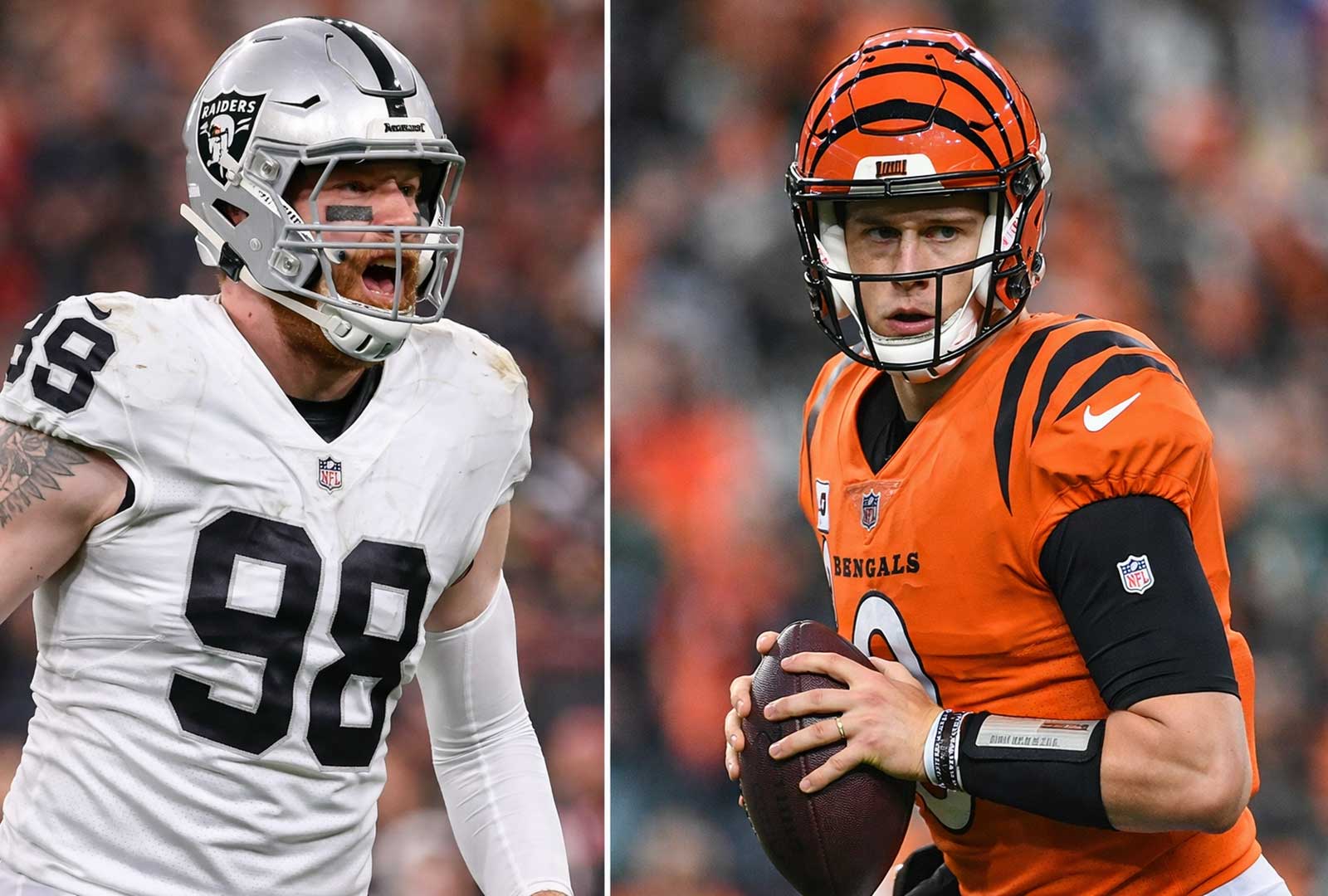
Former NFL executive Mike Tannenbaum made the case on ESPN that the Bengals should pursue Raiders edge rusher Maxx Crosby.
He argued the asking price has collapsed from two first-rounders to a single Top 10 pick as injury concerns linger.
For some, if the Bengals trade the 10th pick for Crosby, it would be a franchise-defining deal. Crosby’s 2025 tape—79.7 PFF grade, 10 sacks, 53 total pressures—positions him as a legitimate replacement for an aging Trey Hendrickson. Moreover, Kirk Cousins, now Crosby’s teammate in Las Vegas, put it plainly. Crosby is one of “maybe a half-dozen” players opponents game-plan around all week.
More Than Sacks
What makes this compelling for Cincinnati is not just the production numbers. Crosby functions as what scouts call a “tone-setter”—a locker-room leader and physical presence. He could reshape a defense that has consistently underperformed relative to Joe Burrow’s offensive firepower. The Bengals gave up 27 points per game last season—bottom-tier for a team with playoff expectations.
Trading the #10 pick for Crosby would instantly address the left side. It would also avoid the risk of betting on a rookie’s development. Crosby brings consistent pressure—double-digit sacks and top-tier pressure rates—even when offenses scheme around him.
The question is whether the Bengals believe they can afford to wait on the draft. Or whether Crosby’s proven edge-rush ability justifies breaking from organizational precedent. Equally, if the Bengals trade the 10th pick, it sets a new direction for the team’s draft strategy.
The Draft-Up Dilemma: Sonny Styles, Arvell Reese, and the 30-Year Pattern Break
The Cincinnati Bengals have not traded up in the first round since 1995. This is a 30-year organizational commitment to patience that reflects a clear philosophy. The idea is to let other teams overpay for prospects. Then accumulate depth through methodical selection. Yet whispers persist that Cincinnati is “high on” Ohio State linebacker Sonny Styles. They also like defensive prospects like Arvell Reese and David Bailey.
This raises an uncomfortable question: would the Bengals actually break three decades of precedent to secure one prospect?
If the Bengals trade the 10th pick to move up, they surrender future draft capital—likely a second or third-round pick—to teams willing to move back. That cost directly contradicts the Bengals’ track record of value maximization. Styles and Reese are legitimate prospects. However, the real tension is whether they’re worth dismantling an organizational approach. Notably, this approach has consistently produced roster depth.
In fact, it raises a question: is the desperation real, or are these rumors simply noise before the draft?
ANALYSIS: The Incentive Trap Behind the Trade Rumors
Here’s what’s worth questioning: every trade rumor involving the Bengals trade the 10th pick serves someone’s interests—just not necessarily Cincinnati’s. When analysts like Mike Tannenbaum float the Maxx Crosby scenario, they generate clicks. They also position themselves as connected insiders. Meanwhile, the Raiders and other teams monitor these reports carefully.
If Cincinnati appears desperate to move the pick, trade partners demand less. If the Bengals stay silent, the uncertainty itself becomes leverage. The front office gains nothing by confirming or denying interest in Sonny Styles or Cole Kmet. In fact, every public statement weakens their negotiating position.
The deeper problem: trading the pick signals that the current roster construction—elite offense, fragile defense—is unsustainable. That admission, once made, invites every team with a pass rusher or tight end to ask for more. The Bengals have stayed quiet for a reason. Patience costs nothing. Desperation costs draft capital.
Cincinnati’s Defensive Reckoning: Why the #10 Pick Matters More Than the Rumors Suggest
The Bengals face a real problem: Joe Burrow has elite weapons, but the defense can’t consistently keep games close. That’s not a small issue—it’s the difference between playoff wins and early exits.
That reality puts three clear paths on the table. Trading up for Ohio State linebacker Sonny Styles bets on upside and future stability. Trading back spreads risk and adds multiple defensive pieces. Moving the #10 pick for Maxx Crosby is the most direct fix. It would bring in a proven pass rusher who replaces Trey Hendrickson’s production right now.
The Dexter Lawrence Option
Then there’s the quieter conversation around a player like Dexter Lawrence. Reports out of New York, including comments tied to Dexter Lawrence’s contract situation, have quietly opened the door to possible movement.
He isn’t flashy in the same way as a double-digit sack edge rusher. Still, he changes how an entire defense functions. He collapses the pocket, eats double teams, and makes life easier for everyone behind him. If Cincinnati is serious about fixing its defensive structure—not just patching it—this is the type of player that shifts the math.
That’s the real issue. Crosby solves the edge immediately. Lawrence-type players stabilize the middle and raise the floor of the entire unit. Lawrence doesn’t rack up sacks the same way, but he’s one of the league’s best interior disruptors, regularly commanding double teams and collapsing the pocket. Styles represents a longer-term recalibration. Each option reflects a different belief about how broken this defense actually is.
And that’s the part that matters more than any single rumor. Because the Bengals don’t just need another player. They need to decide what kind of defense they want to be.
What the Trade Rumors Reveal About Organizational Uncertainty
The steady drumbeat around whether the Bengals trade the 10th pick—for Maxx Crosby, Sonny Styles, or even a defensive anchor like Dexter Lawrence—points to something deeper than flexibility. It suggests a front office that hasn’t fully decided what this defense is supposed to be.
A more decisive team usually shows its hand early. Extensions get done. Veteran help gets added. A clear direction takes shape before the draft. Cincinnati hasn’t done that. Instead, the #10 pick has become the fallback plan. This is the one lever left to fix everything at once.
That’s where the hesitation shows. Right now, the Bengals look like they’re waiting to see how the board falls, who calls, and whether a deal presents itself. That’s not strategy—it’s reacting to the market and hoping the right answer appears.
And that’s the risk. Because Crosby, Lawrence, and Styles aren’t interchangeable moves. Each one represents a completely different philosophy—win-now edge pressure, interior dominance, or long-term development. Drifting between those options without committing to one is how you end up solving none of them.
At some point, they have to pick a direction. If the Bengals trade the 10th pick, it won’t just be about the player they get back. It’ll show whether this front office finally knows what it’s building. Or if it’s still trying to figure that out in real time.
The Realistic Trade Scenarios Ranked by Likelihood and Logic
Most likely: Trade back for depth.
The Bengals move off #10 to a team chasing a quarterback or edge rusher. They slide into the 15–18 range while picking up an extra Day 2 pick. That fits how Cincinnati has operated for decades—more swings, less risk. It also lines up with this year’s cornerback class, which has real depth. This gives them a chance to address the secondary without reaching.
Less likely, but defensible: Maxx Crosby.
If the Raiders’ price softens enough, this becomes the cleanest fix. Crosby gives you immediate, proven edge production and replaces what you lost up front without waiting on development. It’s aggressive by Bengals standards—but it directly solves a problem that cost them games last year.
Wildcard: Dexter Lawrence.
This isn’t the flashy move, but it might be the most structural. Lawrence changes how offenses operate. He collapses the pocket, frees up linebackers, and makes the entire defense more stable. If Cincinnati believes the issue is bigger than just edge pressure, this is the kind of move that raises the floor of the whole unit.
Least likely: Trade up.
Moving up would disrupt how this front office typically operates. It could jeopardize the capital they’ve been careful to protect. It only makes sense if they’re convinced one specific player fixes everything. However, that’s not how this roster is currently built.
The #10 Pick Will Likely Stay Put
The Bengals trade the 10th pick rumors have generated noise, but organizational inertia and cap flexibility suggest Cincinnati keeps the pick and uses it on a defensive prospect—likely an edge rusher or cornerback rather than trading up for Sonny Styles or down for depth. Trading for Maxx Crosby remains the most credible scenario, though it requires overcoming the Raiders’ asking price and Crosby’s recent injury concerns.
What’s less clear is whether the front office has the urgency to act decisively before April 23. If they do, expect a defensive trade target. If they don’t, expect a rookie.
Read More
Bengals signing criticism sparks debate over $60 million deal
FAQs
Why would the Bengals consider trading away the #10 overall pick when they have significant defensive needs?
The Bengals might trade the #10 pick for several strategic reasons. First, trading back allows them to accumulate more draft capital in what analysts describe as a deep draft class, potentially addressing multiple roster holes rather than one premium prospect. Second, trading up for a specific target like Sonny Styles or acquiring a proven veteran like Maxx Crosby could address more immediate needs than waiting for draft day. Third, the Bengals’ historical reluctance to trade up in the first round (they haven’t done so in over 30 years) suggests they typically prefer quantity over premium position, making a trade-back scenario more aligned with their organizational philosophy. The trade rumors ultimately reflect the organization weighing whether a high-upside prospect at #10 is worth more than multiple contributors or a proven defensive anchor.
What makes Maxx Crosby a realistic trade target despite his failed physical with Baltimore?
Maxx Crosby represents an intriguing option for Cincinnati because his trade value has decreased following the failed Baltimore Ravens deal, making him more attainable with the #10 pick. ESPN analyst Mike Tannenbaum noted that while Crosby would have commanded two first-round picks six weeks prior, that price is no longer realistic—a Top 10 pick now becomes viable compensation. Crosby’s production speaks for itself: he posted a 79.7 PFF defensive grade, recorded 10 sacks, and is viewed as a tone-setter who strengthens locker rooms. For the Bengals, acquiring Crosby would directly replace Trey Hendrickson’s production while providing Joe Burrow with a proven defensive leader. The failed physical actually works in Cincinnati’s favor by lowering the Raiders’ asking price and potentially making the Las Vegas organization more willing to negotiate.
Why haven't the Bengals traded up in the first round for over 30 years, and does that history suggest the #10 pick will stay put?
The Bengals’ 30-year avoidance of first-round trades reflects a deliberate organizational philosophy: accumulating draft capital and allowing other teams to make risky trades while Cincinnati builds depth across multiple positions. This strategy works approximately 90% of the time because it maximizes the number of contributors added annually rather than betting on a single premium prospect. The historical pattern suggests the #10 pick will likely remain with Cincinnati on draft day, as trading up would represent a significant departure from decades of organizational DNA. However, the recent trade rumors indicate potential organizational uncertainty or a recognition that their current approach may need adjustment. The fact that media and analysts are discussing trade scenarios at all suggests some internal debate about whether the traditional philosophy still applies—particularly if a generational talent like Sonny Styles becomes available or if a proven veteran like Crosby suddenly becomes attainable. Ultimately, breaking a 30-year pattern would require extraordinary circumstances or a philosophical shift in the front office.
How do the Bengals' potential contract extensions for Chase Brown, DJ Turner, and Dax Hill affect their ability to trade the #10 pick?
Contract extensions for key players like Chase Brown, DJ Turner, and Dax Hill directly impact the Bengals’ cap flexibility and thus their trade decision-making. By extending these players now, Cincinnati locks in favorable long-term deals before salaries escalate, freeing up cap space for other roster moves. This improved financial flexibility could enable the Bengals to pursue higher-priced veteran acquisitions like Maxx Crosby or absorb Cole Kmet’s contract more comfortably. Conversely, if these extensions consume significant cap space, the Bengals might be forced to rely on the draft (keeping the #10 pick) to add talent cost-effectively. The timing of these extensions relative to draft decisions is crucial: if Cincinnati extends these players early, it signals confidence in their offensive core and suggests any #10 pick trade would likely target defensive reinforcements. If extensions are delayed, it indicates the Bengals want to preserve flexibility to either draft or acquire proven veterans. Essentially, these roster decisions are interconnected—the more cap space the Bengals create through smart extensions, the more options they have regarding the #10 pick, whether that means trading for a veteran or trading back to accumulate additional draft picks.
Among the realistic trade scenarios, which is most likely to actually happen before April 23?
The most likely scenario remains the Bengals keeping the #10 pick and selecting a defensive prospect, based on historical precedent and organizational philosophy. However, if a trade must happen, trading back to accumulate additional picks—particularly to address cornerback depth in a deep draft—ranks second in likelihood. This scenario aligns with Cincinnati’s traditional approach while still allowing roster flexibility. A Maxx Crosby trade ranks third in probability because while his decreased asking price makes it feasible, it still requires the Bengals to break from their typical draft-focused strategy and commit significant capital to a 28-year-old edge rusher. A trade-up scenario for Sonny Styles ranks fourth, as it directly contradicts 30 years of organizational behavior and would require extraordinary organizational conviction. The Cole Kmet trade ranks fifth because it addresses a non-critical need and doesn’t solve the Bengals’ most pressing defensive gaps. The least likely scenario is a complete pivot away from defensive priorities, as the secondary and pass rush remain the team’s most glaring weaknesses. With the draft just days away, any trade would need to be finalized imminently, making dramatic last-minute pivots less probable than standing pat or executing a previously negotiated trade-back scenario.
This article was created with the support of our proprietary AI-powered newsroom tools and reviewed by our editorial team for accuracy and clarity.


