
Share This Article
Article Summary:
Tenants across multiple Cincinnati neighborhoods say they’re living with rats, sewage, and mold. At the same time, the city handed a $1 million grant to the nonprofit landlord responsible — and a photo taken Tuesday afternoon is adding fuel to the backlash.
What a concerned citizen on OTR saw today
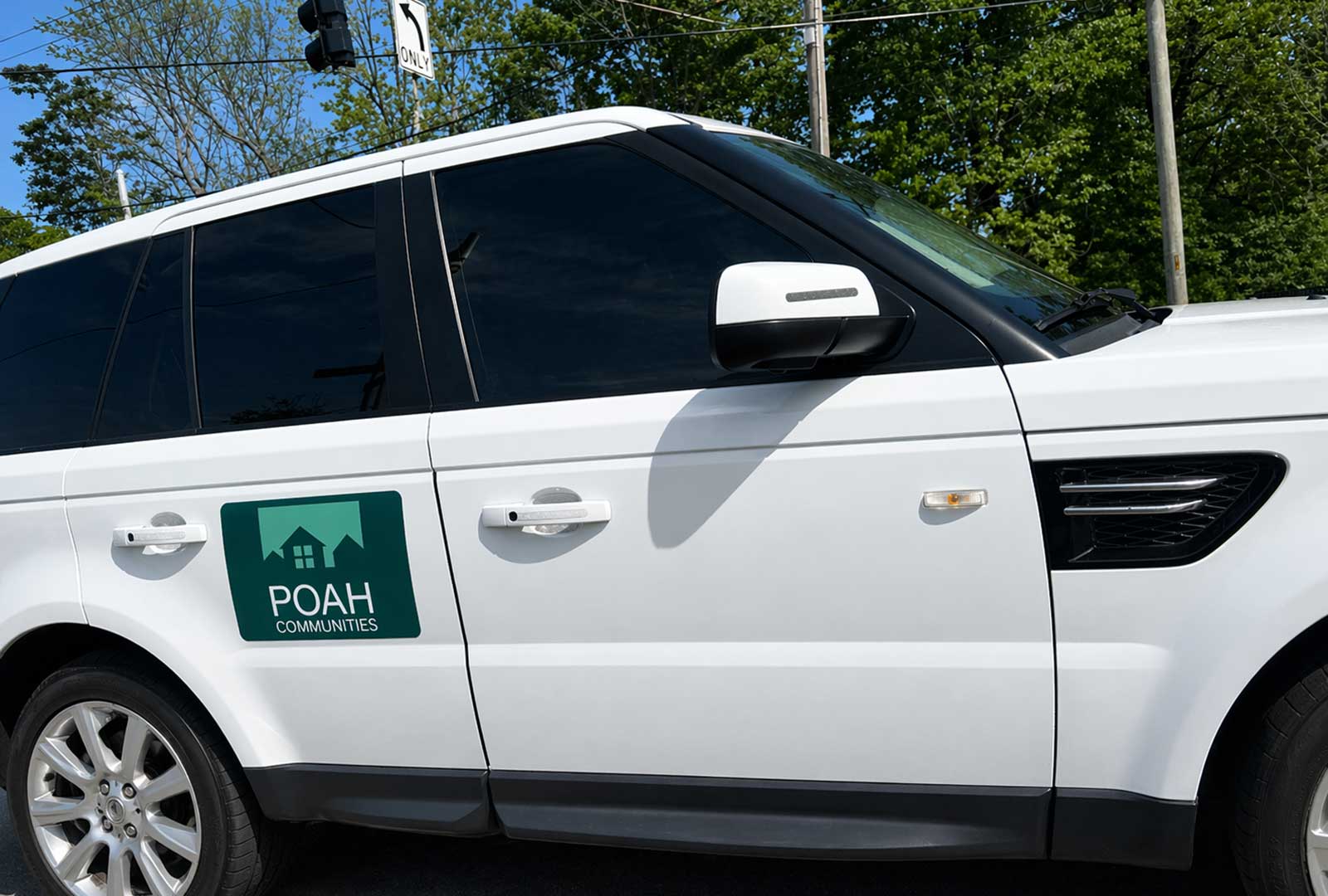
Around 4:30 p.m. Tuesday, a photo taken in Walnut Hills started making the rounds.
It shows a white Range Rover with POAH branding on it — a clean, high-end SUV tied to a nonprofit currently under heavy scrutiny from tenants and the city. On its own, it’s just a car. But in context, it doesn’t feel like just a car. Because this isn’t happening in a vacuum.
The conditions tenants say they’re living in
Across Over-the-Rhine, the West End, Pendleton, and Lower Price Hill, tenants have been describing the same pattern for months:
- Rats inside units
- Sewage backing up into living spaces
- Mold spreading across walls
- Broken appliances and no hot water
- Buildings that don’t lock properly
Some of those complaints go back more than a year. Others are still unresolved right now. And it’s not just word of mouth. Local reporting and city inspections have already confirmed a long list of violations tied to these properties.
At one point, the city stepped in and put the entire portfolio under heightened inspection. That doesn’t happen casually.
Then the city wrote the check anyway
City officials called it necessary. The buildings are old, they said. Keeping the units affordable matters. Big repairs cost real money. And on paper, all of that checks out. But this is where a lot of Cincinnatians started shaking their heads. If the living conditions were already so bad that the city itself described them as “unacceptable” and “dire,” why was writing another big check the first move—before real, visible accountability was locked in?
That question hasn’t faded. If anything, the tension around it has only gotten sharper.
Why that Range Rover photo hit a nerve
The Range Rover isn’t proof of wrongdoing. It doesn’t tell you where the money went or who approved what. But optics matter — especially in a situation like this.
When tenants are dealing with sewage backups and mold, and then a branded luxury SUV shows up tied to the same organization, people are going to connect those dots, whether it’s fair or not. That’s just reality. And in this case, it reinforces a broader question that’s been building:
Is the organization actually stretched thin trying to fix old housing…
Or is something off in how resources are being managed?
Lawsuits are starting to stack up
By late 2025, tenants had already begun filing lawsuits tied to living conditions.
Some of the claims are serious:
- Mold tied to respiratory issues
- Lead exposure concerns
- Families reporting ongoing health problems
- Allegations of negligence
At least a few cases are still moving through the courts. POAH Cincinnati has said it’s addressing repairs and working through long-term renovations. But legal pressure tends to move faster than internal timelines.
The bigger issue Cincinnati can’t ignore
This isn’t just about one nonprofit or one property. It’s about a model the city relies on.
Cincinnati, like a lot of cities, leans on nonprofit housing groups to preserve affordability. That means public money, private management, and aging buildings all tied together. When it works, it keeps neighborhoods stable. When it doesn’t, you get exactly this situation:
- Tenants stuck in bad conditions
- The city is caught between enforcement and funding
- Confidence in how this is being handled is starting to slip
And once that trust goes, it’s hard to get back.
Where this goes next
Inspections are still dragging on. Repairs keep getting promised. Lawsuits are still winding their way through the courts.
And now there’s a new ingredient in the mix: real attention. Not just from WCPO’s I-Team anymore, but from everyday Cincinnatians watching this unfold and asking one blunt question:
If things are this bad — rats, sewage in the bathrooms, mold making kids sick — why does it always feel like nothing really changes until it blows up in the headlines?
Or in this case, until a photo of a fancy POAH-branded Range Rover makes people stop scrolling and start asking harder questions.
The Range Rover as a symbol
That Range Rover isn’t the whole story. It’s just a symbol. But right now, it’s sitting smack in the middle of a much bigger problem that Cincinnati — and a lot of cities around the country — still hasn’t figured out how to solve.
Eroding trust in City Hall
People’s trust in city leadership has taken a real hit lately. Cincinnati’s own 2025 resident survey showed noticeable drops in how people view city services, the direction of the city, and even whether it’s a good place to live or raise a family.
When code enforcement feels slow, when public money keeps flowing despite ongoing complaints, and when tenants are still waiting on basic fixes, that skepticism builds.
At some point, it stops feeling like “government is slow” and starts feeling like the system protects institutions more than the people living in them.
A national pattern of questions
This isn’t just a Cincinnati story.
Across the country, nonprofit affordable housing has been facing real scrutiny — not just criticism, but investigations and, in some cases, criminal cases.
There have been reports of:
- Misused homelessness funds
- Bribery cases tied to housing authorities
- Nonprofits sitting on large assets while properties decline
- Federal dollars getting tied up in bureaucracy instead of fixing real problems
Cities like Los Angeles, New York, Atlanta, and parts of Minnesota have all seen versions of this play out. Different details, same pattern: money moving, problems lingering.
And when you combine nonprofit status, public funding, and limited oversight, people start asking whether accountability is actually keeping up with the scale of the system.
Not every nonprofit is the problem
To be fair, not every affordable housing nonprofit is failing. A lot of them are doing difficult, necessary work in a tough housing market. But situations like this one make it harder to give the benefit of the doubt.
When you’ve got documented violations, health complaints turning into lawsuits, a million-dollar public grant, and then a visible symbol like that Range Rover — people are going to connect those dots. Fair or not, that’s how trust erodes.
Cincinnati housing complaints
The issue hasn’t gone away. If anything, it’s worse.
Tenants want homes that aren’t making them sick.
Neighbors want properties that aren’t dragging down their blocks.
Taxpayers want to know their money is actually fixing something.
Until the city and POAH can show real, measurable progress — faster repairs, clear reporting, and accountability when things aren’t getting done — that distrust is going to stick around.
The photo got people paying attention.
Now the real test is whether anything actually changes before the next story hits.
FAQs
What is POAH Communities?
POAH Communities is a nonprofit housing organization that manages affordable housing properties across multiple states, including Cincinnati.
Why is POAH under scrutiny in Cincinnati?
Tenants have reported serious issues like mold, sewage backups, and unsafe conditions, while the organization also received public funding.
What is the controversy about the Range Rover?
A photo of a POAH-branded Range Rover sparked backlash, with critics questioning spending priorities given tenant complaints.
Did the City of Cincinnati fund POAH?
Yes, the city awarded POAH $1 million in 2025 to address critical repairs in some of its properties.
This article includes reporting, publicly available information, and opinion-based analysis. Allegations referenced have not been independently verified by this publication unless otherwise noted. All individuals and organizations mentioned are presumed innocent of any wrongdoing unless proven otherwise in a court of law.
This article was created with the support of our proprietary AI-powered newsroom tools and reviewed by our editorial team for accuracy and clarity.