
Share This Article
Article Summary:
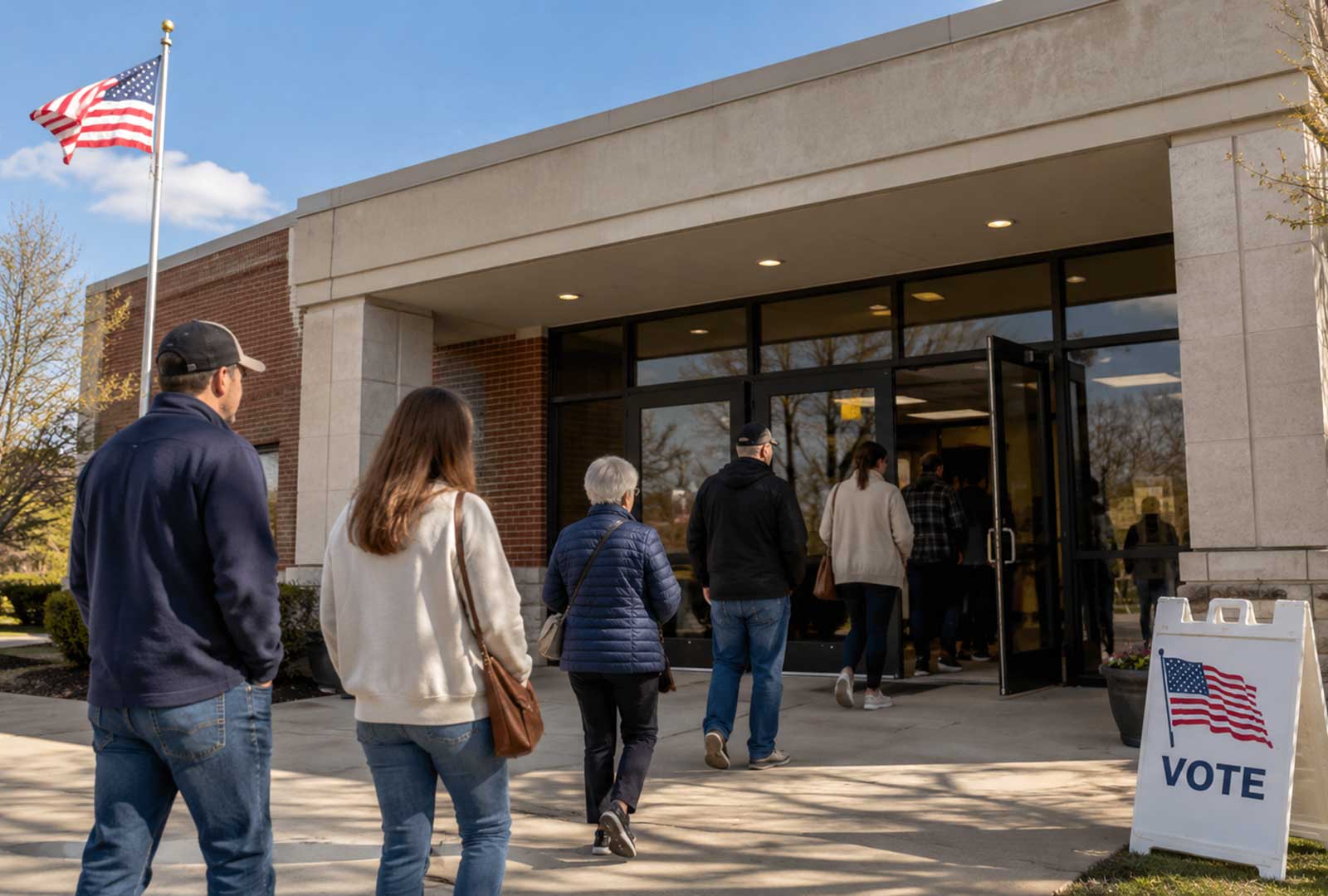
Kentucky voters head to the polls today in a primary election that reaches far beyond routine local races. Competitive contests are exposing deeper tensions over growth, zoning, education, government spending, crime, and the ideological direction of both parties heading into November.
Kentucky Primary Election Puts Local Concerns Front and Center
Today’s ballot includes city council races, county offices, judicial seats, state legislative contests, and several closely watched federal primaries.
Turnout is expected to remain relatively low, likely somewhere in the low-to-mid 20% range statewide for the Kentucky primary election.
That matters because low-turnout primaries usually reward the people most motivated to show up.
Neighborhood groups, organized activists, longtime local networks, and highly engaged voters often carry out an outsized influence in elections like this. In Kentucky right now, those voters are increasingly focused on practical concerns rather than abstract national messaging.
Housing costs. Traffic. Development. Crime. School quality. Infrastructure strain.
The issues shaping local politics across Kentucky are becoming more immediate and more personal.
Kentucky Is Operating in Two Political Worlds
At the federal and statewide level, Republicans still dominate Kentucky politics. Rural counties remain reliably conservative, and the GOP maintains strong structural advantages throughout most of the Commonwealth.
But local politics tells a more complicated story.
Suburban communities around Louisville, Lexington, and especially Northern Kentucky are becoming more divided over how quickly communities should grow, how development should be managed, and how cities balance revitalization with stability.
That split is especially visible in places economically tied to Cincinnati.
Communities like Fort Thomas, Covington, Newport, and parts of Boone County have experienced rising housing prices, redevelopment pressure, and population growth over the last several years.
As those pressures increase, political coalitions become less predictable.
A voter may strongly support Republicans nationally while opposing aggressive local development projects. Another may favor tighter policing while also supporting infrastructure spending or housing expansion.
That fragmentation is becoming one of the defining features of Kentucky politics.
Northern Kentucky Crime Concerns Are Changing Local Conversations
Public safety has also become a growing flashpoint in the revitalization of Northern Kentucky corridors.
In Newport, Trey Isles was shot multiple times near 10th Street and Monmouth Avenue earlier this month after an argument outside a Circle K. Police later issued warrants for three suspects on attempted murder charges.
Then this past weekend in Covington, two separate shootings along Madison Avenue added to growing concerns among residents and business owners.
Early Sunday morning, a security guard was shot outside Hat Trick’s Sports Bar and remains in critical condition. Later that evening, a teenager was shot nearby and hospitalized with non-life-threatening injuries.
For many residents, the concern is not just the violence itself. It is the contradiction.
Northern Kentucky cities have spent years pushing redevelopment, attracting restaurants, apartments, and entertainment investment. But maintaining public order becomes increasingly important as those districts grow.
That tension is now bleeding directly into local political conversations.
Fort Thomas Race Reflects Broader Development Debate
The crowded <a href=”https://thecincinnatiexchange.com/fort-thomas-city-council-election-2026/”>Fort Thomas City Council race</a> may be the clearest local example of those broader pressures.
Fifteen candidates are competing for six at-large seats in today’s nonpartisan primary, driven largely by debates surrounding zoning, density, growth management, and preserving neighborhood character.
That conversation is no longer isolated to Fort Thomas.
Across the Cincinnati metro region, communities are wrestling with the same uncomfortable balancing act: residents want investment and rising property values, but many also fear overdevelopment, worsening traffic, and losing the character that made these areas desirable in the first place.
Federal Republican Races Expose Internal Divisions
Several federal Republican primaries are also highlighting deeper ideological divides inside the GOP.
In the open U.S. Senate race following Mitch McConnell’s retirement, Trump-endorsed Andy Barr faces former Attorney General Daniel Cameron in a closely watched contest.
Meanwhile, Northern Kentucky’s Fourth Congressional District has become the site of one of the most expensive House primaries in Kentucky history. Incumbent Thomas Massie faces Trump-backed challenger Ed Gallrein in a race that has evolved into a broader fight over ideological independence versus party loyalty.
Massie has openly criticized Republican spending levels and deficit growth despite GOP control in Washington, while Gallrein and his allies argue Republicans need tighter alignment with President Trump’s agenda.
That divide mirrors a larger national Republican debate now playing out locally inside Kentucky.
Turnout May Matter More Than Headlines
The biggest takeaway from today’s Kentucky primary may not be any single race.
It may be who actually participates.
Low-turnout elections tend to amplify the voices of motivated voters focused on highly specific local concerns. Right now, many of those concerns revolve around growth, affordability, crime, infrastructure, and preserving community stability during rapid change.
In many ways, Kentucky’s 2026 primary reflects something happening nationally: politics is becoming local again.
And in Northern Kentucky, where Cincinnati’s economic expansion continues pushing across the river, those pressures are likely only beginning.
FAQs
When is the Kentucky primary election in 2026?
Kentucky voters head to the polls for the primary election on May 19, 2026.
Why are local Kentucky races getting more attention?
Local races increasingly shape zoning, development, schools, taxes, and infrastructure decisions that directly affect daily life.
Why is Northern Kentucky politically important?
Northern Kentucky is closely tied to the Cincinnati economy and has experienced rapid growth, housing pressure, and demographic shifts that are reshaping local politics.
Is Kentucky still a Republican state?
Yes. Republicans remain dominant statewide, especially in rural areas, though some suburban and local races are becoming more competitive.
What issues are driving Kentucky local elections?
Growth, housing, zoning, education policy, infrastructure, taxes, and neighborhood preservation are major issues across many Kentucky communities.
This article was created with the support of our proprietary AI-powered newsroom tools and reviewed by our editorial team for accuracy and clarity.