
Share This Article
Article Summary
Federal authorities seized counterfeit designer goods with an estimated retail value of more than $19.26 million at the Port of Cincinnati. The shipment arrived from Colombia and was destined for Puerto Rico before U.S. Customs and Border Protection officers intercepted it. Seized items included counterfeit luxury watches, hats, sunglasses, and eyeglasses. Homeland Security investigators are reviewing the case while the goods move through the federal forfeiture process.
Officers from the U.S. Customs and Border Protection (CBP) seized counterfeit designer goods valued at nearly $20 million at the Port of Cincinnati. This marked one of the region’s largest recent counterfeit luxury product interceptions.
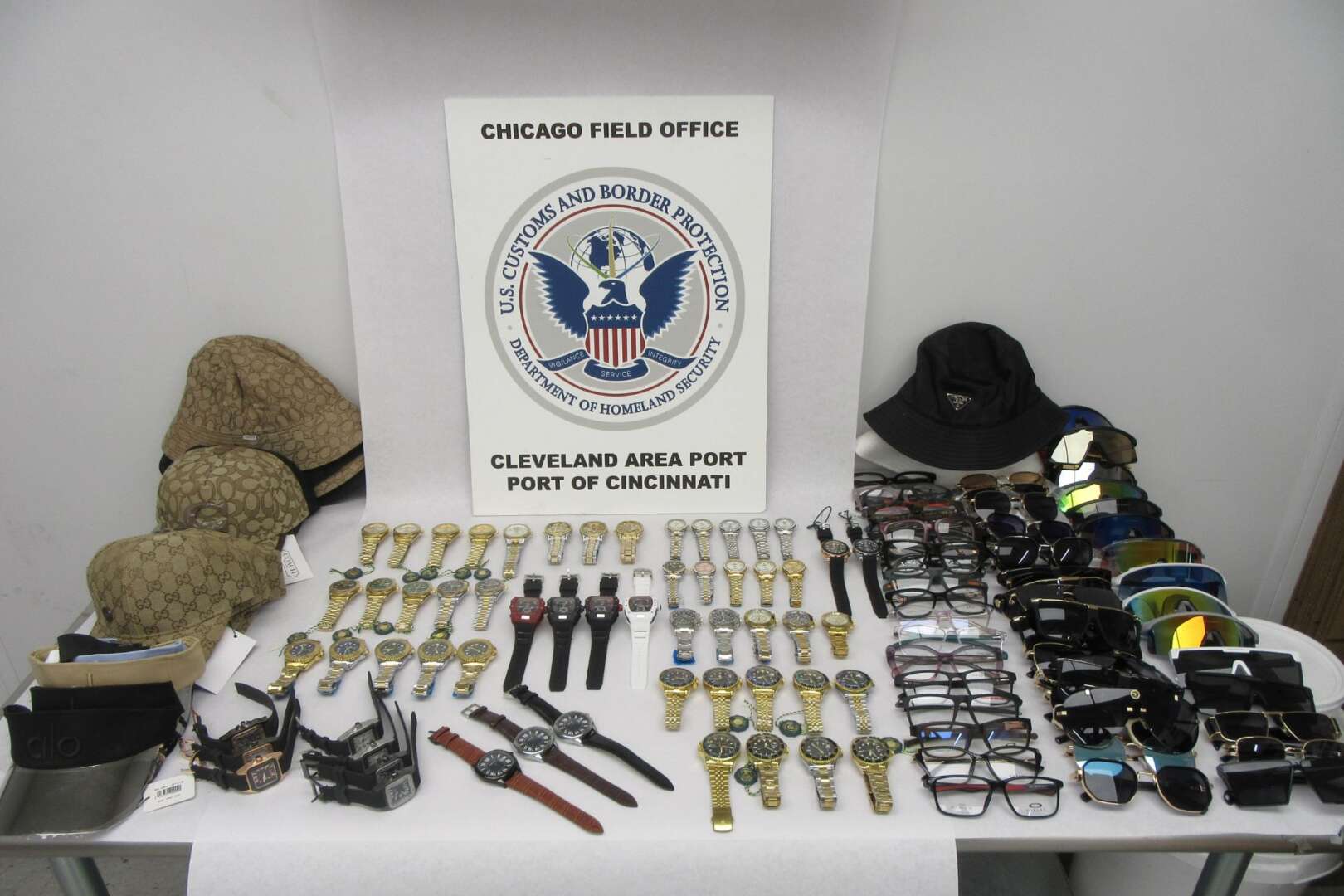
The shipment contained more than 100 fake luxury items, including watches. It also contained hats, sunglasses, and eyeglasses that authorities say were destined for Puerto Rico after arriving from Colombia.
Federal agents seize counterfeit luxury shipment
The US CBP officers intercepted the shipment on June 3 during an inspection at the Port of Cincinnati. According to CBP, the seized products carried an estimated manufacturer’s suggested retail price of more than $19.26 million if they had been authentic.
Officials said the shipment included counterfeit versions of luxury brands that remain highly sought after in secondary markets worldwide. The products were shipped from Colombia and were addressed to a residence in Puerto Rico.
According to CBP officials, the seizure stands out because of the unusually high value attached to the shipment. While agents routinely intercept counterfeit goods entering the United States, shipments approaching $20 million in estimated retail value are far less common.
Eric Zizelman, Port Director for Cincinnati, described the case as significant due to the size and estimated value of the seizure. He noted that authorities regularly encounter counterfeit shipments worth hundreds of thousands of dollars and occasionally more than $1 million. However, the latest seizure far exceeded those levels.
The agency detailed the confiscated items, which included:
- 44 counterfeit Rolex watches
- 4 counterfeit Richard Mille watches
- 10 counterfeit Cartier watches
- 20 hats bearing luxury brand logos
- 62 pairs of designer-branded sunglasses and eyeglasses
According to the U.S. Customs and Border Protection website, counterfeit products continue to represent a major challenge for federal law enforcement agencies and legitimate businesses.
The counterfeit designer goods market remains a global concern
Counterfeit designer goods have become a growing concern for governments, manufacturers, retailers, and consumers worldwide. Federal officials say counterfeit products can divert revenue away from legitimate businesses. In addition, they say these products can expose consumers to potentially inferior or unsafe products.
According to the National Intellectual Property Rights Coordination Center, counterfeit trafficking often involves organized criminal networks that use international shipping systems and online marketplaces to distribute fake merchandise. The center reports that intellectual property theft costs businesses billions of dollars annually and affects industries ranging from luxury goods to electronics and pharmaceuticals.
Multiple news organizations, including Local 12 News and Fox 19, reported on the Cincinnati seizure and highlighted statements from federal authorities regarding the scale of the operation. Both outlets noted that the shipment originated in Colombia and was destined for Puerto Rico before being intercepted by customs officers.
CBP officials emphasized that counterfeit products frequently imitate high-end luxury brands because of strong consumer demand and significant profit margins for traffickers. Moreover, luxury watches, handbags, apparel, and eyewear remain among the most commonly seized counterfeit categories.
The agency also noted that counterfeit shipments increasingly move through international mail facilities and express consignment hubs, making inspections a critical component of enforcement efforts.
Counterfeit designer goods enforcement continues across the region
The counterfeit designer goods seizure underscores the growing role Cincinnati plays in federal import inspections and trade enforcement. The region serves as an important logistics hub because of its extensive air cargo operations and transportation infrastructure.
Federal authorities routinely inspect international shipments entering the United States through Cincinnati-area facilities. Those inspections target counterfeit merchandise, prohibited imports, illegal drugs, and other violations of federal law.
According to CBP, officers work closely with Homeland Security Investigations and other federal agencies to identify suspicious shipments and verify trademarks with rights holders. Brand owners often assist investigators by confirming whether products are authentic or counterfeit.
Following the Cincinnati seizure, officials transferred the goods to investigators with the U.S. Department of Homeland Security. The products will move through the federal forfeiture process unless authorities pursue additional enforcement actions.
Federal agencies generally destroy counterfeit products after forfeiture to prevent them from reentering commercial markets.
Business groups have long supported aggressive enforcement efforts against counterfeit goods. Industry advocates argue that counterfeit products undermine brand investments, reduce tax revenues, and create unfair competition for legitimate businesses.
According to the U.S. Chamber of Commerce’s Global Innovation Policy Center, counterfeiting remains one of the largest forms of intellectual property theft worldwide. The organization has repeatedly called for stronger international cooperation to combat illicit trade networks.
Local economic development leaders have also pointed to the importance of maintaining secure trade channels. This is particularly important as Cincinnati continues to strengthen its role as a logistics and distribution center.
What happens next in the investigation
Authorities have not announced any arrests related to the shipment. Investigators will continue reviewing shipping records and related evidence to determine whether additional enforcement actions are warranted.
Federal agencies typically examine shipment documentation, sourcing information, and distribution networks when investigating large-scale counterfeit operations. Depending on the findings, cases may lead to civil penalties, criminal charges, or asset forfeiture proceedings.
Officials continue to encourage consumers to purchase products through authorized retailers and verified channels. This can help reduce the demand for counterfeit merchandise.
The seizure serves as a reminder of the ongoing challenges federal authorities face in combating counterfeit trade while protecting intellectual property rights and legitimate commerce throughout the United States.
For more information on counterfeit enforcement efforts, visit the U.S. Customs and Border Protection website and the National Intellectual Property Rights Coordination Center.
FAQs
What counterfeit items were seized in Cincinnati?
Federal authorities confiscated more than 100 counterfeit luxury products. The shipment included fake Rolex, Richard Mille, and Cartier watches, along with designer-branded hats, sunglasses, and eyeglasses.
Where did the shipment originate and where was it headed?
According to U.S. Customs and Border Protection, the shipment originated in Colombia. It was addressed to a residence in Puerto Rico when officers intercepted it at the Port of Cincinnati.
Why was the seizure considered significant?
CBP officials estimated the counterfeit products would have been worth more than $19.26 million if genuine. Authorities said seizures of this size and value are uncommon compared with typical counterfeit cases.
What happens to the seized counterfeit goods?
The products have been transferred to investigators with the U.S. Department of Homeland Security. If no additional enforcement action occurs, the goods will proceed through the federal forfeiture process and are expected to be destroyed.