
Share This Article
Article Summary
Major logistics companies like Amazon, Kroger, and DHL are investing heavily in warehouse automation across the Cincinnati and Northern Kentucky region. This technological shift is transforming the local job market by reducing manual labor roles and increasing the demand for skilled robotics technicians, maintenance mechanics, and system managers. In response, local community colleges and state programs have introduced specialized training courses to equip workers for these technical, higher-paying positions within modern distribution centers.
The rise of warehouse automation is rapidly changing the skill requirements for logistics workers in the Cincinnati region.
Local employers are shifting their focus to tech-driven roles as warehouse automation becomes an industry standard.
Logistics and supply chain companies across the Tri-State area are investing heavily in new technology. This shift means that traditional manual labor roles are evolving at a rapid pace. According to industry experts, warehouse automation is pushing companies to hire more technicians, robotics specialists, and systems managers. Cincinnati remains a major hub for national distribution, making these changes highly visible in the local economy. A previous analysis by The Cincinnati Exchange on supply chain resilience showed that workers must now adapt to a landscape where robots and software handle heavy lifting and daily sortation.
Major players like Kroger, Amazon, and DHL are leading this operational shift in the Midwest. These companies have poured millions of dollars into high-tech facilities across Ohio and Northern Kentucky. For example, DHL recently expanded its use of autonomous mobile robots at its massive Cincinnati/Northern Kentucky International Airport (CVG) hub. Meanwhile, Kroger has tested automated customer fulfillment centers to streamline grocery delivery throughout the region. As these retail and shipping giants adopt modern systems, the regional workforce must pivot to maintain its competitive edge.
The direct impact of warehouse automation on employment
Many local residents worry that robots will completely replace human workers on the warehouse floor. However, recent data suggests a much more complex and promising reality for employment. While machines handle repetitive and physically demanding tasks, companies desperately need skilled employees. They require trained professionals to maintain, program, and monitor these advanced robotic systems. Job postings for maintenance mechanics, sortation tech leads, and robot operators have surged in the Cincinnati area. Overall employment numbers remain steady, but the nature of the daily work is noticeably different.
To keep up with these logistics tech trends, local community colleges are updating their training programs. Cincinnati State and Gateway Community and Technical College now offer specialized courses in advanced manufacturing and robotics. These educational programs aim to bridge the skills gap created by rapid technological adoption. Students learn how to troubleshoot complex machinery and manage automated control systems. By earning these credentials, local workers can secure higher-paying positions in modern logistics facilities.
How local companies integrate warehouse automation
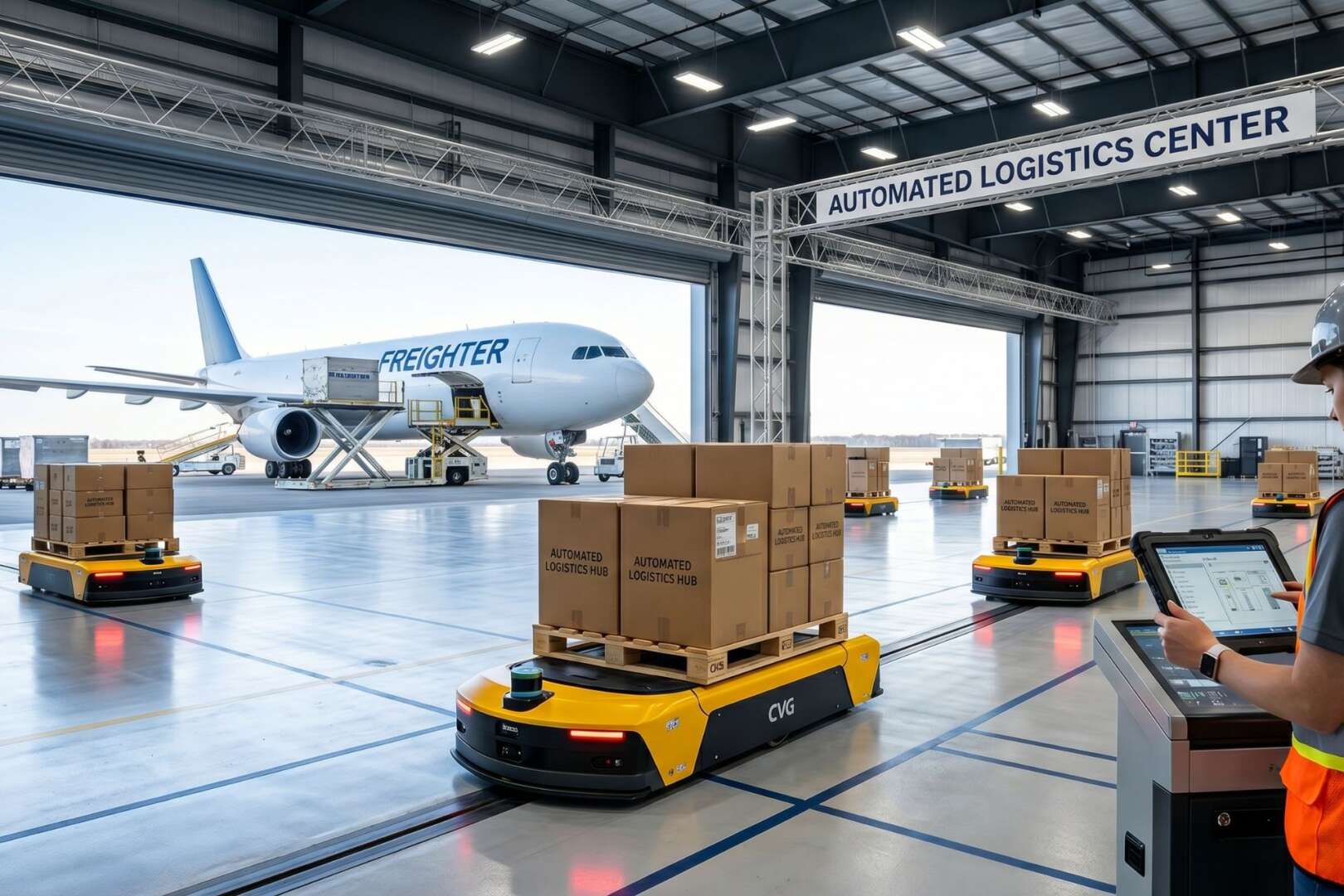
The transition to a tech-forward supply chain involves significant capital investment and strategic planning. Companies increasingly use warehouse automation to maximize their available facility space. In these modern setups, robotic arms perform high-speed picking, packing, and sorting with extreme precision. DHL operations rely heavily on autonomous guided vehicles to move heavy pallets across massive floors.
These physical tools provide several crucial advantages for distribution centers:
- They reduce physical strain and workplace injuries for human employees.
- They dramatically increase overall order processing speed and daily efficiency.
- They allow facilities to operate smoothly during peak holiday shipping seasons.
- They help companies optimize floor plans by stacking inventory vertically.
Kroger’s partnership with Ocado highlights both the ambitions and the challenges of this new technology. The Cincinnati-based grocery giant opened an automated fulfillment center in Monroe, Ohio, in 2021. Thousands of robots scurry across a massive grid to retrieve grocery items for rapid delivery. However, Kroger recently slowed its expansion of these facilities to assess their financial performance. This strategic pause shows that integrating cutting-edge technology requires careful calibration to achieve long-term profitability. According to Grocery Dive, Kroger continues to evaluate its digital profitability strategy as it navigates this shift.
Amazon Air Hub accelerates the shift toward robotics
The massive Amazon Air Hub at CVG represents a multibillion-dollar investment in the region’s logistics infrastructure. Since opening in 2021, the facility relies heavily on robotics to sort millions of packages weekly. Advanced robotic arms and miles of automated conveyor belts form the backbone of this bustling hub. By automating the sorting process, Amazon can load cargo planes faster and meet strict delivery deadlines. This facility alone has created thousands of jobs that require varying levels of technical expertise.
Workers at the Amazon facility frequently interact with robotic systems designed to optimize their workflows. Instead of manually scanning each individual barcode, employees monitor automated scan tunnels that process items instantly. This technology reduces the mental and physical fatigue associated with repetitive warehouse tasks. It also requires a dedicated team of IT professionals and technicians to keep the network running smoothly. As Amazon continues to upgrade its equipment, the demand for specialized tech workers will only increase.
Preparing Cincinnati workers for robotics jobs in Ohio
As the logistics sector modernizes, career paths within distribution centers are becoming much more technical. Employees who previously moved heavy boxes by hand are now cross-training to oversee complex fleet software. Local workforce boards are actively promoting these robotics jobs in Ohio to younger generations entering the labor pool. They emphasize that modern logistics careers involve clean, high-tech environments rather than grueling physical labor. This intentional rebranding is crucial for attracting fresh, tech-savvy talent to the supply chain industry.
A recent report by The Cincinnati Exchange regarding regional job growth detailed how local manufacturing wages are rising alongside tech adoption. Workers with specialized robotics training consistently command premium hourly rates and superior benefits. Companies are highly willing to pay top dollar to minimize equipment downtime and maintain peak throughput. Consequently, workers who eagerly embrace continuous upskilling will find robust opportunities in the evolving job market.
The broader automation impact on employment
The conversation around the automation impact on employment often misses the human element. Automation does eliminate certain low-skill positions, but it simultaneously creates roles that demand critical thinking. Local businesses frequently partner with tech firms to design custom robots for specific operational needs. This collaborative approach fosters a growing ecosystem of software developers and mechanical engineers right here in Cincinnati. By retaining these skilled professionals, the city boosts its overall economic resilience and tax base.
State government initiatives are also supporting this critical workforce transition. Programs outlined by Ohio’s Office of Workforce Transformation encourage employers to invest in comprehensive employee training programs. By lowering the financial barrier to education, Ohio ensures its citizens remain globally competitive. As these programs mature, Cincinnati will likely see an influx of tech-centric startups aiming to service this warehouse automation infrastructure.
The future of warehouse automation in the Tri-State
The integration of artificial intelligence will further accelerate these logistics tech trends in the coming years. AI-driven software can predict maintenance needs before a machine actually breaks down on the floor. This predictive capability ensures that fulfillment centers run around the clock without unexpected and costly interruptions. Future facilities will likely feature an even closer, more seamless collaboration between human workers and intelligent machines. Cincinnati is perfectly positioned to serve as a testing ground for these next-generation systems.
Ultimately, the local economy stands to significantly benefit from this ongoing technological evolution. By embracing these advancements, Cincinnati reinforces its status as a premier logistics hub in the Midwest. E-commerce companies will continue to relocate to the region to take advantage of its strategic location and modern infrastructure. As long as the workforce receives adequate training, the transition to automated systems will drive sustainable economic growth. According to industry leaders, the key to success lies in viewing robots as valuable tools rather than employment threats.
FAQs
Which major companies are driving warehouse automation in Cincinnati?
Kroger, Amazon, and DHL are the primary corporations expanding automated logistics facilities in the region. They have invested heavily in local infrastructure, including the Amazon Air Hub at CVG and Kroger’s robotic fulfillment center in Monroe, Ohio.
How is robotics technology affecting local warehouse employment?
While automation handles repetitive and physically demanding tasks, overall employment numbers remain steady due to new technical requirements. Companies are actively hiring professionals to maintain, program, and monitor the advanced robotic systems and fleet software.
What training is available for workers transitioning to these technical roles?
Institutions like Cincinnati State and Gateway Community and Technical College now offer specialized programs in advanced manufacturing and robotics. These courses teach students how to troubleshoot complex machinery and manage automated control systems to bridge the skills gap.
What are the operational benefits of using automated systems?
Automated tools dramatically increase order processing speeds, daily efficiency, and the ability to handle peak shipping seasons. They also optimize facility floor plans through vertical inventory stacking while reducing workplace injuries for human employees.