



Share This Article
Article Summary
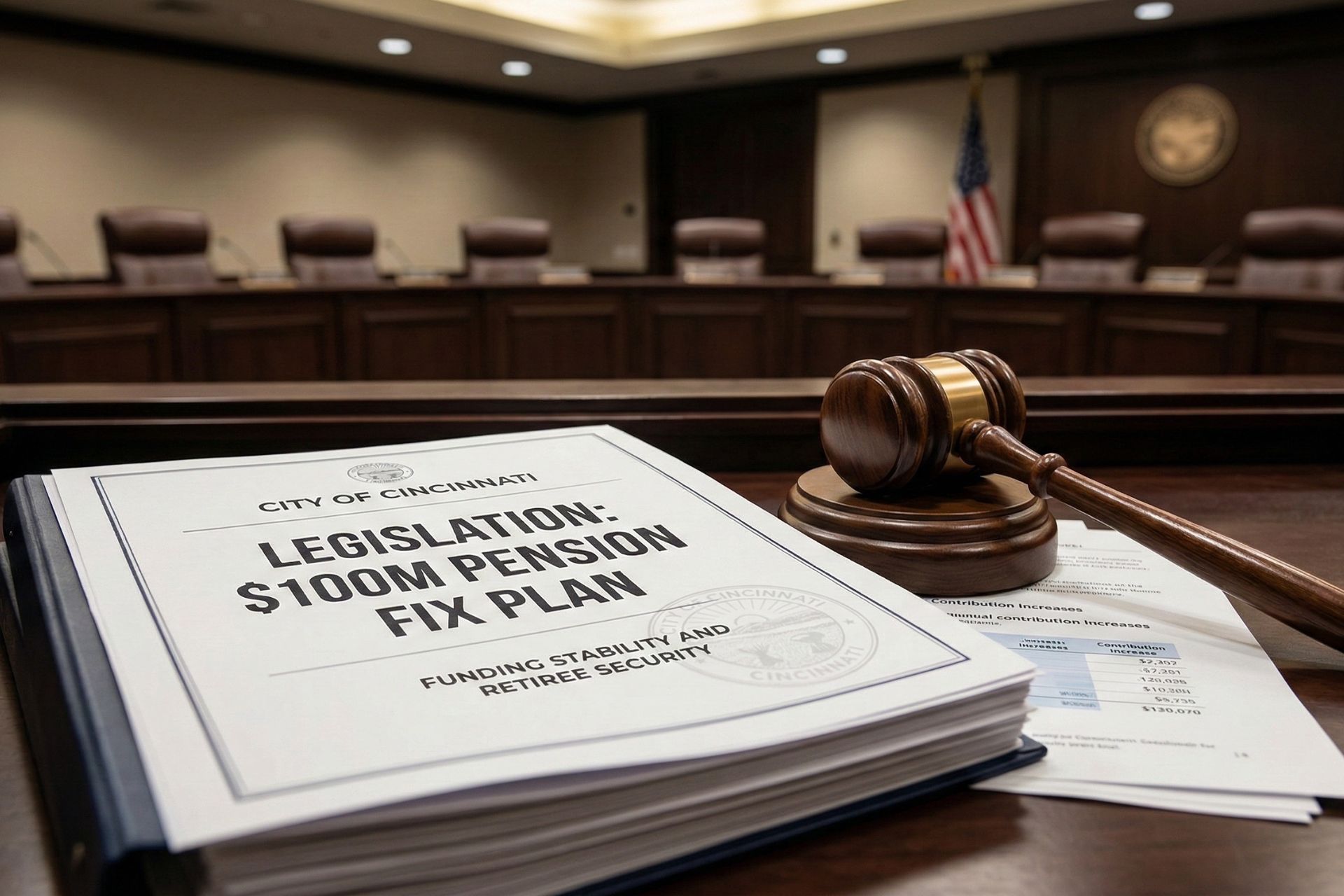
Cincinnati City Council advanced a $100M pension fix plan designed to strengthen the city’s long-troubled retirement system. The proposal includes a one-time $50 million contribution, additional payments over 20 years, and increased employer and employee contributions. Backed unanimously by the council, the plan now heads to a federal judge for approval and aims to improve funding levels and fiscal stability. The move responds to years of underfunding and continues efforts to protect retirees and taxpayers.
Cincinnati City Council moved forward this week with a $100M pension fix proposal. City leaders say the plan will bolster financial stability for the Cincinnati Retirement System.
Council members voted unanimously to advance legislation formalizing the plan after months of negotiation with employee representatives. Municipal officials also took part in the discussions.
The move signals renewed urgency to address decades of pension underfunding. Officials describe this as one of the city’s biggest fiscal challenges.
City officials note that the $100M pension fix proposal builds on earlier reforms and reflects broad political consensus. The consensus is on shoring up retirement security for thousands of workers and retirees. Proponents argue that without additional funding and structural changes, the pension’s underfunded status could jeopardize future benefits. Moreover, it could strain city finances.
What the pension plan includes
Council’s pension fix package combines immediate cash injections with long-term commitments and contribution rate adjustments:
- A one-time contribution of $50 million into the pension trust for an immediate boost.
- Another $50 million spread over 20 years, initially through smaller annual payments that will increase over time.
- Higher baseline employer contributions raise the annual minimum payment toward full funding.
- Incremental increase in employee contributions from 9% to 10% of payroll over four years.
City Manager Sheryl Long emphasized that no changes to benefit formulas, retirement age, or cost-of-living adjustments are part of the plan, a reassurance to current employees and retirees.
Historical pension challenges
More than a decade after a federally mediated settlement was meant to stabilize the pension system, the fund remains significantly underfunded, officials said. According to local reporting, the Cincinnati Retirement System is roughly 68% funded, leaving an unfunded liability nearing $850 million.
Former Cincinnati Mayor John Cranley previously described past pension shortfalls as “existential,” highlighting the ongoing nature of the issue. Current leaders say the latest plan responds to slow market returns and demographic shifts. Additionally, it addresses the city’s commitment to honoring retiree promises.
Council reaction and next steps
Council members praised the bipartisan nature of the pension fix and framed it as a responsible step for long-term fiscal health. The legislation passed 8-0, with council leaders noting they had engaged with both municipal staff and union representatives to ensure broad support.
The next procedural step is a fairness hearing before a federal judge overseeing the pension settlement. If approved, executives say the reforms and funding schedule would take effect on July 1. This aligns with the city’s fiscal year.
Impact on city services and finances
The pension’s unfunded liability has long influenced Cincinnati’s broader budget. It limits how much the city can allocate to public services like police, fire, and infrastructure without jeopardizing fiscal balance. Local experts and financial analysts have linked underfunded pensions with weaker credit ratings. Moreover, there are higher borrowing costs for municipalities.
City leaders argue that the $100M pension fix plan strikes a balance between addressing urgent funding gaps and maintaining the city’s operational budget. They note that, by restructuring some long-term obligations and leveraging targeted one-time resources, Cincinnati can protect retirees. At the same time, the city remains financially prudent.
Broader civic reaction
Community response has been mixed. Retiree groups generally welcomed assurances that benefits would remain intact. However, some taxpayer advocates urged caution, stressing the importance of fiscal oversight and transparency. Federal consent decree requirements continue to shape how changes are implemented. Oversight mechanisms ensure adherence to negotiated terms.
Local business leaders have pointed to the plan as a model of measured pension reform. This is especially true in comparison to other cities that have faced more severe pension crises. They argue that early intervention now could prevent deeper fiscal strain down the road. In addition, it reduces the likelihood of cuts to services or dramatic tax increases.
What comes next for Cincinnati’s pension status
If ultimately approved by the federal court, the new pension terms would take effect later this year. This could potentially steer the Cincinnati Retirement System toward a healthier funded status by the late 2040s. Officials stress that continued monitoring, actuarial reviews, and periodic adjustments will be necessary. These steps help ensure long-term sustainability.
As Cincinnati advances this significant $100M pension fix, the question now shifts from planning to implementation and oversight. This process will test the city’s fiscal management and commitment to securing both worker retirement and community financial health.
FAQs
What is the $100M pension fix approved by City Council?
The $100M pension fix is a funding plan designed to strengthen Cincinnati’s underfunded retirement system. It includes a $50 million upfront payment, long-term contributions over 20 years, and increased employer and employee payments to improve stability.
Why does Cincinnati need a pension fix?
The Cincinnati Retirement System is reportedly about 68% funded, leaving a significant unfunded liability. Without corrective action, officials warn the gap could grow and strain the city’s long-term finances.
Will the $100M pension fix change retirement benefits?
City officials have said the plan does not alter current benefit formulas, retirement ages, or cost-of-living adjustments. Instead, it focuses on strengthening funding levels to ensure promised benefits remain secure.
How will the pension fix affect city employees?
Employees will see their pension contribution rate gradually increase from 9% to 10% over four years. City leaders say the increase helps distribute responsibility while maintaining benefit protections.
What happens next after the Council’s vote?
The plan must receive approval from a federal judge overseeing the pension settlement. If approved, the new funding structure would take effect at the start of the city’s next fiscal year.


