
Share This Article
Article Summary
Cincinnati’s new immigration policy restricting cooperation with federal agencies is causing a political stir. The Cincinnati immigration policy, approved unanimously by City Council, limits use of city property, surveillance data, and manpower for federal immigration enforcement when there’s no judicial warrant. Supporters argue it protects immigrant residents; critics, including Ohio Sen. Bernie Moreno say it could harm federal partnerships. The debate highlights broader tensions over immigration enforcement and local autonomy.
The Cincinnati immigration policy has quickly become a flashpoint in local and state politics.
The immigration policy passed this week aims to limit how federal agencies use city resources for civil immigration enforcement.
City Council’s recent vote places Cincinnati at the center of an ongoing debate about local control and immigration enforcement.
Council action on Cincinnati immigration policy
City Council on Feb. 26 passed three motions that significantly curtail the use of city assets in federal immigration operations.
The measures take aim at how federal agencies, including U.S. Immigration and Customs Enforcement (ICE), access and use municipal resources.
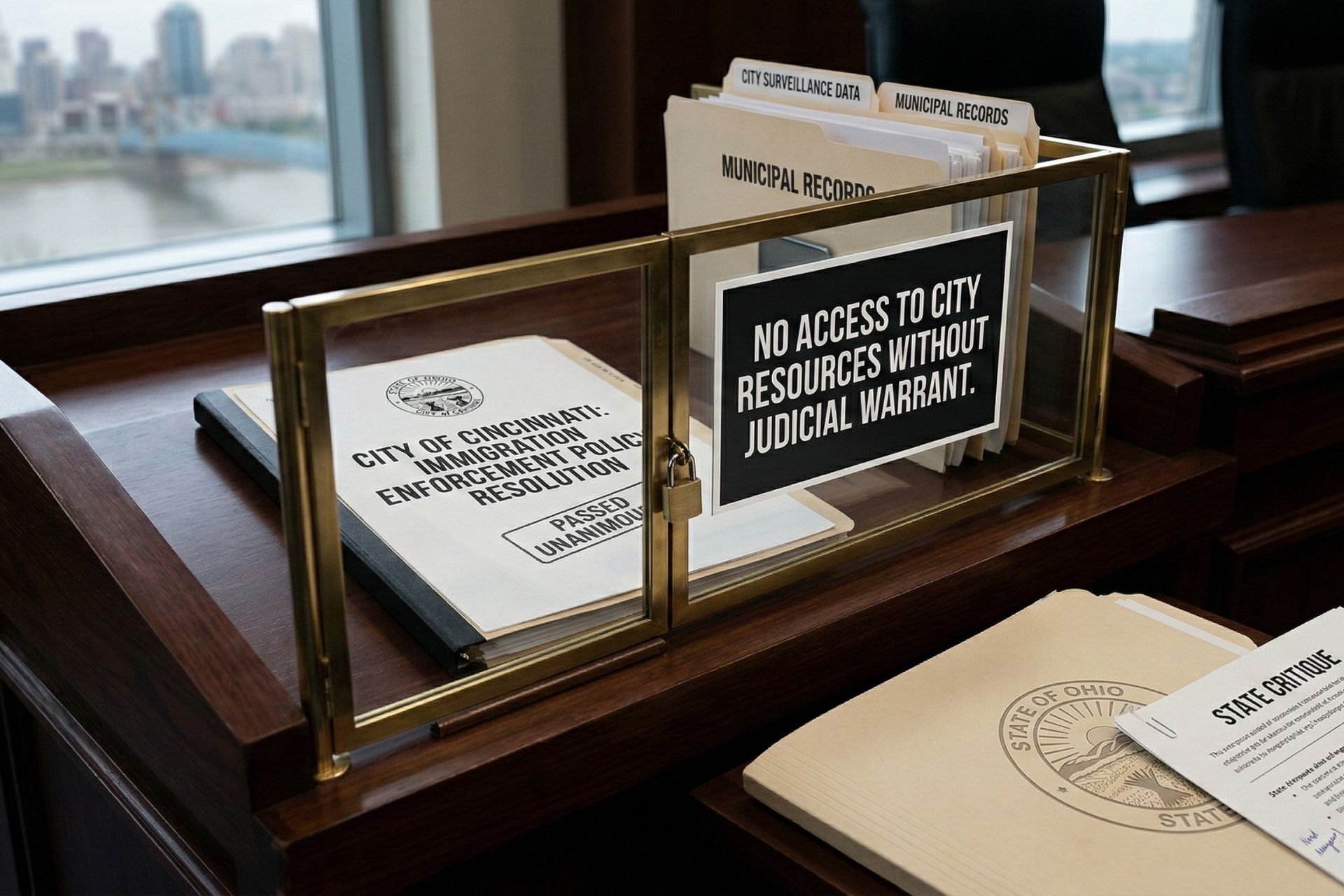
Under the new rules, all federal immigration agencies will be barred from using city-owned property for staging or enforcement unless a judicial warrant is presented.
The city will also restrict access to surveillance data from cameras, drones and other technologies for immigration enforcement without an authorized legal process.
Additionally, the motions require an audit of city programs to remove any collection of citizenship or naturalization status in municipal records.
Vice Mayor Jan-Michele Lemon Kearney said the policy is aimed at protecting all Cincinnati residents, especially immigrants.
“We have to show that we support all of our residents and we will not allow what happened in Minneapolis to happen here,” she said, referencing recent controversies surrounding federal enforcement actions in that city.
Council Member Scotty Johnson was the lone vote expressing reservations about parts of the motions.
“We have to be careful that whatever we pass here today does not jeopardize those MOUs and the major investigations that are going on in this city that keep our citizens very safe every day,” Johnson said.
State lawmaker calls policy detrimental
The Cincinnati immigration policy drew sharp criticism from Ohio Sen. Bernie Moreno (R).
Moreno said the policy could strain the city’s relationship with federal agencies and undermine future cooperation.
“When the city of Cincinnati comes looking to the federal government for help, this is very, very detrimental to the relationship,” the senator said.
Moreno declined to say whether the changes could lead to reduced federal aid but warned they risk harming the city’s ability to secure essential partnerships.
State lawmakers in Ohio have been considering several immigration-related bills, including proposals that would require local law enforcement to report and hold individuals for federal immigration authorities.
Those proposals have faced legal questions about federal preemption and the limits of state authority.
Mixed reactions from community leaders
Reactions among civic leaders, activists, and law enforcement leaders are mixed.
Some community advocates welcome the policy as a step toward protecting immigrant residents from federal enforcement actions they view as heavy-handed.
Local advocacy groups similarly urged council members last year to move beyond symbolic support and enact concrete protections.
But law enforcement officials, including some in the Cincinnati Police Department, have expressed concern that limiting data and resource sharing could disrupt joint investigations involving federal partners.
Hamilton County’s police unions have raised alarm about the potential for reduced cooperation with agencies like the FBI, ATF, and DEA — partnerships they say are vital to public safety.
What the policy does and doesn’t do
The Cincinnati immigration policy does not outlaw federal immigration enforcement in the city — federal authorities retain full authority to operate in Cincinnati with or without local support.
Instead, the policy focuses on municipal neutrality in civil immigration operations that do not involve criminal activity or judicial orders.
City officials emphasized their actions do not prevent federal agents from carrying out their duties, but restrict the use of taxpayer resources to assist them.
Mayor Aftab Pureval’s office did not immediately respond to requests for further comment. Council members signaled that this likely won’t be the last immigration-related policy the city explores.
Broader implications for Cincinnati
The Cincinnati immigration policy highlights growing debates across the U.S. over how local governments respond to federal immigration enforcement.
Several major cities and counties have enacted “sanctuary” policies to varying degrees, prompting legal challenges and political backlash.
Cincinnati first adopted a symbolic sanctuary city resolution in 2017, but the new measures mark the first formal ordinances restricting cooperation with federal immigration efforts.
As the policy takes effect in 30 days, the city may face political, legal, and enforcement tests ahead.
Council members said they will monitor impacts and possibly pursue further changes.
FAQs
What is the Cincinnati immigration policy?
The Cincinnati immigration policy limits how federal agencies, including ICE, can use city resources for civil immigration enforcement. It restricts access to city-owned property, surveillance data, and manpower unless there is a judicial warrant. The policy is meant to protect immigrant residents while maintaining public safety.
Does the policy make Cincinnati a sanctuary city?
No, the policy does not make Cincinnati a formal sanctuary city. Federal immigration authorities retain full enforcement authority. The city’s measures focus on limiting the use of local resources to assist civil immigration operations.
Who supports and opposes the policy?
Supporters include local advocacy groups and immigrant rights organizations, who say it protects residents from aggressive federal enforcement. Opponents include some city council members, law enforcement officials, and Ohio Sen. Bernie Moreno, who warn it could disrupt federal partnerships and investigations.
How could the policy affect law enforcement cooperation?
The policy could limit collaboration on joint investigations with federal agencies such as the FBI, ATF, and DEA. Council members emphasize that the measures do not prevent federal enforcement but restrict the use of city resources. Some police unions have expressed concern about possible impacts on public safety.
When will the policy take effect, and what happens next?
The Cincinnati immigration policy is scheduled to take effect in 30 days. Council members plan to monitor its impact and may make adjustments if necessary. The policy represents the first formal ordinance restricting local cooperation with federal immigration enforcement.