
Share This Article
Article Summary
Cincinnati officials are making another attempt to eliminate about $850 million in pension debt tied to the city’s retirement system. The renewed effort aims to stabilize the underfunded pension fund and improve the city’s long-term financial outlook. City leaders believe resolving the debt could protect benefits for retirees while improving budget flexibility. However, the strategy may involve financial risks and will require careful oversight and long-term commitment. If successful, the plan could significantly reduce one of Cincinnati’s largest financial liabilities and strengthen fiscal stability.
Cincinnati pension debt remains a major financial challenge as city leaders attempt another plan to eliminate roughly $850 million in retirement liabilities.
Cincinnati officials are taking another step toward addressing a long-standing financial burden tied to the city’s retirement system.
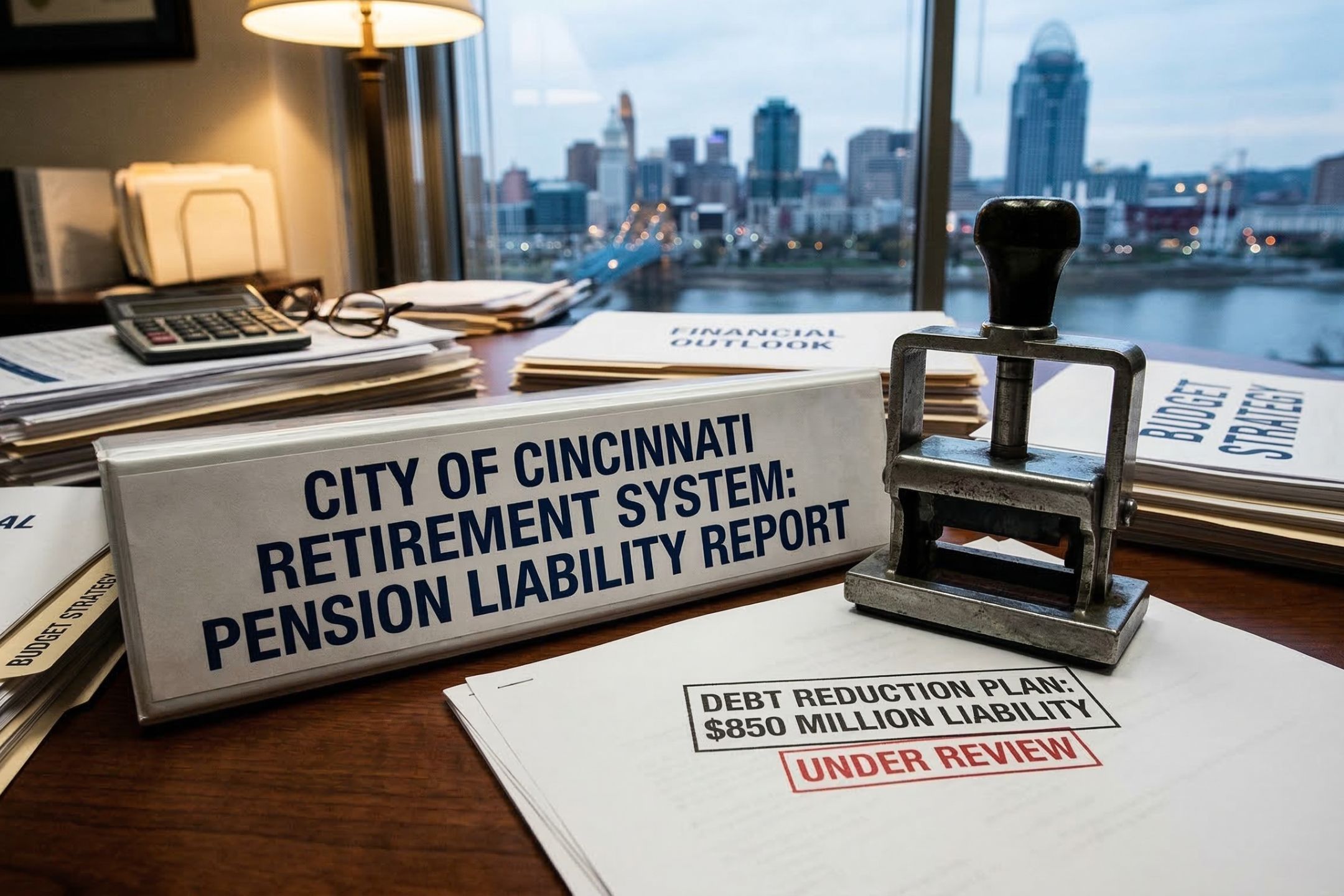
The new proposal focuses on eliminating about $850 million in pension liabilities that have weighed on the city’s finances for years. Local leaders say resolving the issue could improve Cincinnati’s financial outlook and protect benefits promised to city employees and retirees.
The renewed effort comes after a previous attempt more than a decade ago failed to fully erase the pension deficit. Officials now hope a revised approach will bring the city closer to eliminating the debt while stabilizing its retirement fund.
The issue has become one of the most significant fiscal challenges facing Cincinnati in recent years.
Cincinnati pension debt drives new financial strategy
City leaders say the new plan aims to eliminate the Cincinnati pension debt through financial restructuring and long-term funding changes. According to reporting by Local 12, the city is once again attempting to wipe out approximately $850 million in pension liabilities tied to its employee retirement system.
The Cincinnati Retirement System has struggled with funding gaps for years. Unlike most cities in Ohio, Cincinnati operates its own independent pension plan rather than participating fully in statewide systems. That structure has contributed to funding challenges and large unfunded liabilities.
Financial analysts have long warned that pension obligations could affect Cincinnati’s budget flexibility. According to documents from the City of Cincinnati Retirement System, the city’s net pension liability exceeded $900 million in recent financial assessments, highlighting the scale of the challenge.
City officials say eliminating the Cincinnati pension debt could improve fiscal stability and free up resources for other priorities.
Key goals of the proposed strategy include:
- Reducing long-term pension liabilities
- Stabilizing retirement benefits for city workers
- Protecting the city’s credit outlook
- Improving budget flexibility for future projects
Officials say addressing the debt now could prevent larger financial challenges in the future.
Why Cincinnati pension debt has persisted for years
The Cincinnati pension debt did not develop overnight. It grew gradually due to a combination of factors, including investment performance, funding policies, and demographic changes within the workforce.
Pension systems depend on consistent contributions and investment returns to remain healthy. When those elements fall short, liabilities grow over time.
Several factors contributed to the city’s pension deficit:
- Rising retirement costs as employees live longer
- Lower-than-expected investment returns in certain years
- Past decisions to underfund pension contributions
- A shrinking workforce is contributing to the system
Financial experts say these pressures are common among municipal pension systems across the United States. However, Cincinnati’s situation is unique because the city maintains its own single-employer retirement system.
According to information from the City of Cincinnati Retirement System, the plan has historically funded only about half of the actuarially recommended annual contributions.
That gap allowed liabilities to grow over time, eventually reaching hundreds of millions of dollars.
Earlier attempts to solve Cincinnati pension debt
This is not the first time Cincinnati leaders have tried to eliminate the Cincinnati pension debt.
More than a decade ago, city officials approved a plan intended to close the funding gap. However, the strategy ultimately failed to deliver the expected results, leaving the city with significant liabilities.
According to Local 12, the current proposal represents a second attempt to address the problem with a revised financial strategy.
Earlier solutions faced several obstacles:
- Economic downturns affect investment returns
- Political disagreements over funding methods
- Concerns about financial risk
- Changes in pension assumptions over time
City leaders say the new plan attempts to address those challenges while protecting taxpayers and city employees.
Residents interested in learning more about the city’s retirement system can review financial reports through the City of Cincinnati Retirement System website.
Potential benefits of resolving Cincinnati pension debt
If successful, the new strategy could provide several benefits for Cincinnati’s finances.
Supporters say eliminating the Cincinnati pension debt would strengthen the city’s long-term fiscal outlook and make future budgets easier to manage.
Potential advantages include:
- Improved credit ratings and investor confidence
- Lower long-term pension costs
- More predictable city budgets
- Greater financial flexibility for public services
Municipal finance experts say large pension liabilities can limit a city’s ability to invest in infrastructure, public safety, and community programs.
Reducing the pension deficit could help Cincinnati redirect resources toward priorities such as transportation improvements, housing development, and economic growth.
Readers can also explore how other financial issues affect the region in our coverage of Greater Cincinnati budget pressures and local economic policy debates.
Risks and concerns about the new pension strategy
Despite the potential benefits, some experts warn that resolving the Cincinnati pension debt could involve financial risks.
Large pension restructuring plans often depend on investment performance and long-term economic conditions. If assumptions about returns or revenue fail to materialize, the city could face additional fiscal pressure.
Critics also warn that large financial strategies may expose taxpayers to potential losses if projections prove overly optimistic.
Still, supporters argue that taking action now is better than allowing the pension deficit to grow.
Municipal finance specialists say many American cities face similar challenges. Addressing pension liabilities has become a priority for governments seeking long-term financial stability.
What happens next for Cincinnati’s pension debt
The future of the Cincinnati pension debt plan will depend on approval from city leaders and continued financial analysis.
Officials will review potential funding structures, investment strategies, and budget impacts before moving forward with the proposal.
Key steps likely include:
- Detailed financial modeling
- City council review and approval
- Implementation of funding strategies
- Ongoing monitoring of pension performance
If the effort succeeds, Cincinnati could significantly reduce one of its largest financial liabilities.
However, experts caution that solving pension deficits often requires long-term commitment and careful oversight.
For Cincinnati residents, the outcome could shape the city’s financial stability for decades.
FAQs
What is Cincinnati’s pension debt?
Cincinnati’s pension debt refers to the city’s unfunded liability in its employee retirement system. This gap represents the difference between the pension benefits promised to workers and the funds currently available to pay them. The debt has grown over time due to funding shortfalls and investment challenges.
How much pension debt is the city trying to eliminate?
City officials are working to eliminate about $850 million in pension liabilities. This amount represents a significant financial obligation for the city government. Reducing the debt could improve Cincinnati’s long-term fiscal stability.
Why is Cincinnati addressing the pension debt again?
Cincinnati previously attempted to solve the pension deficit more than a decade ago. That earlier effort did not fully eliminate the funding gap. The city is now pursuing a revised strategy to address the remaining liability.
What benefits could come from eliminating the pension debt?
Resolving the pension deficit could strengthen Cincinnati’s financial position. It may also improve budget flexibility and increase investor confidence in the city’s finances. Additionally, it helps ensure retirement benefits remain secure for city employees and retirees.
Are there risks involved in the new pension strategy?
Yes, financial restructuring plans often carry some risk. Market conditions, investment returns, and economic changes could affect the outcome. City leaders will need careful planning and oversight to ensure the strategy succeeds.