
Share This Article
Article Summary
Cincinnati Jewish leaders are increasing security vigilance after an attack at Temple Israel raised national safety concerns. The incident prompted renewed discussions about protecting houses of worship and strengthening security coordination with law enforcement. Jewish institutions in Cincinnati are reviewing safety protocols, including surveillance systems, trained security personnel, and emergency preparedness plans. Community leaders emphasize vigilance while maintaining open and welcoming spaces for worship. The incident has also renewed calls for interfaith solidarity and stronger protections for religious institutions across the United States.
Cincinnati Jewish security leaders are increasing vigilance after a violent attack at a Michigan synagogue raised concerns about safety at Jewish institutions nationwide.
The attack occurred on March 12 when a man drove a vehicle into Temple Israel, one of the largest Reform synagogues in the United States.
Authorities say the suspect crashed a vehicle into the building before being confronted by armed security personnel.
According to reporting by the Associated Press, the suspect died at the scene after a confrontation with security guards. One guard was injured when the vehicle struck him, but he is expected to recover.
Investigators say around 140 children and staff were inside the synagogue’s early childhood center at the time of the attack, though no civilians were seriously injured. The Federal Bureau of Investigation is investigating the incident as a targeted act of violence against the Jewish community.
The event triggered heightened awareness among Jewish organizations across the country, including those in Cincinnati.
Cincinnati Jewish security response after Michigan attack
Jewish leaders in the Cincinnati area say the Michigan attack serves as a reminder that strong security planning remains essential for religious institutions.
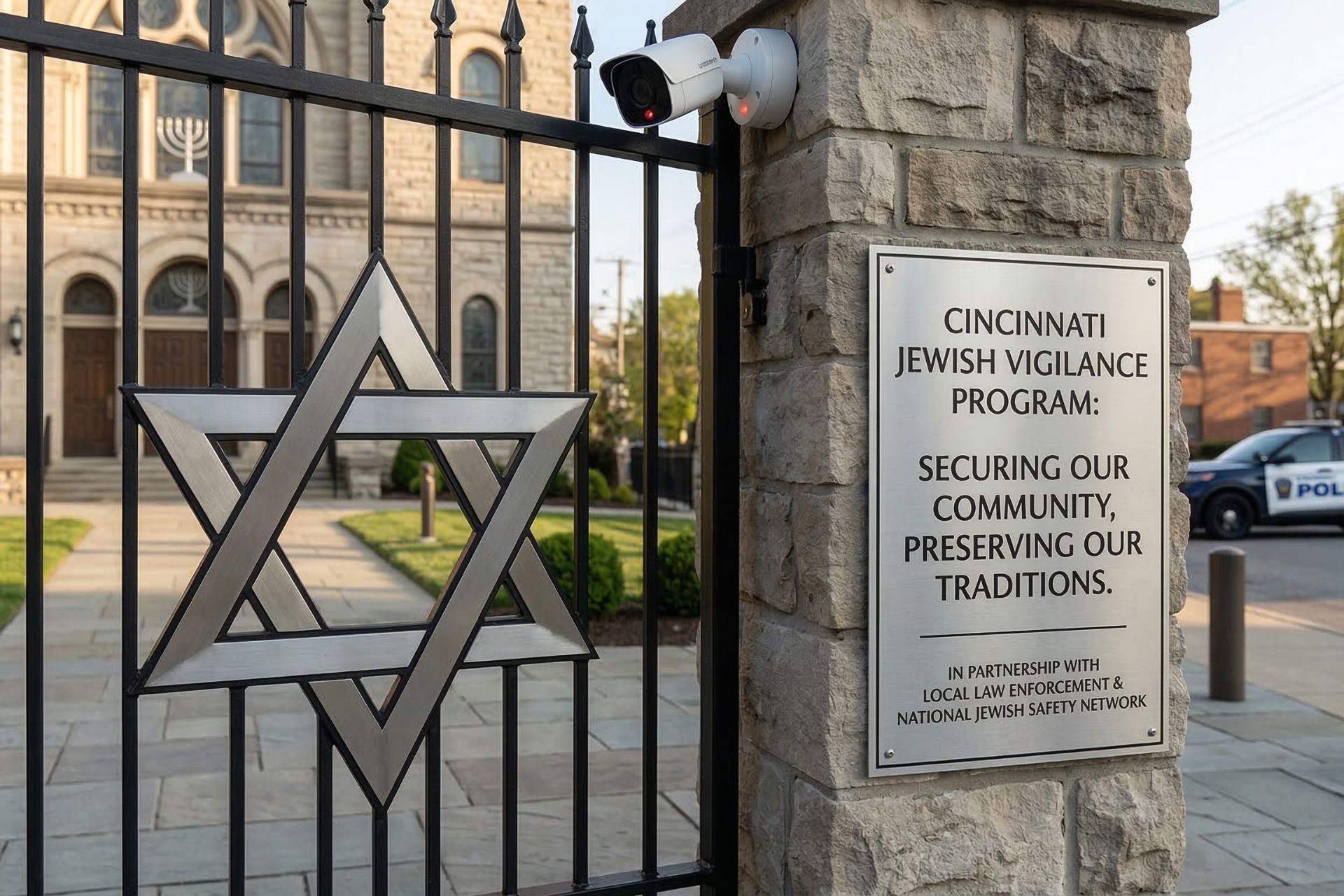
Local synagogues already maintain security partnerships with law enforcement and national Jewish safety organizations. Following the Michigan incident, many are reviewing protocols and communicating with congregations about safety procedures.
Security efforts typically include:
- On-site security personnel during services and major events
- Surveillance cameras and controlled building access
- Emergency training for staff and volunteers
- Coordination with local police and federal authorities
Many Jewish institutions also participate in training programs that equip them to respond quickly to potential threats. Those efforts have expanded significantly in recent years amid rising concerns about antisemitic violence.
The Michigan synagogue attack highlights why such planning matters. According to Reuters, the synagogue’s security team acted quickly to confront the attacker and prevent further harm.
Jewish security experts say preparation can significantly reduce risks during emergencies.
Temple Israel attack raises national security concerns
Authorities say the suspect intentionally rammed his vehicle into the synagogue building during daytime hours.
According to the Department of Homeland Security, the attacker was identified as a 41-year-old naturalized U.S. citizen originally from Lebanon. Officials say he drove a truck containing weapons and possibly explosives into the building before the vehicle caught fire.
Security guards inside the building engaged the suspect during the incident. Law enforcement later found him dead inside the vehicle.
The crash and fire prompted a large emergency response in suburban Detroit. Authorities temporarily locked down nearby areas and investigated the scene for additional threats.
Despite the chaotic scene, the quick response prevented mass casualties. The synagogue’s early childhood center, which serves dozens of young children, was evacuated safely.
Investigators say the motive remains under review. However, federal officials believe the synagogue was deliberately targeted because it serves the Jewish community.
National leaders and faith organizations quickly condemned the violence and expressed solidarity with the Michigan Jewish community.
Why Cincinnati Jewish security remains a priority
The incident comes amid broader concerns about security at religious institutions across the United States.
Federal authorities have warned that global conflicts and political tensions can sometimes trigger threats against religious communities. According to a previous advisory from federal law enforcement agencies, Jewish and Israeli institutions have faced an elevated threat environment in recent years.
Cincinnati’s Jewish community has long invested in coordinated safety programs.
Many synagogues work closely with national security organizations and the Jewish Federation of Cincinnati to strengthen preparedness. These efforts often include threat monitoring, emergency drills, and coordination with police departments across Greater Cincinnati.
Community leaders say such cooperation helps ensure that synagogues remain open and welcoming while maintaining strong safety measures.
Local officials also emphasize the importance of community awareness.
Congregants are encouraged to:
- Report suspicious activity immediately
- Follow security instructions during events
- Participate in safety training when offered
Leaders say these steps can help communities respond quickly if threats emerge.
Interfaith support and community solidarity
Following the Michigan attack, leaders across faith groups have emphasized the importance of solidarity against violence targeting houses of worship.
Religious institutions frequently share security strategies and resources. Churches, mosques, synagogues, and temples often collaborate with local governments on emergency preparedness.
Faith leaders say these partnerships help strengthen community resilience.
The attack also serves as a reminder that houses of worship remain symbolic targets for individuals motivated by hate or extremist ideologies.
Cincinnati religious leaders have repeatedly called for unity in responding to such incidents. They say maintaining open dialogue and community cooperation remains critical to preventing violence.
For Jewish communities in Cincinnati and across the country, the focus remains on safety while continuing daily religious life.
Security leaders stress that vigilance does not mean fear.
Instead, they say it reflects preparation and awareness in a changing security landscape.
FAQs
Why are Cincinnati Jewish leaders increasing security vigilance?
Jewish leaders in Cincinnati heightened security after an attack at Temple Israel in Michigan. The incident raised concerns about threats targeting religious institutions nationwide. Local organizations want to ensure synagogues and community centers remain safe for worshippers.
What happened during the Michigan synagogue attack?
Authorities say a man drove a vehicle into the building at Temple Israel before security personnel confronted him. The suspect died during the incident, and one security guard was injured. Investigators are reviewing evidence to determine the motive behind the attack.
What security measures are commonly used by synagogues in Cincinnati?
Many synagogues rely on trained security personnel and surveillance systems to protect congregations. Buildings often have controlled entry points and emergency response plans. Local institutions also coordinate closely with law enforcement and national security organizations.
How are Jewish organizations responding to the incident?
Jewish organizations across the country are reviewing security procedures and communicating with congregations about safety. Many communities are strengthening partnerships with local police and federal agencies. Leaders say these steps help prepare institutions for potential threats.
What broader concerns does this incident raise?
The attack highlights ongoing concerns about safety at houses of worship in the United States. Religious communities have faced increased threats in recent years. Many leaders say stronger cooperation between faith groups, communities, and law enforcement is essential for long-term security.