



Share This Article
Key Points
- U.S. regular gasoline averaged $4.15 a gallon the day before the 2026 midterms.
- Oil flows through the Strait of Hormuz partially recovered in the third quarter.
- Democrats won control of both chambers of Congress in the November elections.
Christina Holbrook argues that the Iran war exposed Americans to higher energy costs and hurt Republicans at the polls. The voter evidence points to broader concerns about prices and government, too.
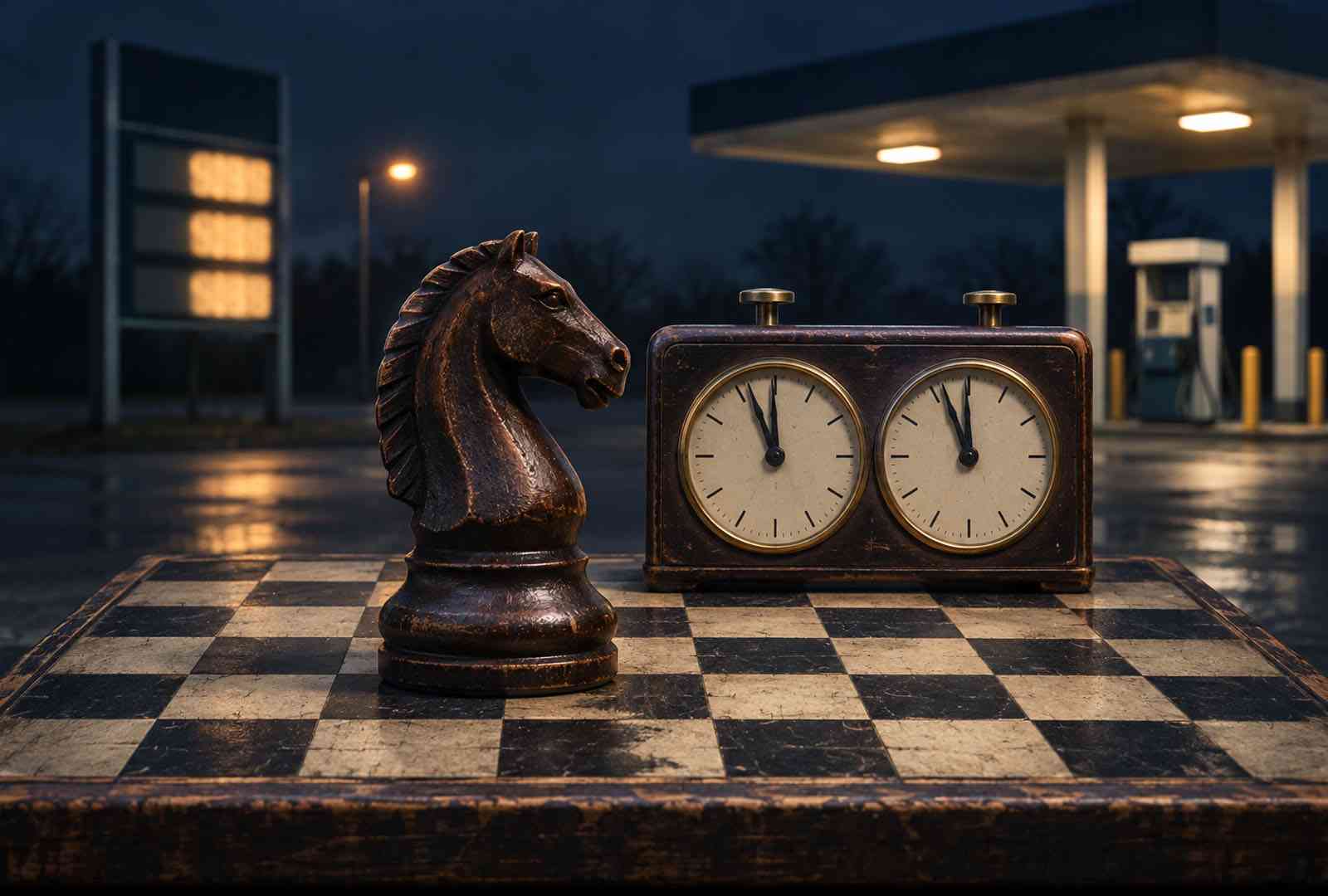
Trump went into Iran with a chessboard and ended up with a clock
Americans were still paying more at the pump when they voted in the midterms.
When the bombs started falling on Iran on February 28, the White House sold the war as a chess match already won. Precision strikes. Supreme Leader Ali Khamenei dead in the opening assault. The White House said Trump had set out a four-to-six-week operation to dismantle Iran’s military threat. November was a long way off.
Chess players plan. Gamblers chase. Somewhere between February and November, Donald Trump stopped playing chess and started playing against a deadline, and the house he was betting against turned out to be the American voter.
The warning nobody wanted
University of Chicago political scientist Robert Pape saw this coming because he has spent thirty years studying this mistake. His 1996 book Bombing to Win distinguishes between damaging an enemy and getting its government to concede. His framework for this war has a name: the escalation trap. Early battlefield success produces strategic disappointment. Leaders pile on more force instead of rethinking. The weaker side spreads the costs of the fight. Then comes the grinding middle phase, where retreat feels impossible and compromise looks harder than escalation.
In March, Pape called Washington’s belief that it controlled escalation “the biggest illusion in the Iran war.” He pointed to the Strait of Hormuz. By then, tanker traffic had already dried up.
The strait they didn’t take seriously
Before the war, roughly 130 ships a day moved through Hormuz, according to UN Trade and Development. The passage carried about a fifth of world oil supply in the last full quarter before the war, according to the U.S. Energy Information Administration. Iran never needed to match American carriers. It needed to make that chokepoint hard to use, and it did. The UN Food and Agriculture Organization said tanker traffic fell more than 90 percent within days of the escalation.
Here is the part that should embarrass everyone involved. They were told. The Wall Street Journal reported that Gen. Dan Caine, chairman of the Joint Chiefs of Staff, warned Trump before the war that an attack could prompt Iran to block the strait. Trump went ahead, reportedly convinced Tehran would capitulate before it got that far. The White House told the Journal that Trump understood the risks and was determined to confront what it saw as a national security threat. CNN separately reported that the Pentagon and National Security Council underestimated Iran’s willingness to close the waterway.
So the excuse that nobody saw it coming doesn’t hold. Knowing the risk and betting it won’t happen is a wager.
The case that Trump is winning
To be fair, the administration’s defenders have a real argument, and it deserves a hearing. In August, former White House Middle East coordinator Brett McGurk argued that the U.S. blockade and sanctions were squeezing Iran while recovering shipments were weakening Tehran’s leverage over other countries. The IMF’s October outlook projected Iran’s economy would shrink 7.6 percent in 2026. In April, the White House said U.S. forces had met their military objectives during 38 days of major combat. If Iran is under pressure and losing leverage, how is it the side that is winning?
The numbers on the water did improve. EIA estimates put oil flows through the strait at 9.1 million barrels a day from July through September, up from 5.1 million in the previous quarter. That’s a recovery. It’s also less than half the late-2025 rate. That matters if the date that counts is November 3.
Why that argument misses the point
Iran never needed to win the war. It only needed to make Washington pay at the polls. Pape laid it out in August. In his reading, Tehran could change the political math in Washington by keeping energy and shipping costs painfully high through the midterms. Whether Iran was losing money did little for the American driver paying to fill up.
On Nov. 2, the day before voting, the national average for regular gasoline was $4.15 a gallon, up from $2.94 on Feb. 23, the last weekly reading before the war. GasBuddy’s Patrick De Haan told Bloomberg that regular gasoline set an Election Day record on Nov. 3. Nearly nine in ten voters called the cost of living crucial or a major factor in their House vote, according to the SSRS Voter Poll.
Farm country got hit twice. The FAO estimates that up to 30 percent of internationally traded fertilizer normally moves through Hormuz. In March, Tennessee farmer Todd Littleton told the Associated Press he expected his fertilizer bill to rise by $100,000 that season, about 40 percent over the year before. That was one farmer’s estimate, but it gives you a sense of what a shipping disruption can mean when you have a crop to get into the ground.
The bill came due on November 3
The voter poll read like an indictment. In the national House tables published by ABC News, 74 percent called the Iran war crucial or a major factor in their vote. Of that group, 65 percent backed Democrats for the House. In a separate question, 64 percent said the U.S. made the wrong decision to take military action. CBS News reported that about a quarter of Republicans surveyed agreed.
Democrats won control of both chambers of Congress. Vice President JD Vance was blunt the next day: “The reason we lost is the war.” Trump told 60 Minutes voters “didn’t like the war.” CBS reported that he also pointed to high gas prices, though he said his absence from the ballot mattered more. The war wasn’t the only thing people voted on. In the same survey, 90 percent called government corruption crucial or a major factor. Voters were reading more than one line on the bill.
Cheaper gas, too late
Now, with the votes counted, prices are sliding. By mid-November, De Haan estimated the strait’s oil flow was back to about 90 percent of normal. He also pointed to weaker seasonal demand and cheaper winter-blend gasoline. By Nov. 23, EIA put regular gasoline at $3.64 a gallon, 51 cents below the pre-election reading and about 70 cents above the last prewar reading. Highway diesel still averaged $5.70. And CoBank warned in August that tight supplies could keep fertilizer costs elevated into 2027.
Relief that shows up after the election isn’t relief. It’s a receipt.
The gambler’s deadline
This is what the escalation trap looks like in real life. Trump started with a chessboard and ended up with a clock. Every month the strait stayed choked, the deadline got closer and the stakes got higher. The answer was always one more push: more strikes, a blockade, another threat.
The trap isn’t finished. In July, Pape put the odds of U.S. ground troops being sent into Iran at about 70 percent, probably within a month and possibly as soon as that week. That window closed without a publicly reported ground offensive. On Nov. 11, Trump said he wanted “a total victory, not a 93 percent victory.” The next day, Iran’s Assembly of Experts called for a review of defense doctrine and urged consideration of leaving the Nuclear Non-Proliferation Treaty. The war had reopened debate over the very outcome Washington went to war to prevent: a nuclear-armed Iran.
The risks reached an ally, too. The U.S. moved its bombers out of RAF Fairford in October after a security incident. Britain’s prime minister said Iranian coordination was highly likely. Iran denied involvement. U.S. prosecutors later described an alleged plot at the base. The defendants are presumed innocent. On Nov. 27, the U.S. was still enforcing its blockade.
Iran may be losing money. Fine. Republicans lost Congress, drivers paid an extra dollar a gallon and then some before they voted, and the traffic through the strait still hadn’t returned to normal in the latest EIA quarterly figures. The chess pieces were never in order. Trump placed the bet anyway. And the American people paid the tab.
From The Cincinnati Exchange
Ohio drivers are still in a temporary tax holiday. The Ohio Department of Taxation says the state reduced its 38.5-cent gasoline tax and 47-cent diesel tax to a hundredth of a cent per gallon through Jan. 2, 2027, and requires retailers to pass the savings through. The legislature’s final analysis says the law appropriated $725 million from the General Revenue Fund to offset the revenue loss.
In Hamilton County, Democrat Amy Acton took 63.45% of the vote for governor and Republican Vivek Ramaswamy took 34.17%, according to the county’s official count. For more on the local races and the limits of reading them as a verdict on the war, see our earlier midterm coverage.
FAQs
What is the escalation trap?
Political scientist Robert Pape uses the term for a cycle in which military gains fail to produce the desired political result, and leaders respond by escalating.
How did the Iran war affect oil shipments through Hormuz?
The U.S. Energy Information Administration estimates flows fell from 21.6 million barrels a day in late 2025 to 5.1 million in the second quarter of 2026, then rose to 9.1 million in the third.
How much did U.S. gas cost around the midterms?
EIA reported an average of $4.15 a gallon for regular gasoline on Nov. 2, the day before voting, and $3.64 on Nov. 23.
Did voters blame the war for higher costs?
The AP Voter Poll found that voters linked higher prices to Trump’s policies, including the war and tariffs. It also found concern about government corruption.
Who won control of Congress in the 2026 midterms?
Democrats won control of both chambers in the Nov. 3 elections. That outcome does not establish which issue decided an individual vote.
This column reflects the author’s opinion. The Cincinnati Exchange used AI to assist with fact-checking and editing. The featured image is an AI-generated illustration.


