



Share This Article
Article Summary
Cincinnati ShotSpotter is at the center of renewed debate as city leaders expand smart surveillance Cincinnati programs to address gun violence. Officials argue gun violence technology improves response times and officer deployment, while critics question cost, privacy, and effectiveness. National data and reporting from other cities add context to local policy discussions. As Cincinnati elections approach, public safety technology has become a key issue in broader local policy debates about transparency, equity, and crime prevention.
Cincinnati ShotSpotter remains a focal point in the city’s public safety strategy.
Cincinnati ShotSpotter continues to shape how police deploy resources in neighborhoods affected by gun violence.
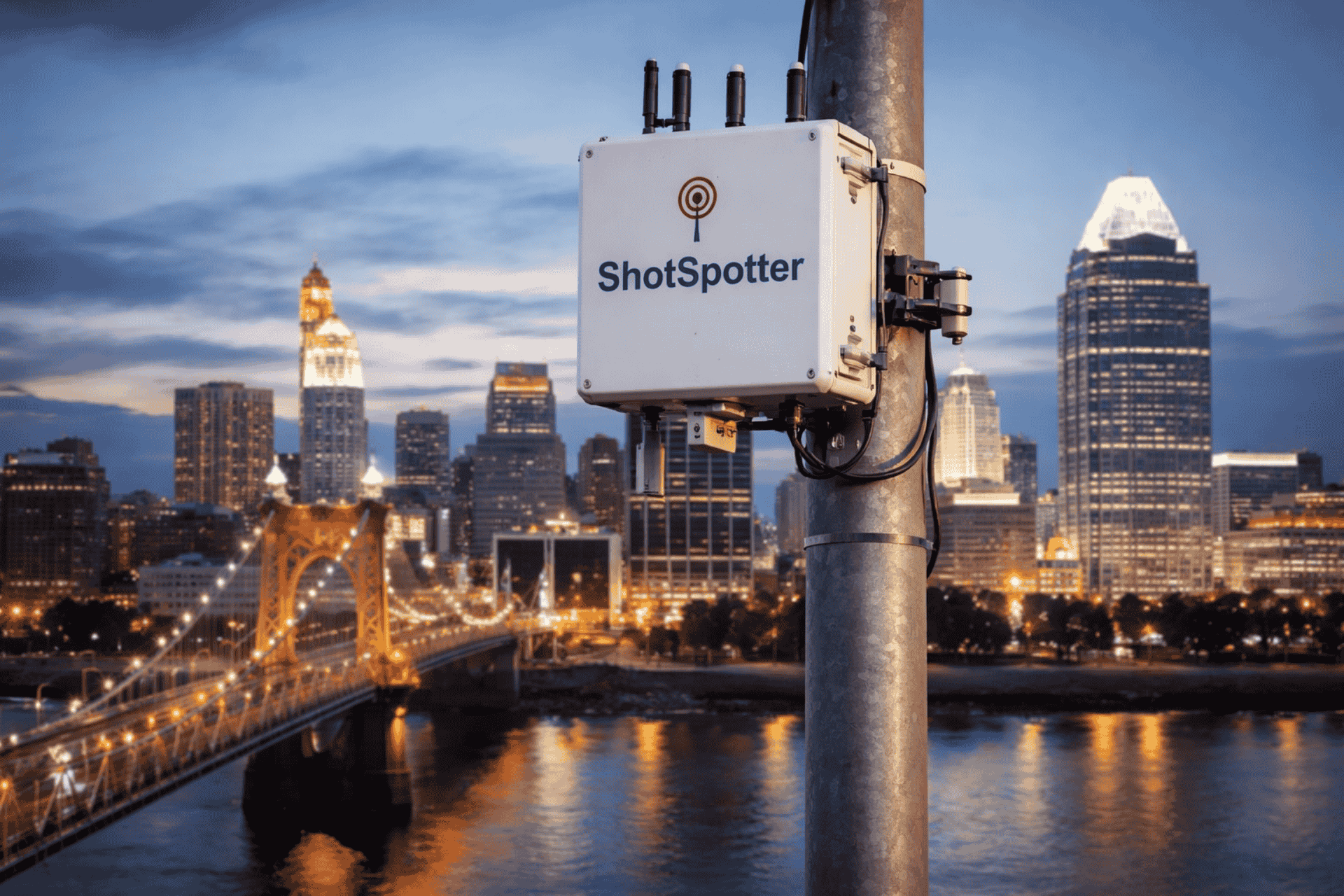
City officials say the acoustic gunshot detection system helps officers respond faster to shootings. The technology uses rooftop sensors to detect, triangulate, and alert police to suspected gunfire within seconds. Supporters argue it fills gaps when residents hesitate to call 911. Critics counter that the system raises questions about accuracy and oversight.
The debate unfolds as Cincinnati invests more heavily in smart surveillance Cincinnati initiatives. Leaders describe the effort as part of a broader modernization push. The goal: reduce violent crime through gun violence technology and real-time data tools.
How Cincinnati ShotSpotter works on city streets
Cincinnati ShotSpotter operates through a network of audio sensors placed in targeted areas. When sensors detect a loud bang, software analyzes the sound signature. If it matches gunfire characteristics, the system sends an alert to the Cincinnati Police Department.
According to the manufacturer’s public materials and city briefings, alerts can reach officers in under a minute. The company behind the technology, SoundThinking, states that trained acoustic experts review incidents before notifying dispatch. Supporters argue that human verification reduces false alerts.
The Cincinnati Police Department has said the tool helps locate shell casings and identify crime scenes that might otherwise go unreported. In other cities, law enforcement leaders have echoed similar claims. For example, reporting by The Washington Post has examined how departments nationwide use gun violence technology to supplement 911 calls.
Still, independent analyses have questioned accuracy rates. A 2021 investigation by Chicago Inspector General found inconsistencies in how alerts translated into confirmed gun crimes. Civil liberties advocates cite that report when urging caution in smart surveillance Cincinnati expansions.
Local officials acknowledge those concerns. They say Cincinnati reviews deployment data regularly and adjusts sensor locations based on crime trends.
Smart surveillance Cincinnati expansion beyond ShotSpotter
Cincinnati ShotSpotter represents only one piece of a larger surveillance network. The city also uses license plate readers, public safety cameras, and data analytics software. Leaders frame these tools as layered deterrence.
According to the official website of the City of Cincinnati, public safety modernization remains a top priority. Budget documents outline investments in real-time crime centers and upgraded dispatch systems.
Advocates argue that combining gun violence technology with camera footage improves investigations. When an alert triggers, officers can cross-reference nearby cameras. That coordination may speed arrests or identify suspects more quickly.
However, privacy groups warn about mission creep. They argue that data retention policies and oversight mechanisms must remain transparent. Organizations like the American Civil Liberties Union have called for clearer safeguards in cities adopting similar systems.
Key questions shaping local policy debates include:
- How long does the city retain audio data?
- Who can access surveillance footage?
- What independent audits occur?
- How does the city measure effectiveness?
Council members say they continue to evaluate metrics. They emphasize that community trust matters as much as crime reduction statistics.
Gun violence technology and response times
City officials defend Cincinnati ShotSpotter by pointing to response times. They argue that many gunshots go unreported. In some neighborhoods, residents may fear retaliation. Automatic alerts ensure police learn about incidents quickly.
National research shows mixed results. A 2023 review cited by Brookings Institution suggested that acoustic detection systems can improve evidence recovery but may not significantly reduce overall gun violence alone. Experts note that technology works best alongside community-based interventions.
Cincinnati leaders say they do not view the tool as a standalone solution. They pair surveillance with violence interruption programs and youth outreach. A coverage by WCPO 9 reported that officials consider technology one part of a broader crime strategy.
Police representatives maintain that alerts often reveal shooting incidents without 911 calls. That discovery, they say, changes how the department understands crime patterns. Critics respond that increased alerts can inflate statistics without improving safety outcomes.
The disagreement has become a recurring topic in public meetings. Residents frequently ask for clearer performance data. Officials promise annual transparency reports.
Cincinnati ShotSpotter in local policy debates Ohio voters watch
Cincinnati ShotSpotter has entered the spotlight as candidates discuss public safety in upcoming Cincinnati elections. Some contenders call for expanded smart surveillance Cincinnati tools. Others advocate reallocating funds toward prevention programs.
The issue reflects broader local policy debates Ohio communities face. Cities statewide weigh similar investments in gun violence technology. Supporters argue that ignoring new tools leaves police behind. Opponents caution that cities must avoid overreliance on surveillance.
Cincinnati’s approach may influence neighboring jurisdictions. Regional law enforcement agencies watch the data closely. If metrics show measurable reductions in response times or arrests, expansion could follow.
At the same time, transparency remains critical. Public forums and council hearings allow residents to voice concerns. Officials say they welcome scrutiny.
Balancing technology, trust, and transparency
Cincinnati ShotSpotter illustrates the tension between innovation and accountability. City leaders insist that gun violence technology supports officers and protects residents. Community advocates demand proof of effectiveness and strong privacy guardrails.
The debate will likely continue as new data emerges. Technology evolves quickly. Public expectations evolve just as fast.
For now, smart surveillance Cincinnati initiatives remain embedded in the city’s public safety strategy. Whether those tools deliver long-term reductions in gun violence depends on implementation, oversight, and sustained community engagement.
FAQs
What is Cincinnati ShotSpotter and how does it work?
Cincinnati ShotSpotter is an acoustic gunshot detection system that uses rooftop sensors to identify and locate suspected gunfire. The system analyzes sound patterns and sends alerts to police within seconds, allowing faster response to potential shootings.
Does Cincinnati ShotSpotter record private conversations?
City officials state that the technology activates only when it detects loud, impulsive sounds consistent with gunfire. The system does not continuously record conversations, but privacy advocates continue to call for clear oversight and transparency policies.
Has Cincinnati ShotSpotter reduced gun violence?
Officials say the system improves response times and helps recover evidence like shell casings. However, national studies on gun violence technology show mixed results regarding long-term crime reduction.
How does smart surveillance Cincinnati fit into broader public safety efforts?
Smart surveillance Cincinnati includes tools such as public safety cameras, license plate readers, and data analytics software. City leaders describe these technologies as part of a larger strategy that combines enforcement with prevention programs.
Why is Cincinnati ShotSpotter part of local policy debates Ohio voters are watching?
Public safety technology has become a major issue in Cincinnati elections and broader local policy debates Ohio communities face. Candidates differ on whether to expand funding for surveillance tools or prioritize alternative violence prevention strategies.


