
Share This Article
Key Points:
- Cincinnati City Council passed Ordinance 341-2026, the parking security ordinance, 7-2 on Sept. 30. It takes effect Jan. 1, 2027.
- Licensed paid lots must keep an attendant on site or use cameras, and the ordinance provides no city funding to help operators comply.
- Mayor Aftab Pureval tied the rules to guns stolen from cars, but the ordinance never mentions guns, and Ohio law protects qualifying lot owners from civil liability for those thefts.
- Cincinnati lost in court over its 2023 gun-storage rule, and Ohio’s firearms-uniformity law reserves gun-storage rules to the state.
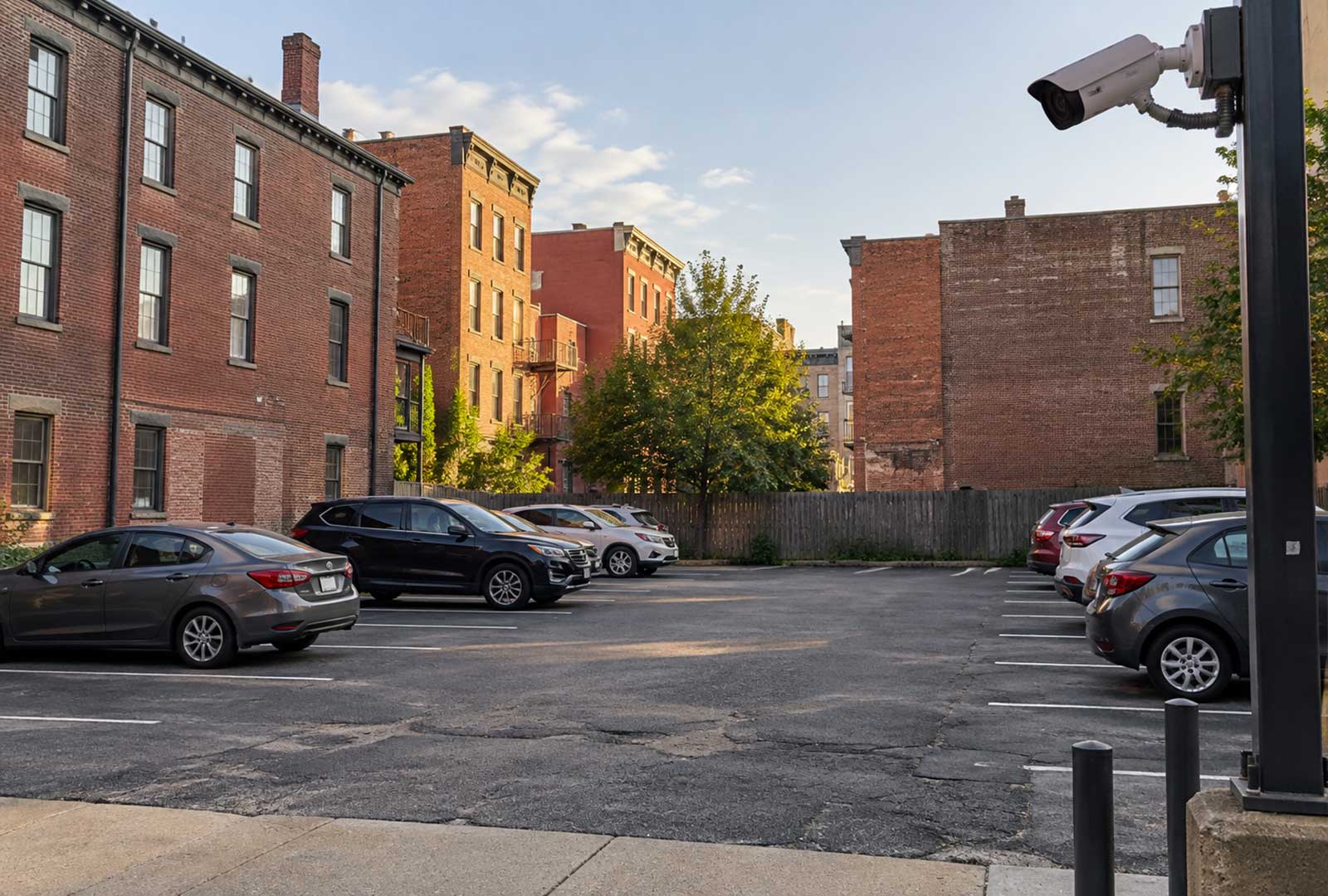
Say you own a small paid parking lot in Cincinnati, with a pay box and no electrical service.
You’ve never broken into a car, and you have no idea which ones hold guns.
Starting Jan. 1, Cincinnati’s parking security ordinance makes you pay to stop the people who do.
Council passed it 7-2 on Sept. 30. Your choices are cameras or an attendant on site every hour you’re open. Licensed operators get six months if they make a good-faith effort. After that, skipping both is a civil offense with fines starting at $1,250, and every day counts as a new violation.
Start with the cameras. They need power, and you don’t have any. A letter to council from Chavez Properties and a few other operators warned this spring that a camera system could cost up to $50,000, WVXU reported. That’s the high end of an opponent’s estimate, and a wireless or solar setup might come in lower. Either way, the check is yours. The ordinance provides no city funding to help you comply.
Then the ordinance gives you three ways to monitor those cameras: a local employee watching live every hour you’re open, live monitoring through FUSUS, or registering the lot as a FUSUS location. For a small lot, registration is the realistic option. Cincinnati police run their private-camera program, Connect Cincinnati, on FUSUS. A registered camera lands on a map that only authorized police personnel can see, The Exchange reported in September. So choosing registration puts your cameras on a police map.
Instead, you could hire a person. But an attendant isn’t a one-time purchase. It’s payroll, every hour the lot is open, for as long as it stays open. The signed ordinance doesn’t estimate what either option costs.
And if you can’t afford it? The hardship section won’t help. It offers relief when compliance would eliminate parking spaces, not when it would eliminate your margin. Meanwhile, a lot with a handful of spaces carries the same duty to have a security plan as a downtown garage with hundreds.
Who’s responsible for a stolen gun?
Mayor Aftab Pureval tied these rules to guns stolen from parked cars. In May, he told WVXU that guns taken from cars were “part of the problem of illegal guns on our streets.” That became “very clear” to the city the summer before, he said.
Now look at what the city had already tried with gun owners. In 2023, council made it child endangering for a parent or guardian to negligently leave a gun where a kid could reach it, at home or in a car. In 2024, an appeals court agreed that state law voided that rule, and the fight left the city facing about $300,000 in the challenger’s legal and expert fees.
Ohio already required people to promptly report lost or stolen guns. In December 2023, council added its own reporting rule through council member Liz Keating’s emergency ordinance, while acknowledging what it called “the extremely limiting firearm laws set by the Ohio State Legislature.” The city’s version copies the state’s wording almost word for word and adds a civil fine. It even includes an off switch: the rule shuts down if the General Assembly ever bans local reporting requirements. The 2024 ruling didn’t address it, and I’d like to know whether the city has ever enforced it.
Meanwhile, Ohio’s firearms-uniformity law reserves rules on gun storage to the state. And another state law covers you. You can’t ban a customer with a concealed handgun license from keeping a gun locked in the trunk, glove box or another compartment of their own car, parked where it’s allowed to be. When a customer keeps a gun that way, the same law protects you from civil liability for what someone else does with it, “including the theft of a firearm” from a customer’s car. The one exception is an owner who intentionally solicited or procured the harm.
So line it up. The city can’t set its own rules for how gun owners store guns, and it already lost in court trying. By its own account, state gun law boxes it in. And the city’s own violence plan says the rule it lost “aimed to reduce accidental shootings, gun thefts, and misuse.” Then City Hall decided guns stolen from cars were part of the problem. The rules it passed land on someone else. You didn’t bring the gun, and you can’t keep a licensed one out. From behind the pay box, it sure looks like City Hall went after the one party in the deal it could still regulate.
Pureval says the goal is “a proven deterrent for car break-ins,” and cameras do deter some. You can decide for yourself why the bill landed where it did. For the record, the parking security ordinance never mentions guns.
Where the parking security ordinance stops
The rules also stop at your property line. Chapter 413 covers only privately owned lots and garages with at least 1,500 square feet of parking area that charge the public. The rules don’t reach street parking. They don’t reach a Kroger lot that doesn’t charge, or lots owned by public bodies like the University of Cincinnati and Cincinnati Public Schools. They don’t reach driveways, either. That’s where someone stole Hamilton County Sheriff Charmaine McGuffey’s county vehicle in 2021, duty weapon and all, WCPO reported.
Supporters have an answer. “To have a carve-out for parking lots when they are driving a substantial portion of these car break-ins makes zero sense to me,” council member Anna Albi said, WVXU reported. But the city’s break-in figures, as WVXU described them, lumped paid public lots together with private surface parking like big-box store lots. They also counted streets and homes. The data didn’t isolate the paid lots this law covers, and the ordinance cites no crime statistic. Instead, council simply declared that the benefits “substantially outweigh any burden imposed upon affected businesses.”
Still, cameras have research behind them, and that’s the best case for the ordinance. Senior Crime Analyst Jillian Desmond cited national data on cameras and lighting. A 2019 review of CCTV studies by Piza, Welsh, Farrington and Thomas found a modest but significant drop in crime, largest in car parks and with active monitoring. But a camera that’s merely registered, with nobody watching live, isn’t the setup that showed the biggest effects.
Who was in the room
Pureval made clear early that the cameras weren’t going anywhere. “My version will not do away with cameras,” he said in May. Public Services staff had met with lot and garage operators before the city proposed the rules in April, WVXU reported. Then, in August, Pureval told WVXU that talks with “some of the industry leaders” had produced a compromise on barriers and signage. The point, he said, was “to preserve and prioritize the lighting and the video monitoring.”
I’d love to know whether anybody running a small lot took part in those conversations. Neither report says.
Council members Meeka Owens and Seth Walsh tried a version that limited security plans to garages. It died when the mayor’s version passed 7-2 over their no votes. The surface lots were the fight, and the surface lots lost.
What City Hall wants for surface parking
My suspicion, and it’s only that, is that City Hall wouldn’t mind if some of these lots gave up.
The city’s Green Cincinnati Plan tracker, in a June 2024 advisory board packet, lists minimizing surface parking among its aims, along with more density near transit. In 2022, council member Mark Jeffreys introduced legislation that led to a study of downtown surface parking. After that, Ordinance 37-2024 restricted new surface lots downtown. And in July, talking about a land value tax, Jeffreys told WVXU, “Surface parking lots are not the best form of development.” He voted yes on Sept. 30.
None of that proves a plan to squeeze lot owners out. I haven’t seen anyone at City Hall say that’s the goal. But if you wanted fewer surface lots without banning them, making them more expensive to run would be an efficient way to get there. Cameras or an attendant, new lights, a fine schedule. Each one changes the math for an owner deciding whether to keep a lot, sell it or build on it. When a regulation pushes the same direction the city’s own plans already point, the safety case needs more proof, not less.
The rules take effect Jan. 1, and the grace period runs out next summer. Small operators have to make the numbers work by then. So should the officials imposing these requirements.
FAQs
When do Cincinnati's new parking security rules take effect?
Ordinance 341-2026 takes effect Jan. 1, 2027. Operators holding a valid Chapter 413 license on that date get six months to comply, but only while they make a good-faith effort. The grace period doesn’t cover violations that pose an immediate threat to public health, safety or welfare.
Which parking lots does the ordinance cover?
It covers lots and garages licensed under Chapter 413 of Cincinnati’s municipal code: privately owned facilities with at least 1,500 square feet of parking area, open to the public, that charge to park. The ordinance didn’t change those definitions, so free lots fall outside it.
Do operators have to install cameras or give police a live feed?
No. An operator can keep an attendant on site during all operating hours instead. Camera systems can be watched live by a local employee, registered with the police FUSUS program or streamed to FUSUS, and registration alone meets the rule. Every licensee must also report listed crimes within 24 hours of becoming aware of them.
Is a lot owner liable when someone steals a gun from a customer's car?
Under Ohio law, a property owner can’t stop a valid concealed handgun license holder from keeping a gun locked in a compartment of their own vehicle, parked where permitted. The owner then isn’t civilly liable for another person’s actions involving that gun, including theft, unless the owner intentionally solicited or procured the harm. The city’s ordinance adds no liability for theft.
Can a lot owner get a hardship exemption because compliance costs too much?
The ordinance does not offer a general hardship exemption based on cost alone. The director can reduce or waive requirements when compliance would eliminate parking spaces at lots and garages legally established and maintained before Jan. 1, 2026, with the licensee in good standing. Relief can’t exceed the minimum needed to prevent losing 10% or more of spaces.
The Cincinnati Exchange used its proprietary AI article system to assist with research and drafting. This opinion and analysis piece reflects The Cincinnati Exchange’s editorial perspective and interprets public records.