



Share This Article
Key Points
- Cincinnati set aside $360,000 from a $5.42 million public safety package to replace and expand police license plate readers.
- A Jan. 22, 2026 City Manager memo says eight companies submitted proposals and a request for a 90-day trial of the top three went up for approval.
- Public records reviewed by The Cincinnati Exchange don’t name the eight bidders or the top three, and they don’t show whether the trial happened.
- Cincinnati’s current plate readers come from Axon, which also owns Fusus, the platform behind the city’s Connect Cincinnati private-camera program.
Article Summary
Cincinnati budgeted $360,000 to replace and expand police license plate readers under RFP265X901108, which closed Oct. 21, 2025. A Jan. 22, 2026 City Manager memo says eight companies bid and a request to trial the top three for 90 days went up for approval, but the city hasn’t publicly named the bidders or said whether the trial ran. City Council expects a surveillance technology presentation on Oct. 6, 2026.
Cincinnati set aside $360,000 to replace and expand its police license plate readers.
Eight companies bid for the work, and public records don’t show who they are or which three ranked highest.
A Jan. 22 memo from City Manager Sheryl Long describes the Cincinnati ALPR procurement in two sentences. “Evaluation committee scores submitted and corresponding request for 90-day trial and evaluation of top three (3) respondents of eight (8) submitted for approval,” the memo says. It doesn’t say whether anyone approved that trial, and it doesn’t name a single company. Eight months later, council’s new surveillance motion should bring cameras, drones and plate readers before a committee Oct. 6. The contest behind the $360,000 hasn’t come up in public yet.
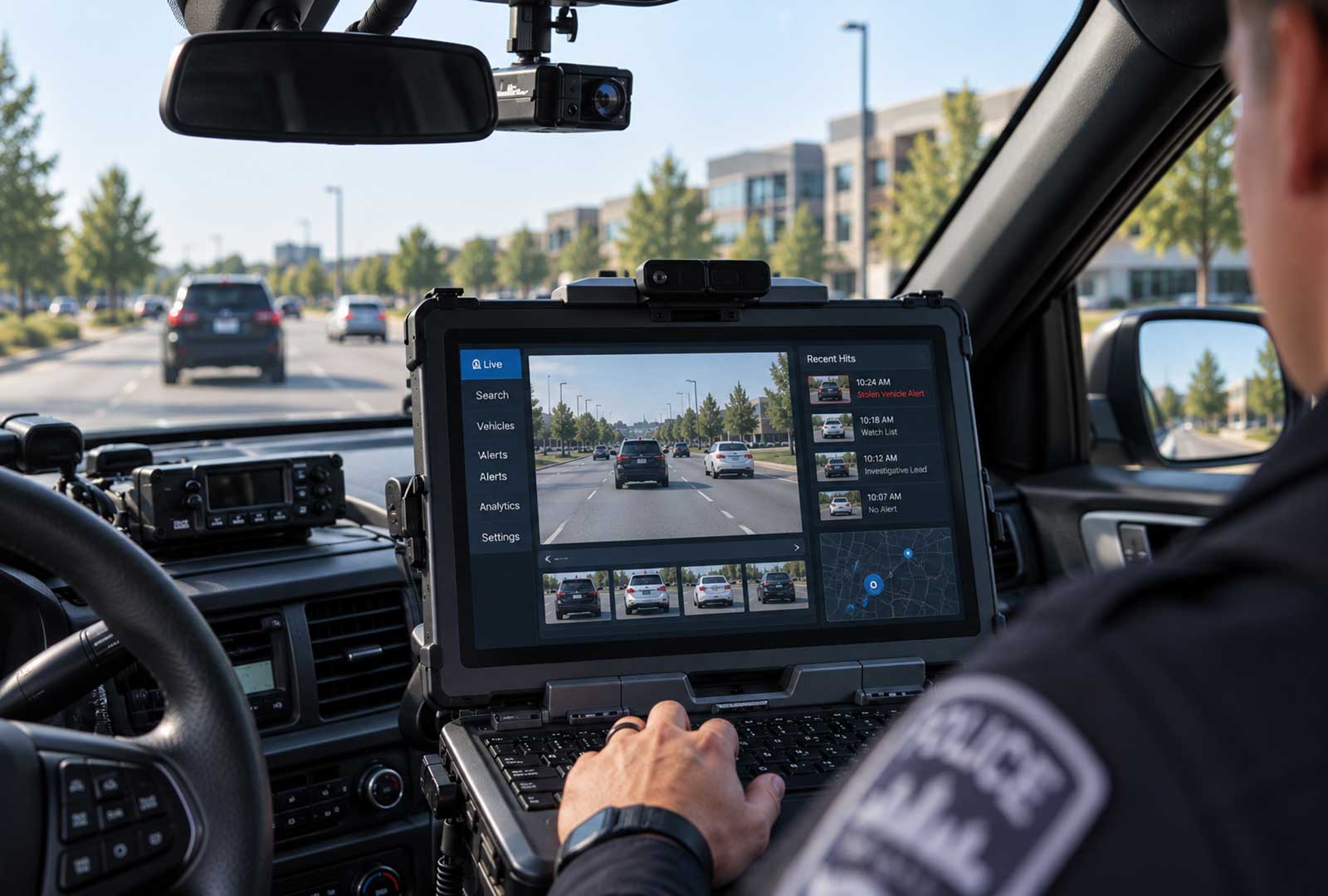
Automatic license plate readers, or ALPRs, are cameras that photograph passing vehicles and convert each plate into searchable text. Police check the reads against lists of stolen and wanted vehicles. Investigators can also search past reads during a case.
What the Cincinnati ALPR Memo Says, and What It Leaves Out
The $360,000 comes from a $5.42 million public safety package council approved on Sept. 17, 2025, through Ordinance 290-2025. That money targeted violent crime downtown and in other hot spots. Long’s January memo walks through each line item, and most report spending to the penny. West End cameras cost $151,038.99. Drone infrastructure cost $99,385.50.
The license plate reader line reports no dollars spent or encumbered. Instead, it says the investment “will assist with replacement and expansion of our license plate readers which greatly assist investigators in identifying suspects involved in violent crimes if automobiles may have been involved.” A few other lines in the four-page memo report no money spent or encumbered. Each of those carries a pending or in-negotiation note, and the plate reader line carries neither.
The memo leaves several basic facts out. It doesn’t list the eight bidders or the three top scorers. Scores, prices and evaluation criteria don’t appear either. Nor does the memo say whether the trial request won approval, when a trial would run, or what it would measure.
A Year-Old Bid Still Listed Under Evaluation
The city posted the solicitation, RFP265X901108, on Sept. 19, 2025, according to DemandStar, a bid-listing service that carries city solicitations. Proposals were due Oct. 21, 2025. Its scope lists the goals: finding “stolen, wanted or suspect vehicles,” suspects with warrants, witnesses and missing people named in Amber and Silver Alerts. The listing also mentions protecting the public during special events.
WVXU reported Sept. 10 that the RFP sought quotes for 30 to 50 cameras as part of a five-year CPD expansion. It also reported that submissions were “under review, according to the city website.” As of Sept. 25, DemandStar still lists the bid as “Under Evaluation.”
The calendar makes the question sharper. Proposals closed 339 days ago. Long’s memo arrived 93 days after the deadline, about the length of one 90-day trial. If the city approved the trial the day the memo went out, it would have ended in late April. Instead, the records we’ve seen can’t tell readers whether a trial ran, is running or never started.
Holding proposals back until an award is a common purchasing practice. Nothing in the record suggests anything improper about this one. The gap is simply one of visibility: taxpayers funded the purchase, and they can’t yet see the choices.
Axon Runs Cincinnati’s Plate Readers and Its Private-Camera Platform
Cincinnati doesn’t use Flock Safety, the company behind many plate-reader programs elsewhere in Hamilton County and Northern Kentucky. The city contracts with Axon for body cameras and license plate readers, WVXU reported. Across the river, Covington approved a $6 million Axon deal this month but left out license plate readers, WVXU reported.
Axon’s reach in Cincinnati extends further. In February 2024, Axon announced that it had acquired Fusus. The release credits Fusus with “aggregating live video, data and sensor feeds from virtually any source.” CPD runs its private-camera program, Connect Cincinnati, on Fusus. That program’s website carries an Axon copyright.
The memo describes Fusus as the platform that lets CPD “aggregate and integrate privately owned cameras into one platform.” So the company behind Cincinnati’s current plate readers also owns the software the city uses to pull private cameras together. That doesn’t make Axon the favorite, and no public record says Axon bid at all.
How Plate Readers Fit the City’s Wider Camera Buildout
The same January memo shows the plate readers joining a much larger buildout. Fusus spending totaled $99,997 for “FUSUS QR cards and core bundles.” CPD planned to deploy those devices in phases, using crime data and private camera locations in each district. It expected full deployment by the end of the third quarter of 2026. A separate $81,300 contract amendment with 3CDC included money to connect 19 of 3CDC’s cameras to Fusus.
Connect Cincinnati’s privacy page draws a line residents should know. Registering a private camera “does not require any cost or additional hardware.” It places the camera on a registry map that only authorized CPD users can see. Live access requires a FususCORE device, and the owner sets its rules. “The owner’s policy settings cannot be overridden remotely by Cincinnati Police Department officers or Fūsus,” the site says. It also says Fusus doesn’t use facial recognition, though software can flag “weapons, vehicles of interest, etc.”
The city also spent $99,385.50 to add 13 drones, meant to cover 90% of the city this spring. It encumbered $100,000 for a mobile camera trailer. The Department of Transportation and Engineering bought 70 cameras for $204,870.87, and a fiber project should add 74 more by December. Those purchases come from different departments and serve different purposes, so adding them into one “surveillance budget” would mislead.
What Council Asked For
Councilmembers Anna Albi, Seth Walsh and Jeff Cramerding sponsored Motion 202602632, which council adopted Sept. 10. WVXU reported that the vote was unanimous. It asks the administration to present, within 30 days, the city’s “current deployment, data retention, and any data-sharing agreements” for cameras, drones and plate readers. It also asks for an ordinance. That law would set limits on data sharing and storage, an annual “state of surveillance” report, a use policy and “Council approval of related contracts.”
That last item bears directly on the Cincinnati ALPR purchase. If the city signs a contract first, it would come before any council approval requirement exists. Earlier this year, council also passed a motion on immigration enforcement, WVXU reported. It bars the city from sharing data from its surveillance technology for civil immigration enforcement unless a law, court order or judicial warrant requires it.
The motion’s sponsors don’t frame the technology as the problem. Their statement says that “used properly and in good faith, surveillance technology is an effective tool for solving and preventing crime.” Albi told council that “from everything I’ve heard from CPD and [the] Law [Department], Cincinnati is doing it right.” Cramerding said, “I will not support anything that in any way handcuffs our police or prevents them from doing their jobs.”
Councilmember Scotty Johnson, a retired Cincinnati police officer, chairs the committee that will hear the presentation. He pushed back harder. “We must stay 10 steps ahead of the bad guys,” Johnson said. He added that some investigations are ones “the citizens of Cincinnati do not need to know about” because of their sensitivity.
Cincinnati ALPR Questions the Oct. 6 Presentation Could Answer
The procurement record leaves specific questions open:
- Which eight companies bid, and which three ranked highest?
- What did each propose to charge, including software, maintenance and data costs?
- Did the city approve the 90-day trial? If so, where and when did it run, and what did it measure?
- Has Cincinnati picked a vendor or signed a contract?
- How long will the city keep plate reads, and which outside agencies can search them?
- Does CPD audit searches, and how often do plate-reader hits lead to arrests or recovered vehicles?
The answers sit in records such as the eight proposals, the score sheets, any trial approval or results and any vendor recommendation. They also include the city’s retention policy and its data-sharing agreements.
WVXU reported that the administration expects to present at the Public Safety and Quality of Life Committee on Oct. 6. Council asked for an overview of what the city already runs. The eight bids show what it plans to buy next.
FAQs
How much is Cincinnati spending on license plate readers?
Cincinnati set aside $360,000 for the replacement and expansion of police license plate readers. The money comes from a $5.42 million public safety package City Council approved in September 2025. A January 2026 City Manager memo lists the amount but reports no money spent or encumbered on plate readers yet.
How many companies bid on Cincinnati's license plate reader contract?
Eight companies submitted proposals under RFP265X901108, according to a Jan. 22, 2026 City Manager memo. Evaluators scored the proposals, and the city submitted a request for a 90-day trial of the three top-ranked respondents. The memo doesn’t name any of the companies, and public records don’t show whether the trial happened.
Does Cincinnati use Flock cameras?
Local reporting says the City of Cincinnati doesn’t use Flock Safety for its license plate readers. The city contracts with Axon for body cameras and plate readers. That applies to the city’s own system, not to every government, business or private camera operating in Cincinnati or Hamilton County.
Can Cincinnati police access private security cameras?
Only when owners opt in through Connect Cincinnati, which runs on the Fusus platform. Registering a camera is free and puts it on a registry map for authorized police users. Live access requires a FususCORE device, and the program says owners control those settings and police can’t override them remotely.
When will Cincinnati present its surveillance technology report?
City Council adopted a motion on Sept. 10, 2026, asking the administration to present an overview of cameras, drones and license plate readers within 30 days. WVXU reported that the presentation is expected at the Public Safety and Quality of Life Committee on Oct. 6, 2026.
This article was produced with assistance from The Cincinnati Exchange’s proprietary AI article system and reviewed by our editors. This article includes analysis and interpretation by The Cincinnati Exchange of public records.