
Share This Article
Article Summary
Cincinnati is investing millions of dollars into park safety and infrastructure improvements through municipal budgets, the Cincinnati Southern Railway Trust, and private foundation grants. Major funded projects include a $4.1 million renovation of Owl’s Nest Park, the development of a 22-acre greenspace at the former James N. Gamble estate, and physical security upgrades at Fountain Square. These initiatives prioritize ADA compliance, facility rehabilitation, environmental restoration, and enhanced law enforcement tools like police drones.
Major infrastructure updates and new funding models are driving improvements in Cincinnati park safety across the city.
Local officials emphasize that ensuring Cincinnati park safety remains a top priority for future urban development.
Recent budget proposals and trust fund allocations highlight a renewed focus on outdoor safety. Officials are directing millions toward revitalizing public outdoor spaces. The goal is to make neighborhoods safer and more accessible. Enhancements include better lighting, new trails, and facility upgrades. Residents can expect these changes to roll out rapidly over the next few years.
The Cincinnati Southern Railway Trust recently outlined its FY26 project list. Starting in July 2025, the trust will dedicate $56 million to vital improvements across multiple sectors. Trust administrators dedicated over $2 million specifically to park infrastructure rehabilitation. Additional funds target pedestrian and vehicle safety near green spaces. Traffic calming projects and speed humps will protect park visitors. These upgrades directly support ongoing public park security initiatives.
Specific neighborhood parks receive massive capital injections. For instance, planners slated Owl’s Nest Pavilion for a $2 million rehabilitation. Sawyer Point and Yeatman’s Cove will receive nearly $1.4 million for bike trail and playground upgrades. These direct investments fix aging infrastructure that poses risks to the public. Replacing uneven trails and outdated play equipment is a basic step toward secure outdoor spaces.
Recent budget proposals target Cincinnati park safety
Cincinnati City Manager Sheryl Long recently proposed a fiscal year 2027 budget that addresses existing deficits while prioritizing safety. According to a report by WVXU, the plan includes $500,000 for physical public safety improvements at Fountain Square. Upgrades will feature new lighting and security cameras to eliminate blind spots. Planners are evaluating pedestrian flow to reduce accidents. This approach reflects a broader strategy to enhance Cincinnati park safety downtown. Officials are partnering with local business owners to understand physical layout challenges.
The city manager’s budget also recommends utilizing data to manage resources effectively. The Cincinnati Recreation Commission suggested adjusting pool and recreation center hours based on utilization tracking. While some services may see reduced hours, the overarching goal remains keeping active public spaces secure. Properly staffed and maintained facilities deter crime and encourage community use. A well-lit and active park is naturally a safer park.
Furthermore, Long recommended an additional $1.6 million for the Cincinnati Police Department’s drones as first responders program. This technology adds a high-tech layer to urban park security. Fast drone deployment allows officers to monitor parks and respond to emergencies quickly. Innovative tech solutions provide an extra layer of security for park patrons.
Great parks master plans focus on accessibility and restoration
Beyond the city limits, Great Parks of Hamilton County is advancing several major projects. Great Parks is currently developing a new 22-acre destination in the Westwood neighborhood. The site of the former James N. Gamble estate will become a welcoming urban greenspace. Construction prioritizes ADA-compliant trails and strong neighborhood connections. These physical improvements naturally enhance neighborhood safety.
Planners are carefully staging construction to minimize environmental impact. Early site preparation began in March 2026. Full construction will start this fall. Temporary site closures will run from November 2026 through the project’s completion. The master plan includes on-site parking, all-season restrooms, and natural play structures. Safe pedestrian and vehicle entryways are a primary focus. Such organized layouts prevent traffic bottlenecks and protect families walking to the park.
Historical preservation balances with modernization during these renovations. Great Parks conducted extensive assessments of the buildings on the Werk Road property. They reviewed structural integrity, hazardous materials, and historical significance. Removing hazardous materials from old structures is a crucial aspect of site safety. The historic barn and carriage house will undergo conservation for safe public use.
The Great Parks master plan outlines several key priorities for the upcoming years:
- Building clearly defined, ADA-compliant trail systems.
- Restoring natural habitats and preserving healthy trees.
- Providing clean, year-round spaces for community gatherings.
- Upgrading security lighting and visibility in dense areas.
- Preserving historic structures for safe public use.
- These goals directly correlate with maintaining Cincinnati park safety.
Private foundations enhance Cincinnati park safety
The Cincinnati Parks Foundation continues to play a massive role in supporting urban green spaces. According to their 2025 Impact Report, the foundation invested nearly $5 million directly into the park system. They completed fundraising for a $4.1 million renovation at Owl’s Nest Park. This project specifically improves accessibility, lighting, and park entrances. Better lighting and clear entrances are critical elements of park security.
The foundation also removed over 12 tons of litter through community cleanups. Clean parks discourage vandalism and make visitors feel more secure. Over 1,700 volunteers contributed more than 13,000 hours to these efforts. They also advanced capital projects at Glenway Park in East Price Hill. Those renovations include regrading and walking path improvements to increase visibility. High visibility prevents hidden corners and boosts overall visibility and protection.
Furthermore, the foundation planted over 1,500 trees and funded invasive species removal. Removing invasive overgrowth clears sightlines along wooded trails. Clear sightlines allow walkers and joggers to see their surroundings. This simple change drastically reduces the risk of accidents or crime. They also supported the grand opening of the Mt. Airy Forest Bike Skills Course. By creating well-designed spaces for extreme sports, the city improves public park security for both cyclists and pedestrians.
Community health and recreation tie into park security
Active community engagement is another layer of park security. The foundation launched an award-winning wellness program last year. This program brought over 12,000 participants into 22 different parks. They partnered with the Cincinnati Recreation Commission and UC Health providers. Increased foot traffic naturally deters negative behavior. When residents actively use the trails and pavilions, the environment becomes safer.
Expanding recreational facilities requires careful planning and continuous funding. The recent renewal of the Great Parks 1-mill levy ensures stable support until 2035. Voters recognized that cutting park funding ultimately hurts property values and public safety. This guaranteed revenue allows for long-term safety planning.
Environmental restoration protects park infrastructure
A critical component of maintaining secure trails is environmental management. Planners tasked an engineering firm with developing a hydrologic plan for California Woods. They must mitigate ongoing erosion issues that threaten the park’s future. Unstable ground and eroding stream banks create severe hazards for hikers. Stabilizing these natural features is essential for visitor protection.
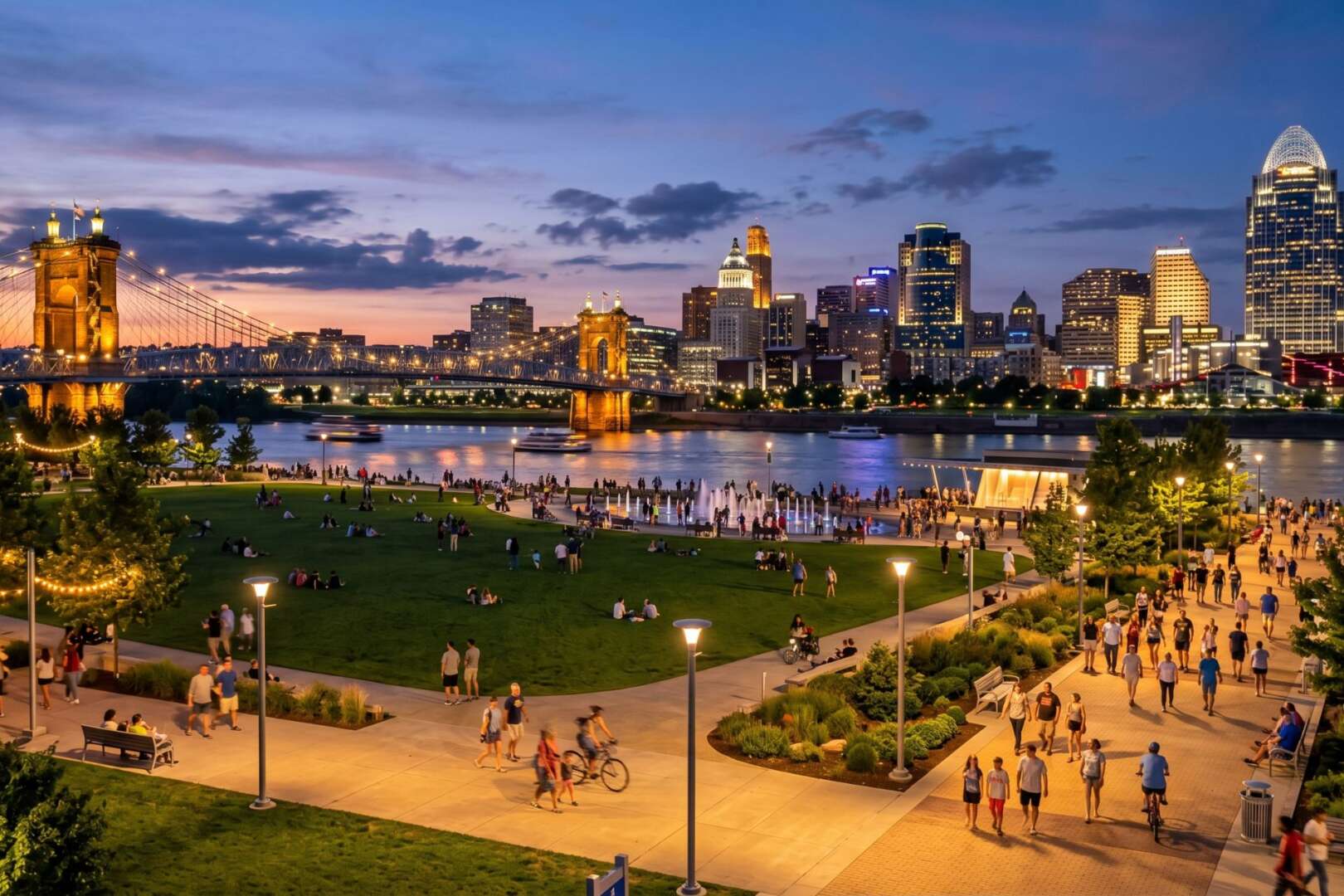
Similarly, the U.S. Army Corps of Engineers partnered with the Cincinnati Park Board. They studied the Ohio River’s edge near Smale Riverfront Park. They aim to create a welcoming, safe, and sustainable environment. The project provides opportunities for ecosystem restoration while protecting the riverfront from erosion. Erosion control stops pathways from crumbling into the water. This proactive planning keeps cincinnati park safety at the forefront of riverfront development.
What the future holds for public spaces
Several multi-year projects will redefine how residents interact with nature. Planners are working to restore a Sawyer Point playground lost to a fire. The new design aims to serve a wide range of ages and abilities. City planners are engaging the community to ensure the new space meets modern safety standards. The target opening for this iconic regional park playground is spring 2027.
Additional improvements are targeting specific neighborhood needs. The Lytle Park renovation is bringing new life to an underutilized corner of downtown. Fueled by corporate generosity, the project includes new hardscapes and well-lit brick walkways. Upgraded fencing and restrooms also contribute to a secure environment. Every single upgrade undergoes evaluation for its impact on visitor security.
As Cincinnati grows, maintaining secure public spaces will demand constant attention. The combined efforts of the city council, park boards, and private foundations show a unified approach. Upgraded trails, better lighting, and engaged communities form the backbone of these improvements. Residents can look forward to greener, safer, and more vibrant neighborhoods. The city’s commitment to Cincinnati park safety remains stronger than ever.
FAQs
How is Cincinnati funding its park safety and infrastructure improvements?
Funding comes from multiple combined sources, including the city’s municipal budget, the Cincinnati Parks Foundation, and the newly established Cincinnati Southern Railway Trust. These entities are allocating millions of dollars specifically for infrastructure rehabilitation, trail maintenance, and direct security upgrades.
What specific park renovation projects are currently planned or underway?
Major initiatives include the rehabilitation of Owl’s Nest Park and the design and reconstruction of the fire-damaged Sawyer Point playground. Additionally, Great Parks of Hamilton County is converting the 22-acre former James N. Gamble estate in Westwood into an ADA-compliant urban greenspace.
What security technology is the city implementing in public spaces?
The proposed FY2027 city budget includes $1.6 million to fund a drones-as-first-responders program for the Cincinnati Police Department. The city is also dedicating $500,000 to physical safety improvements at Fountain Square, which includes installing new lighting and security cameras to eliminate blind spots.
How does environmental management contribute to park safety in Cincinnati?
Stabilizing natural features directly prevents physical hazards like crumbling pathways, uneven trails, and unstable ground. Active projects include developing a hydrologic plan to stop severe erosion at California Woods and working with the U.S. Army Corps of Engineers to protect the riverfront edge near Smale Riverfront Park.