
Share This Article
Article Summary
Greater Cincinnati Water Works has replaced more than 10,000 lead service lines since launching its current program in 2018. More than 30,000 lines remain across its service area, with GCWW targeting completion by 2037. Cincinnati has allocated $20 million for private lead service line replacement in its fiscal year 2027 budget.
Cincinnati lead service lines have reached a major replacement milestone as Greater Cincinnati Water Works passes 10,000 removals.
The Cincinnati lead service lines program still has more than 30,000 lines to replace across the utility’s service area.
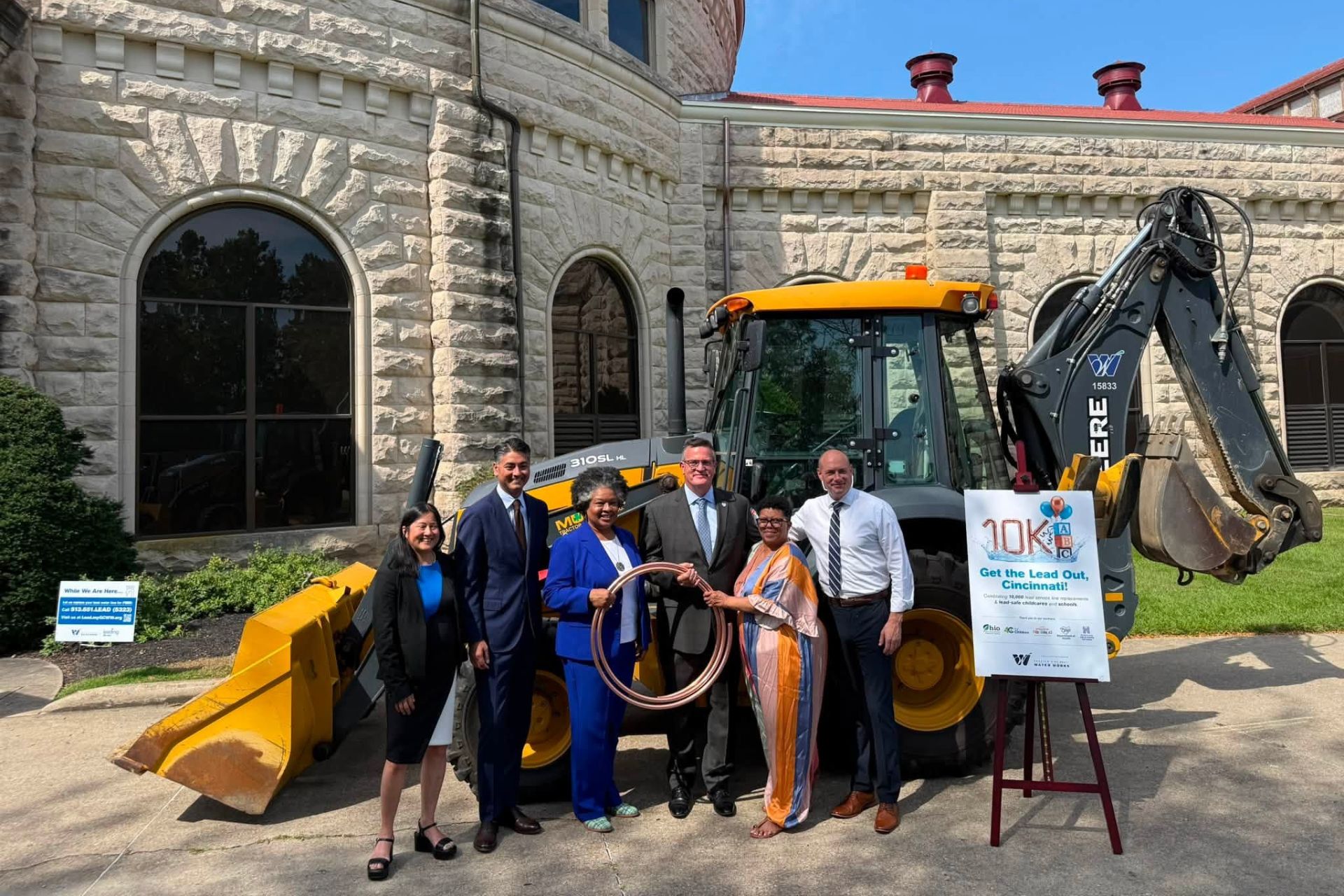
Greater Cincinnati Water Works (GCWW) marked the milestone Wednesday, Aug. 26, highlighting progress from a program that began in 2018. The utility replaces lead service lines that connect properties to the public water system. The work aims to remove a potential source of lead exposure from drinking water. GCWW said the program has now replaced more than 10,000 lines across Greater Cincinnati. The milestone includes work at homes, businesses and licensed child care facilities.
Cincinnati lead service lines program reaches 10,000 replacements
GCWW began its current Enhanced Lead Service Line Replacement Program in 2018. The utility has steadily increased the number of replacements as federal requirements have changed. GCWW previously reported nearly 7,500 replacements in July 2025. That figure has now passed 10,000.
The program covers both public and private portions of eligible service lines. GCWW says property owners can receive replacements at no additional cost through its program. The work relies on local funding, state and federal grants, and other financing sources. The utility has also pursued targeted funding for neighborhoods and facilities where lead exposure presents particular concerns.
The milestone comes as Cincinnati works toward a much larger goal. GCWW estimates that more than 30,000 lead service lines remain in its service area. The utility wants to eliminate the remaining lines by 2037.
Cincinnati lead service lines remain in major neighborhoods
The remaining lines are not evenly distributed throughout Cincinnati. FOX19 reported that Hyde Park has the largest number of identified remaining lead service lines among city neighborhoods. Oakley and East Price Hill also rank among the areas with the highest totals.
According to FOX19, the Aug. 26 figures include:
- Hyde Park: 1,903 remaining lead service lines
- Oakley: 1,638 remaining lead service lines
- East Price Hill: 1,617 remaining lead service lines
- West Price Hill: 1,486 remaining lead service lines
- Westwood: 1,475 remaining lead service lines
East Price Hill and West Price Hill have also recorded significant replacement activity since the program began. Evanston, Northside and CUF have also seen substantial numbers of lines replaced. However, each of the five neighborhoods listed above still has more than 1,400 remaining lines, according to the FOX19 report.
The neighborhood figures show why the 10,000-line milestone does not mark the end of the project. GCWW still faces a large replacement workload across Cincinnati and other communities in its service area. The utility estimates it currently replaces about 2,500 lines each year. That pace will need to increase to meet the 2037 target.
For readers following Cincinnati’s broader water infrastructure spending, the city’s $45 million water infrastructure investment provides additional context on the funding behind the work.
Lead service lines and drinking water safety
Lead service lines can allow lead to enter drinking water when conditions cause the metal to leach from the pipe. The U.S. Environmental Protection Agency says lead can enter water when drinking water flows through lead service lines. Children face particular risks from lead exposure, including potential effects on brain and nervous system development.
GCWW says the presence of a lead service line does not mean customers face an immediate threat. The utility treats its water to reduce the possibility of lead leaching into drinking water. However, GCWW also says removing lead-containing lines provides the most complete way to eliminate that potential source.
Cincinnati has a long history with lead service lines. The city began requiring copper pipes in 1928 and stopped using lead for public lines at that time. Some older private service connections continued to contain lead. Those remaining lines are now the focus of the replacement effort.
The EPA’s current rules require public water systems to replace nearly all lead service lines by 2037. The federal requirement has pushed utilities nationwide to accelerate replacement programs. GCWW had already begun its replacement effort before the federal deadline took effect.
Child care facilities receive priority
GCWW has also focused on child care facilities because young children are particularly vulnerable to lead exposure. In 2025, the utility received a $500,000 Ohio Environmental Protection Agency grant for replacements at licensed child care facilities. GCWW identified more than 100 facilities with private-side lead service lines.
The grant targeted both publicly and privately owned portions of service lines. GCWW partnered with Hamilton County Jobs and Family Services, 4C for Children and Preschool Promise to reach eligible providers. The utility said the work would come at no cost to participating child care providers.
WLWT reported that GCWW has completed work involving roughly 100 child care facilities as part of the broader milestone. The station also reported that U.S. Rep. Greg Landsman helped secure a nearly $1 million grant for lead-line replacement in disadvantaged neighborhoods.
The focus on child care facilities reflects the health concerns associated with lead exposure among young children. It also gives GCWW a way to target locations where children regularly spend time. The utility continues to encourage eligible facilities to participate in its replacement efforts.
Cincinnati funding supports lead line replacement
Cincinnati City Council has continued allocating money toward lead service line replacement. The city’s approved fiscal year 2027 budget includes $20 million for private lead service line replacement activities. It also includes more than $25 million for broader Water Works capital improvements.
The city has also pursued state financing to help cover replacement costs. A June 2026 council measure authorized an application for up to $8 million through the Ohio Environmental Protection Agency and Ohio Water Development Authority. The package includes $4.24 million in principal forgiveness and $3.76 million in zero-interest financing.
The funding is important because service-line replacement can involve work on both public and private property. Cincinnati’s program has increasingly shifted toward covering private-side replacement costs. The city took responsibility for restoring private and public lines at no cost to property owners in 2021, according to a city audit.
The city audit also found that participation in the program had reached about 90 percent. GCWW has used local funding along with state and federal grants and loans to support the work. The utility expects to accelerate replacements as the federal deadline approaches.
More work remains before 2037
The 10,000th replacement represents substantial progress, but GCWW still has a long way to go. More than 30,000 lead service lines remain across its service area, according to reports from FOX19 and WLWT. The utility’s target remains full replacement by 2037.
The pace of replacement will be critical. GCWW previously told WVXU that it anticipated about 30,000 remaining lines and would need to replace roughly 3,000 annually once federal requirements increased. The utility has since continued expanding its replacement program.
The federal deadline gives Cincinnati about 11 years from the current milestone to finish the remaining work. That means funding, contractors and neighborhood-level participation will remain important parts of the program. The city has already committed additional money for the next fiscal year.
Residents who have questions about a property’s service-line material can use GCWW’s lead-line resources. GCWW also offers free drinking water lead testing for customers. Residents who receive elevated test results can receive additional assistance, according to FOX19.
The Greater Cincinnati Water Works lead service line program remains central to Cincinnati’s effort to remove aging lead infrastructure. The utility’s latest milestone shows that thousands of lines have already been eliminated. However, the more than 30,000 lines still in service make replacement a major infrastructure project for the years ahead.
FAQs
How many lead service lines has Cincinnati replaced?
Greater Cincinnati Water Works has replaced more than 10,000 lead service lines since its current program began in 2018. The replacements cover properties throughout the utility’s service area.
How many lead service lines remain?
More than 30,000 lead service lines remain in the Greater Cincinnati Water Works service area. The utility plans to replace the remaining lines by 2037.
Which Cincinnati neighborhoods have the most remaining lead lines?
FOX19 reported that Hyde Park has 1,903 remaining lines, followed by Oakley with 1,638 and East Price Hill with 1,617. West Price Hill and Westwood also have more than 1,400 remaining lines each.
Does GCWW charge residents for lead service line replacement?
GCWW offers replacement of eligible public and private lead service lines at no additional cost to property owners. The program uses local, state and federal funding to support the work.