
Share This Article
Article Summary
The Cincinnati housing market remains stable as the local economy strengthens, but housing supply and affordability challenges persist. Detached homes are cooling, while demand grows for smaller and attached units. Policy efforts and new development programs aim to improve inventory and address long-term affordability.
Cincinnati’s economy is entering 2026 with a sense of balance, but housing constraints remain a defining issue.
Job growth has stabilized, incomes are rising modestly, and demand for housing remains consistent.
However, supply has not kept pace, leaving many buyers priced out of the market. The result is a housing environment that feels steady on the surface but strained underneath. Analysts say this “balanced but tight” condition could define the region’s trajectory over the next several years. The Cincinnati housing market reflects broader national trends while maintaining unique local pressures.
Cincinnati housing market shows steady economic foundation
The housing market is supported by a stable regional economy with steady job numbers and moderate wage growth. Employment levels across the metro area remain strong, helping sustain housing demand even as interest rates fluctuate. Household incomes have increased in recent years, giving some buyers more purchasing power. However, that growth has not been enough to offset rising home prices.
According to data reported by U.S. Bureau of Labor Statistics, unemployment in the Cincinnati metro area has remained below the national average, reinforcing the region’s economic resilience. Meanwhile, industry coverage from Builder Magazine notes that income growth in the region has hovered around four percent year over year.
Key economic drivers include:
- A diversified job base across healthcare, manufacturing, and logistics
- Continued population stability with modest growth
- Strong employer presence across the tri-state region
These factors help explain why the Cincinnati housing market has avoided sharp downturns. Still, stability alone does not solve the deeper issue of housing accessibility.
Cincinnati housing market shifts toward smaller and attached homes
Moreover, the housing market in Cincinnati is undergoing a shift as buyers adjust to affordability constraints. Detached single-family homes, once the dominant preference, are seeing softer price growth. In contrast, attached housing such as townhomes and condominiums is gaining traction.
Recent data shows:
- Slight declines in new single-family home sales
- Rising prices in attached housing segments
- Increased demand for smaller, more affordable units
This trend reflects a broader behavioral shift among buyers. Many households are prioritizing affordability over space, especially first-time buyers entering the market. Developers are responding by building more compact housing options, though supply remains limited.
According to reporting by CityBeat, local initiatives are encouraging the development of “missing middle” housing. These include duplexes, triplexes, and small multifamily units designed to bridge the gap between single-family homes and large apartment complexes.
The Cincinnati housing market is adapting, but the transition takes time. Zoning restrictions, construction costs, and permitting delays continue to slow progress.
Affordability remains the biggest challenge
Meanwhile, despite income growth, many residents cannot afford newly built homes. This gap has widened over the past several years, creating barriers for both buyers and renters.
Estimates suggest:
- Only about one in five households can afford a median-priced new home
- Less than half of households can afford existing homes
- Renters face increasing cost burdens across the metro area
A report highlighted by News From The States found that nearly half of renters in Ohio spend more than they can afford on housing. This aligns with local concerns about long-term housing stability.
Affordability challenges are driven by several factors:
- Rising construction costs
- Limited available land for development
- Higher interest rates impacting monthly payments
These issues continue to constrain the Cincinnati housing market, even as demand remains steady.
Supply constraints continue to limit growth
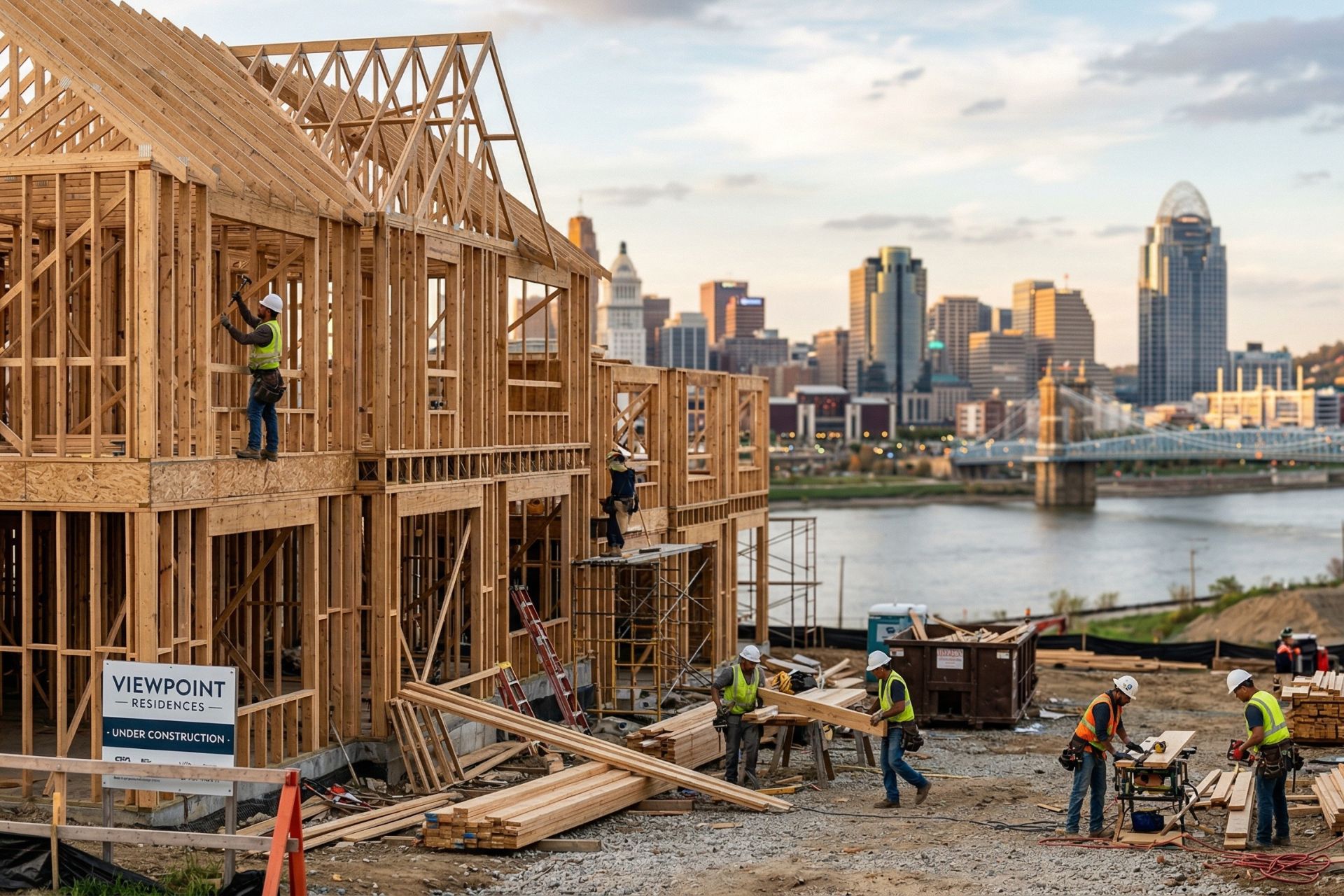
Moreover, the Cincinnati housing market remains undersupplied, and new construction has not kept pace with demand. Housing starts declined in late 2025, slowing the pipeline of new inventory. While developers have plans for future projects, many have yet to break ground.
Current supply conditions include:
- A measurable housing shortage across the region
- Thousands of planned housing lots still in development stages
- Delays tied to financing, labor shortages, and regulatory hurdles
Despite these challenges, local leaders are working to accelerate housing production. Programs aimed at streamlining approvals and reducing costs are gaining attention.
One such effort focuses on pre-approved building designs, allowing developers to move projects forward more quickly. According to local coverage from CityBeat Cincinnati, these initiatives aim to reduce construction timelines and increase affordability.
The Cincinnati housing market could see improvement if these programs succeed. However, meaningful change will likely take several years.
Policy efforts target long-term housing solutions
The housing market is increasingly shaped by policy decisions aimed at addressing supply and affordability. City officials and regional planners are exploring new strategies to close the housing gap.
Key initiatives include:
- Expanding zoning flexibility for multifamily housing
- Supporting “missing middle” development
- Investing in infrastructure to support new communities
Local government resources, including housing data from the U.S. Department of Housing and Urban Development, highlight the need for sustained investment in affordable housing. Policymakers are also looking at regional collaboration to address cross-border housing issues in Ohio, Kentucky, and Indiana.
The housing market will depend heavily on how effectively these policies are implemented. Without sustained action, affordability challenges could worsen.
Outlook for the Cincinnati housing market
The Cincinnati housing market is expected to remain stable but constrained in the near term. Economic fundamentals provide a strong foundation, but housing supply and affordability continue to limit growth.
Experts anticipate:
- Gradual increases in housing inventory
- Continued demand for affordable and mid-range homes
- Slow but steady price adjustments rather than sharp declines
For buyers, the market presents both challenges and opportunities. While affordability remains a concern, the shift toward balance may reduce competition compared to previous years.
For policymakers and developers, the focus remains clear: increase supply without driving up costs. Achieving that balance will be key to the future of the Cincinnati housing market.
FAQs
Is the Cincinnati housing market currently stable?
Yes, economic conditions and steady employment support a stable market, but supply limitations keep affordability a concern.
Are home prices rising in Cincinnati?
Detached home prices are softening slightly, while attached homes like townhomes and condos continue to increase due to demand.
What is driving housing constraints in Cincinnati?
Limited land availability, higher construction costs, and regulatory delays are key factors constraining supply.
Are there programs to improve housing availability?
Yes, initiatives like “missing middle” housing and pre-approved building designs aim to speed development and increase affordable options.
What is the outlook for buyers in Cincinnati?
The market will remain tight but balanced, offering opportunities in smaller or more affordable homes while larger homes face slower growth.