



Share This Article
Article Summary
The Cincinnati digital divide leaves many lower-income and socially vulnerable households without reliable internet, severely impacting their access to education, employment, and telehealth services. Recent data from a 2026 Connected Nation report indicates this local issue mirrors a national crisis where over 15.7 million Americans lack broadband access. To address these gaps, local organizations are partnering with libraries to provide devices and digital literacy training while advocating for long-term fiber-optic infrastructure investments.
The Cincinnati digital divide continues to be a major hurdle for families seeking reliable web connectivity.
Understanding the Cincinnati digital divide is critical for advocates fighting for equitable resources.
The Cincinnati digital divide is a persistent challenge for many local neighborhoods. Internet connectivity has become a fundamental requirement for modern living. Yet, thousands of households across the city still lack reliable home web service. Families without high-speed service struggle to access education, employment, and essential health care. The gap between connected and unconnected residents highlights ongoing broadband inequality in the region. Recent data shows that this disparity heavily impacts lower-income and socially vulnerable areas.
Community leaders are working urgently to close this technology gap. Access to devices and internet service is no longer a luxury. It is a vital utility required to function in today’s digital-first society. Without immediate intervention, residents in disconnected neighborhoods risk falling further behind.
How the Cincinnati digital divide impacts local students and workers
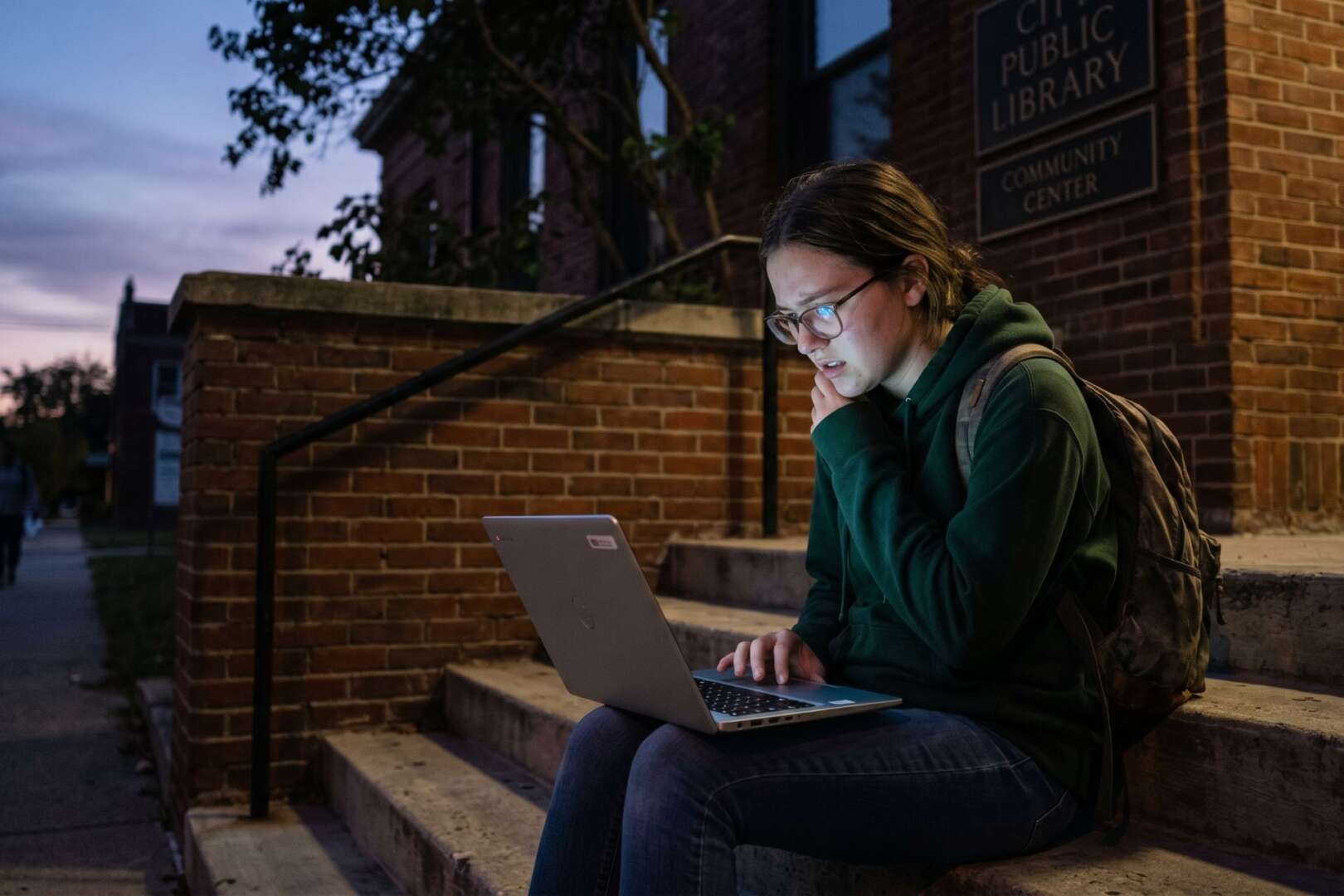
The Cincinnati digital divide creates significant roadblocks for students navigating modern education. Schools increasingly rely on digital platforms for assignments and communication. Students without home internet face immediate disadvantages compared to their connected peers. Some children are forced to do homework on mobile phones. Others must travel to public spaces just to find a reliable Wi-Fi signal.
The lack of reliable connectivity fundamentally limits academic and career potential in several ways:
- Students struggle to complete daily online assignments.
- Children often rely on small mobile screens for reading.
- Job seekers cannot easily access remote interview platforms.
- Workers miss out on crucial digital skills training.
Workforce participation is equally hindered by broadband inequality. Most job applications require online submissions and digital literacy. Employers expect applicants to possess basic computer skills. Many job interviews now take place over video conferencing software. Residents without proper internet access miss out on these employment opportunities entirely. Organizations like the United Way of Greater Cincinnati recently reported that digital skills are necessary for the day-to-day functions of modern jobs.
Job seekers find themselves trapped in a frustrating cycle. They need a job to afford internet service, but they need internet service to find a job. Local initiatives are attempting to provide devices and digital training. However, the sheer scale of the Cincinnati digital divide requires more comprehensive infrastructure changes. Tech access communities must be expanded to ensure everyone has a fair chance at economic stability.
Telehealth limitations and healthcare disparities
Lack of reliable internet also creates severe disparities in healthcare access. The COVID-19 pandemic accelerated the shift toward telehealth and online medical services. These virtual appointments offer convenience for patients with fast, reliable broadband. Unfortunately, this shift leaves out patients living in digital deserts. A recent study by the University of Cincinnati highlighted this growing problem. Researchers found that socially vulnerable communities face massive barriers to adequate health care.
According to Diego Cuadros, a UC epidemiologist, the lack of available broadband directly limits healthcare options.Patients need high-speed internet and proper devices to use telemedicine comfortably. They also need digital literacy to navigate patient portals and scheduling systems. Without these tools, vulnerable residents experience delays in diagnosis and treatment. This digital barrier effectively worsens existing health outcomes for disconnected families.
As medical providers continue to digitize their services, the gap threatens to widen. The convenience of telemedicine is only useful to those who can access it. Rural areas outside the city and low-income urban neighborhoods both suffer from this trend. Public health experts stress that internet access must be viewed as a social determinant of health. Bridging the Cincinnati digital divide is necessary to ensure equitable medical care.
Measuring the Cincinnati digital divide against national numbers
The Cincinnati digital divide mirrors a larger national crisis regarding internet infrastructure. According to a 2026 report by Connected Nation, more than 15.7 million Americans still cannot access broadband. Furthermore, over 81 million Americans do not subscribe to home broadband service. These staggering numbers illustrate that infrastructure availability is only part of the problem. Affordability and digital literacy remain massive barriers to full adoption.
In Ohio, shifts in federal funding have complicated local digital equity efforts. Community leaders had hoped these funds would directly support digital skills initiatives. Now, organizations must find alternative ways to finance broadband workforce training programs. Improving the internet access Ohio residents depend on requires creative solutions and robust partnerships. Local nonprofits are stepping up to fill the gaps left by federal changes.
For example, Cincinnati Works has partnered with the local library system to help job seekers. They provide borrowed laptops and host hybrid virtual job fairs. These grassroots efforts provide immediate relief for residents caught in the technology gap. However, piecemeal solutions cannot permanently solve the underlying infrastructure problems.
Building tech access communities for the future
Creating sustainable tech access communities requires long-term investment and strategic planning. City officials must prioritize broadband infrastructure in historically underserved neighborhoods. Laying new fiber-optic cables demands significant upfront capital. However, the long-term economic benefits far outweigh these initial construction costs. Internet service providers also play a crucial role in offering affordable plans.
Low-cost tiers must provide sufficient speeds for video conferencing and online learning. Substandard internet connections simply do not meet the demands of modern applications. Providers must ensure their budget options deliver genuinely functional speeds.
Community anchor institutions like libraries and community centers remain essential. They offer safe spaces where residents can access free Wi-Fi and updated computers. These locations also provide vital digital literacy training for older adults. Learning how to navigate the internet safely is just as important as having the connection. Digital navigators can guide residents through the process of signing up for affordable service.
Moreover, addressing the Cincinnati digital divide requires continuous monitoring and transparent data. Leaders must track exactly which neighborhoods remain unconnected. Recent infrastructure updates from The Cincinnati Exchange show some progress, but the work is far from finished. Holding providers and policymakers accountable will ensure that promises become reality.
Moving forward to eliminate broadband inequality
Eliminating broadband inequality is an ambitious but deeply necessary goal for the region. The Cincinnati digital divide affects every single aspect of civic life. From education and employment to healthcare and social connection, internet access is indispensable. The pandemic proved that digital equity is not merely a convenience. It is a fundamental pillar of a resilient, functional, and modern society.
Taking action: How the community can help
Local organizations will continue to advocate for marginalized and disconnected communities. They recognize that leaving anyone offline holds the entire city back. Residents also have a vital role to play in this ongoing community effort. Citizens can support digital inclusion programs by donating their gently used devices. They can also volunteer their time to teach basic computer skills at local centers. Check out our guide on local volunteer opportunities to get involved today.
A collaborative path to full inclusion
The path toward full digital inclusion is complex and admittedly challenging. It requires unprecedented cooperation across government, private industry, and nonprofit sectors. By keeping the public spotlight squarely on the Cincinnati digital divide, the community can drive meaningful change. Ultimately, true progress will only be achieved when every household is securely and affordably connected.
FAQs
What is the Cincinnati digital divide?
The Cincinnati digital divide is the gap between residents who have reliable, high-speed internet access and those who do not, primarily affecting lower-income and socially vulnerable neighborhoods. This lack of home connectivity creates massive barriers to participating in modern society, including accessing online education, remote work, and digital healthcare.
How does the lack of internet access affect local students and workers?
Students without reliable home internet struggle to complete online assignments, often relying on small mobile screens or traveling to public spaces for Wi-Fi. Similarly, job seekers face immediate barriers to submitting online applications, attending virtual interviews, and accessing necessary digital skills training.
Why is broadband access considered a healthcare issue in Cincinnati?
The rapid shift toward telehealth has created a significant disparity where patients without high-speed internet cannot access virtual medical appointments or online patient portals. According to University of Cincinnati researchers, these “digital deserts” cause delays in diagnosis and treatment, effectively worsening overall health outcomes for unconnected families.
What steps are being taken to fix broadband inequality in the region?
Organizations like Cincinnati Works have partnered with local libraries to provide immediate, grassroots relief through borrowed laptops and hybrid virtual job fairs. For sustainable long-term progress, community leaders are advocating for the expansion of fiber-optic infrastructure, affordable service tiers from providers, and dedicated digital literacy training.


