



Share This Article
Article Summary
The Wilmington City Council voted to approve controversial data center zoning changes, clearing the path for a massive tech campus. Despite community pushback and environmental concerns, the 5-2 vote rezones over 545 acres to light industrial use. The approval paves the way for a potential Ardent-led project near a proposed Amazon Web Services site, highlighting the growing clash between economic development and rural preservation in Greater Cincinnati.
The recent data center zoning approval marks a major economic shift for Wilmington.
Local leaders hope this data center zoning decision brings new jobs to the region.
The Wilmington City Council officially passed new data center zoning ordinances on Thursday. Consequently, this data center zoning decision fundamentally changes the landscape of Clinton County.
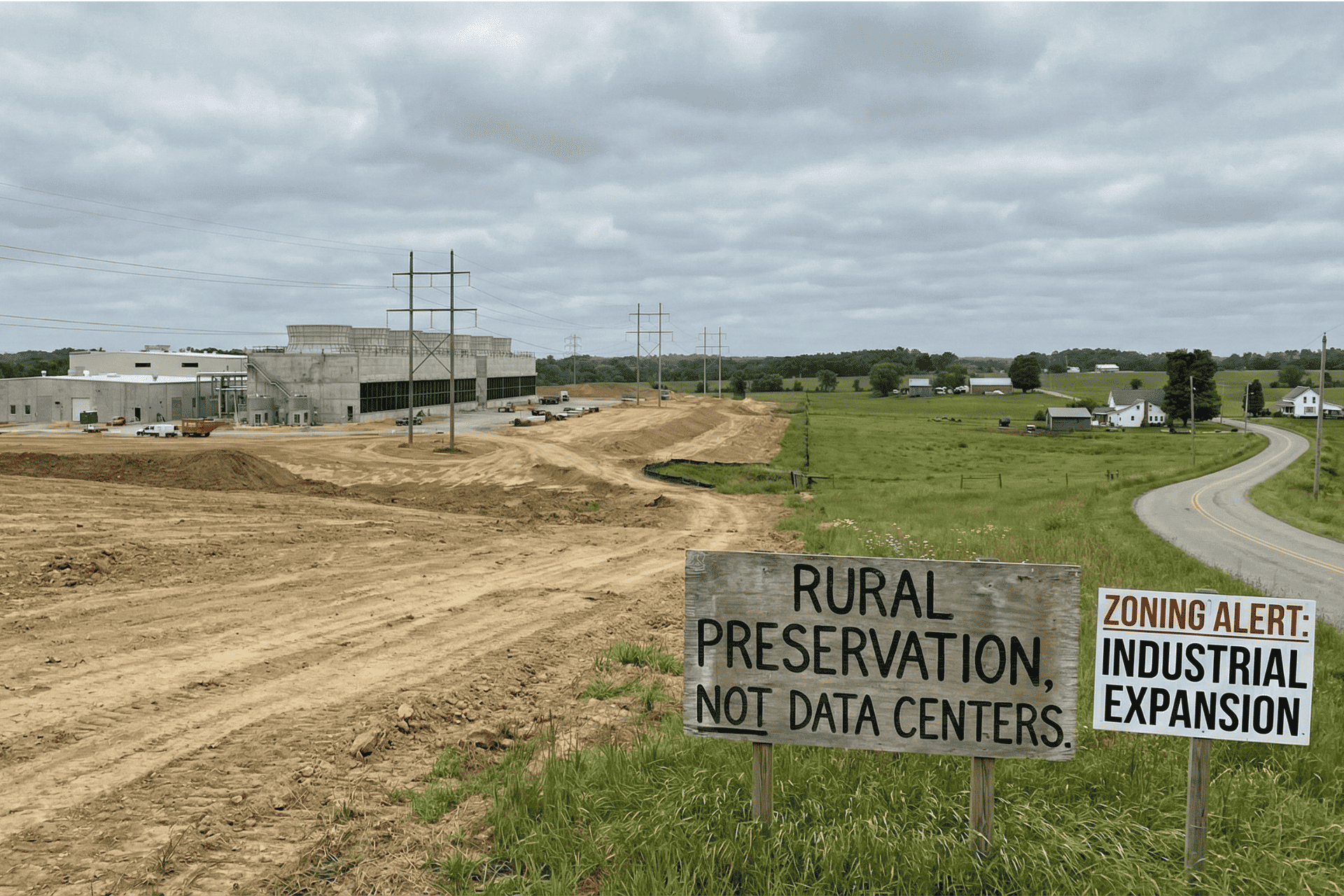
The council approved the rezoning of nearly 546 acres in a split 5-2 vote. Specifically, this land transitions from rural residential to light industrial use. This shift is intended to accommodate a potential Ardent-led tech campus.
The site sits right next to a proposed $4 billion Amazon Web Services facility. Meanwhile, local officials debated the issue heavily before casting their votes.
The proposed AWS project already promises a massive investment in Wilmington. Furthermore, the newly rezoned land acts as a potential expansion for similar operations.
Specific changes
The specific changes designate exactly 545.893 acres for light industrial development. Notably, these parcels were recently annexed from Union Township into the city limits. As a result, moving this land required multiple readings before the final council approval. Moreover, this thorough process sparked intense debates about long-term municipal planning.
The data center zoning vote followed weeks of intense public scrutiny. During this period, dozens of residents attended the council meetings to voice their concerns. In fact, many citizens demanded a complete pause on the development project.
They cited fears about unchecked noise pollution and massive electricity usage. Additionally, people also worried about the intense strain on local water resources. Nevertheless, despite these vocal protests, the majority of the council moved forward. They maintained that the economic benefits simply outweighed the potential risks.
Navigating the data center zoning debate
Council members Jeff Earley, Dennis Gherman, Jamie Knowles, Kelly Tolliver, and Don Wells supported the measure. Earley highlighted the pressing need for local job creation. He recalled his own past commutes to Kentucky just to find reliable work.
He stressed that Wilmington must grow to avoid long-term economic stagnation. Tolliver echoed this sentiment during the heated public meeting. He stated the country needs to aggressively expand its digital infrastructure.
Not everyone on the council agreed with this fast-tracked approach. Judiciary Chair Josh Schlabach and council member Michael Snarr voted against the measure. They urged their colleagues to slow down the entire data center zoning process.
Schlabach argued the city needs specific regulations tailored to tech facilities. Currently, these massive campuses fall under general industrial guidelines. He suggested making them a conditional use to maintain better community oversight.
Snarr expressed deep concerns about transparency and long-term environmental impacts. He pointed to ongoing state and federal policy discussions. These legislative talks could potentially weaken protections for air and water quality.
Snarr stressed the need to build trust within the community first. He wanted a more inclusive conversation before altering the city’s rural character. The council ultimately rejected multiple motions to table the final vote.
Economic promises versus environmental fears
Tech campuses require enormous amounts of resources to function properly. Residents living near the proposed site worry about several key issues:
- Massive daily water consumption for facility cooling systems.
- Threats to local air quality from diesel backup generators.
- Constant humming noises are ruining the quiet atmosphere of neighborhoods.
- Sudden utility rate hikes for everyday residential consumers.
Balancing Economic Boons with Environmental and Fiscal Responsibility
Many locals feel the city rushed the approval without adequate environmental studies. Proponents argue that these facilities generate massive local tax revenues. Companies like Amazon and Ardent invest billions into surrounding economies.
This sudden influx of cash can fund public schools and emergency services. Supporters also point out that data centers create high-paying technical jobs. Construction phases alone bring hundreds of skilled workers to the area. For a city like Wilmington, this represents a generational financial opportunity.
Policy experts continue to monitor these massive corporate investments closely. Some financial analysts warn that local governments often give away too much. According to a report by Policy Matters Ohio, certain incentive packages lack basic ratepayer safeguards.
They urge cities to negotiate stricter terms before granting permanent tax abatements. Municipalities must protect everyday citizens from bearing the cost of utility upgrades. Proper planning ensures corporations pay their fair share of local taxes.
Community pushback shapes data center zoning talks
The public backlash in Wilmington reflects a growing national trend. Citizens across the country are pushing back against unchecked tech expansion. During recent Wilmington Planning Commission meetings, dozens of residents testified against the site plan. They felt completely left out of the initial municipal planning stages. Many neighbors did not know about the rezoning until the final hour. This lack of communication fueled intense distrust toward elected local officials.
To address these concerns, some residents demanded comprehensive traffic studies. They want guarantees that heavy construction will not destroy local roads. Citizens also asked for strict limits on generator usage during power outages. Environmental advocates pushed for immediate commitments to renewable energy sources. They hope the developers will install solar panels or fund green initiatives. The community refuses to back down from protecting their beloved hometown.
Other municipalities are watching the Wilmington situation very closely. They know their own property codes might face similar challenges soon.
City planners everywhere must balance citizen demands with lucrative corporate interests. This delicate balancing act defines modern urban development in the Midwest.
How the data center zoning impacts Greater Cincinnati
Wilmington is not the only city grappling with this exact issue. The entire Greater Cincinnati region currently faces a massive digital infrastructure boom. Just days before the Wilmington vote, the Cincinnati City Council took action. Cincinnati leaders officially passed an Interim Development Control Overlay District. This emergency measure effectively pauses new tech campus permits for three months. The city wants adequate time to draft permanent and protective property regulations.
Cincinnati officials realized their existing land laws were woefully outdated. According to a recent report by WVXU, the city previously classified these massive tech hubs as indoor storage. This legal loophole allowed developers to build power-hungry facilities in commercial zones. The new pause directly affects over 22,000 individual land parcels across Cincinnati. City planners will use this valuable time to study noise and energy impacts.
The stark contrast between Wilmington and Cincinnati highlights a regional divide. Rural towns often welcome the massive tax revenues that tech giants bring. Meanwhile, dense urban centers prioritize grid stability and strict environmental protection. Both municipal approaches carry significant economic consequences for the immediate future..
Looking ahead at future tech developments
The corporate development debate in Ohio continues. Lawmakers have proposed a special commission to study how digital infrastructure affects the statewide grid, especially as AI drives massive electricity demand. The goal is to prevent blackouts and protect consumer rates.
Meanwhile, the Ardent and Amazon projects in Wilmington move forward, pending site plan approvals and permits. The city council vows to enforce all regulations, and residents plan to monitor every meeting closely. Clinton County’s digital transformation is officially underway.
FAQs
What exactly does the new Wilmington data center zoning approval mean?
The recent city council vote officially rezones nearly 546 acres from rural residential to light industrial use. This change legally paves the way for a massive tech campus, potentially led by Ardent, right next to the proposed Amazon Web Services site.
Why are local residents pushing back against the data center zoning?
Community members are heavily protesting these massive tech campuses due to fears about environmental degradation and rapid resource consumption. Residents consistently cite concerns over daily water usage, constant noise pollution, and massive electricity demands that could hike local utility rates.
How will the data center zoning impact the local economy?
Supporters of the rezoning argue that hyperscale tech campuses bring billions of dollars in corporate investment and generate substantial local tax revenues. However, financial analysts warn that the actual number of permanent jobs created is relatively small once the initial construction phases conclude.
What is the State of Ohio doing about the rapid growth of data centers?
State lawmakers are actively responding to the regional tech boom by introducing legislation like House Bill 646 to create a specialized study commission. This group will thoroughly evaluate how the rapid expansion of digital infrastructure impacts the statewide energy grid and consumer utility costs.
Will Cincinnati implement similar data center zoning rules as Wilmington?
Cincinnati is actually taking a very different approach by implementing an Interim Development Control Overlay District to temporarily pause new tech campus approvals. This gives city planners time to draft permanent, protective regulations rather than rushing to approve light industrial rezonings.