
Share This Article
Cincinnati native and St. Xavier graduate Vivek Ramaswamy won a landslide Republican primary victory for Ohio governor on May 5, taking 82.5% of the vote and dominating Hamilton County by +77 points. He now faces Democrat Dr. Amy Acton in November to succeed Gov. Mike DeWine. The race contrasts Ramaswamy’s bold plan of major tax cuts, deregulation, and economic growth with Acton’s focus on targeted family credits and healthcare protections. A local success story, Ramaswamy aims to revive the American Dream across Ohio.
Cincinnati’s Own Vivek Ramaswamy Delivers Landslide Victory, Poised to Become Ohio’s Next Governor
Local Roots, Bold Vision: Ramaswamy Sets Up Strong Contrast with Dr. Amy Acton in November General Election
Vivek Ramaswamy, the Cincinnati native and St. Xavier High School graduate, delivered a landslide victory in the May 5, 2026, Republican primary. With more than 95% of the votes counted, Ramaswamy captured 82.5% of the vote, totaling 673,902 votes, to defeat long-shot challenger Casey Putsch, who received 17.5% and 143,257 votes.
The Associated Press called the race shortly after polls closed at 7:30 p.m.
In his home county of Hamilton County, Ramaswamy turned in one of his strongest performances statewide, winning by a commanding 77-point margin with 41,248 votes. The local surge reflects deep community pride in a son of Cincinnati who attended public schools through eighth grade before graduating from St. X and building a nationally recognized career in biotechnology.
Ohio Primary Turnout Low, But Vivek Ready
Overall, primary turnout in Hamilton County was low at 19.91%, with 119,934 ballots cast out of 602,251 registered voters. Even with light turnout, Ramaswamy’s dominance in the Ohio primary showed the excitement he has generated among local voters.
In victory remarks, Ramaswamy tied his personal story directly to Ohio’s promise:
My parents came halfway around the world to Cincinnati, Ohio, half a century ago, with nothing to their name. I went to public schools through 8th grade… I went to St. X for high school. My dad worked for a 5-figure salary… and now… to call myself the Republican nominee for governor in the very state where I was born and raised — that is the American Dream that makes American exceptionalism possible.
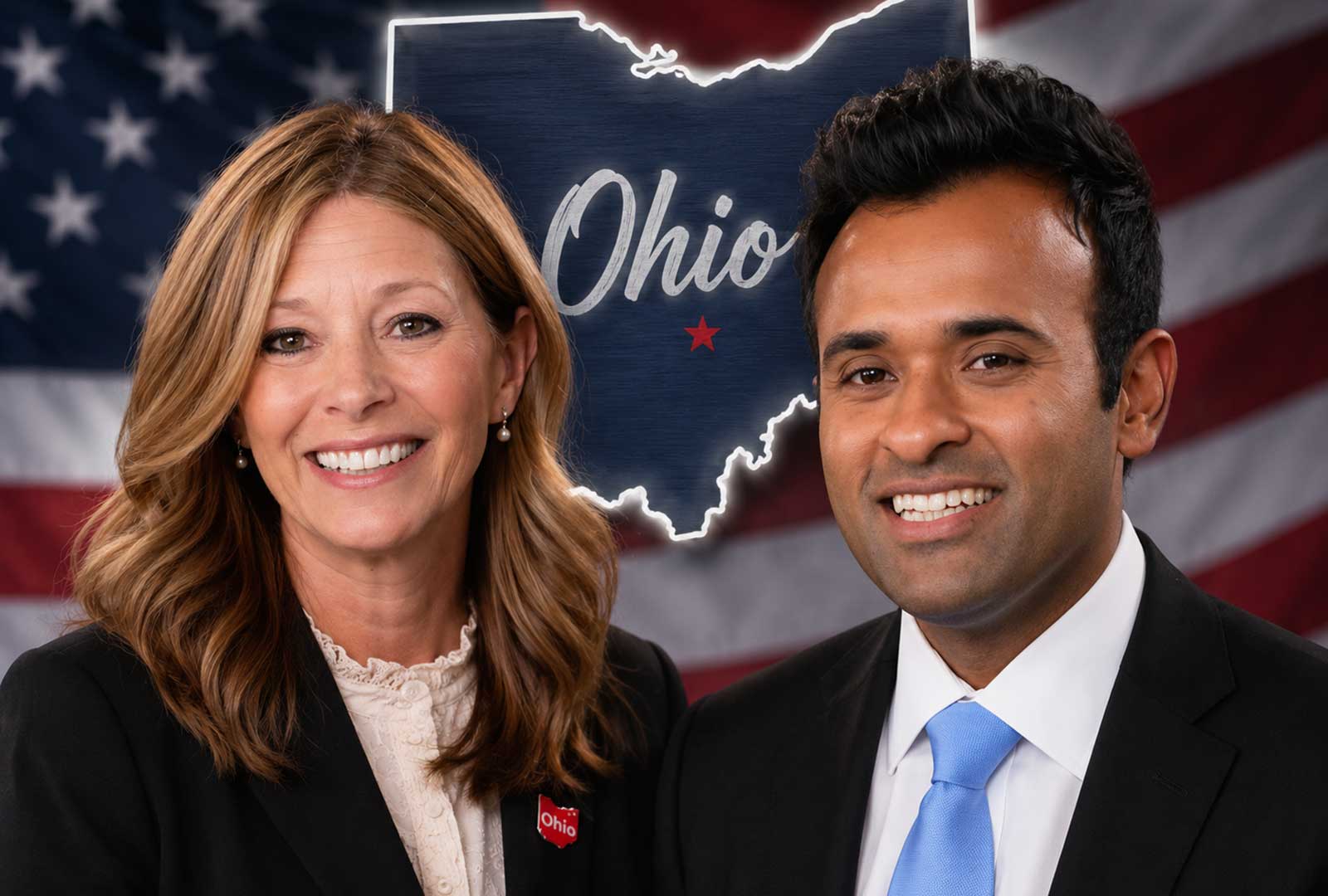
As the clear winner of the Ohio primary, Ramaswamy will now face Democrat Dr. Amy Acton in November to succeed term-limited Gov. Mike DeWine. The contest pits two compelling but very different candidates against each other in a state that has trended strongly Republican in recent years.
Meet the Candidates
Vivek Ramaswamy: Cincinnati Success Story and Bold Visionary
Born and raised in Cincinnati, Ramaswamy is a first-generation American whose parents immigrated from India. After excelling at St. Xavier, he built a thriving biotechnology company before entering national politics as a 2024 presidential candidate.
His campaign has centered on practical, growth-oriented solutions: slashing taxes, cutting red tape, expanding energy production, and restoring excellence in schools. Ramaswamy’s message resonated powerfully during the Ohio primary, where voters in Hamilton County saw him as one of their own — a local figure ready to deliver results for working families across all 88 counties.
Dr. Amy Acton: Physician, Former Health Director, and Democratic Nominee
Dr. Amy Leigh Acton, born February 16, 1966, in Youngstown, Ohio, earned the Democratic nomination unopposed in the Ohio primary. A preventive-medicine physician, she rose to prominence as Director of the Ohio Department of Health from 2019 to 2020 under Gov. DeWine, leading the state’s early COVID-19 response.
Acton’s personal story — overcoming childhood neglect, abuse, hunger, and homelessness in a steel-mill family — has shaped her focus on affordability, healthcare access, and opportunity for struggling families.
She lives in Bexley with her husband Eric, a teacher and coach; they have a blended family of six children. Acton selected former Hamilton County Commissioner David Pepper as her running mate, giving her a direct Cincinnati-area connection as she heads into the general election.
Policy Contrast: Ramaswamy’s Bold Growth Agenda vs. Acton’s Targeted Relief
Both candidates say they want to make Ohio more affordable and reverse population loss. However, their approaches differ sharply.
Ramaswamy’s platform is ambitious and supply-side. It is designed to ignite economic dynamism. Acton offers a more government-centered approach, focused on targeted assistance rooted in her public-health background.
Taxes and Everyday Costs
Ramaswamy proposes the largest property-tax rollback in state history, returning rates to pre-pandemic levels while protecting schools, police, and fire services. He also favors phasing out the state income tax, starting with capital gains taxes, while cutting government waste.
His stated goal is to make Ohio the most affordable state in America, attract new residents and businesses, and grow the state’s population to 15 million through prosperity.
Acton favors targeted tax credits for working families, including an Earned Income Credit and child tax credits. She also supports consumer protections against price gouging and hidden fees. Her plan is narrower and relies more on government intervention than broad-based tax reduction.
Education, Healthcare, Energy, and Safety
Ramaswamy wants higher academic standards, merit pay for teachers, parental choice, cellphone bans in classrooms, and expanded career-technical education. On healthcare, he leans market-oriented. On energy, he champions natural gas, nuclear, and deregulation to lower bills and create jobs. On public safety, he backs stricter bail for repeat offenders and a “back the blue” approach.
Acton prioritizes fully funding public schools, protecting Medicaid, lowering drug prices through an Ohio Rx platform, forgiving medical debt, and holding big energy projects accountable so taxpayers are not burdened. Her emphasis is on equity, consumer safeguards, and anti-corruption measures in state government.
Side-by-Side Comparison
| Area | Vivek Ramaswamy (R) | Dr. Amy Acton (D) |
|---|---|---|
| Taxes/Affordability | Broad cuts to property, income, and capital gains taxes; phase out income tax to drive growth. | Targeted credits for working families; consumer protections against price gouging. |
| Education | Higher standards, merit pay, school choice, cellphone bans, and university consolidation. | Full funding for public schools, with a focus on equity and struggling districts. |
| Healthcare | Market-oriented approach. | Protect Medicaid, lower drug prices, forgive medical debt, and crack down on surprise billing. |
| Energy/Economy | Deregulation plus expanded natural gas, nuclear, and fracking to lower energy costs and create jobs. | All-of-the-above energy approach with stronger consumer safeguards and project accountability. |
| Public Safety | Stricter bail and sentencing, support for police, and attention to root causes like mental illness. | Focus on economic opportunity and public-health prevention. |
| Governing Style | Disruptive, growth-first, and focused on “One Ohio” unity through opportunity. | Collaborative, people-first, and focused on anti-corruption reforms. |
How They Compare to Past Ohio Governors
Ohio has a long tradition of pragmatic governors who delivered results across party lines. Ramaswamy and Acton both enter the race without prior elected office, which makes this race unusual. Each candidate draws on different strengths from recent Ohio leaders.
Mike DeWine: Republican, 2019 to Present
The current governor is a longtime moderate who focused on crisis response, education reform, and business recruitment. He appointed Acton as Health Director and later endorsed Ramaswamy.
Ramaswamy’s aggressive tax cuts and deregulation go further than DeWine’s incremental style, promising faster growth. Acton shares DeWine’s emphasis on public health and problem-solving.
John Kasich: Republican, 2011 to 2019
Kasich was a fiscal conservative with national ambitions. He expanded Medicaid, pursued higher-education efficiency, and delivered balanced budgets.
Ramaswamy echoes Kasich’s drive for government efficiency and economic dynamism, but with a bolder and more disruptive conservative edge.
Ted Strickland: Democrat, 2007 to 2011
The last Democratic governor emphasized education, healthcare, and working-class issues during the Great Recession. Acton’s personal story and focus on affordability most closely mirror Strickland’s populism. However, she brings a physician’s perspective to the role.
Earlier governors like Bob Taft stressed education and infrastructure. In today’s Ohio, voters have consistently chosen pragmatic, results-oriented leaders. Ramaswamy’s Cincinnati roots and business-honed vision position him to build on the successes of DeWine and Kasich while injecting fresh energy into the state’s future.
Post Ohio Primary: Looking Ahead to November
This race sets up a clear contrast: Ramaswamy’s bold, growth-first conservatism, rooted in Cincinnati and Hamilton County, versus Acton’s more conventional, government-centered progressivism.
In a state trending Republican, Ramaswamy’s landslide win in the Ohio primary and strong local support in Hamilton County give him a strong foundation heading into November.
His emphasis on lowering taxes, creating jobs, and restoring the American Dream speaks directly to the aspirations of families and working Ohioans across the state.
Full precinct-level results and down-ballot details are available on the Hamilton County Board of Elections website. Local coverage from WLWT and the Cincinnati Enquirer will continue to track the campaign.
Two Choices for Ohio Governor
Come November, Ohio voters will choose between two candidates who both love this state, but who offer very different paths forward.
Ramaswamy is running on decisive, opportunity-expanding leadership built around growth, affordability, and economic ambition. Acton is running on targeted relief, public-health experience, and government-centered support for working families.
As the standout winner of the Ohio primary, Vivek Ramaswamy’s story is now directly tied to Ohio’s next major political chapter. His campaign will try to make the case that his vision is what the state needs next.
For more information on either candidate, visit vivekforohio.com or actonforgovernor.com. Hamilton County voters will play an important role in this race, especially after the Ohio primary helped shape the November matchup.
FAQs
Who won the 2026 Ohio Republican gubernatorial primary?
Who is running for Ohio governor in 2026?
What are the main differences between Vivek Ramaswamy and Amy Acton?
How did Vivek Ramaswamy do in Hamilton County?
When is the 2026 Ohio governor election?
This article was created with the support of our proprietary AI-powered newsroom tools and reviewed by our editorial team for accuracy and clarity.