



Share This Article
Article Summary:
Cincinnati Violent Crime Weekend: A grandfather was strangled near Oak Hills HS, a fatal bus shooting near the Zoo, and multiple shootings and a hit-and-run left residents questioning public safety. Despite official claims of declining crime, many Cincinnatians feel disorder is spreading and trust in city leadership is eroding.
Another violent weekend in Cincinnati, folks.
This included a strangulation death near Oak Hills High School, multiple shootings across city neighborhoods, a bar shooting in Covington, and a fatal hit-and-run in Price Hill.
The incidents touched communities from North Fairmount to the West Side to Northern Kentucky. This violent weekend in Cincinnati left a lasting impact on many neighborhoods.
The larger issue is not simply the number of crimes. It is the growing disconnect between official messaging around public safety and the lived reality of residents who feel disorder bleeding into everyday life across the metro.
Among the Incidents
- A 22-year-old allegedly strangled his grandfather to death near Oak Hills High School.
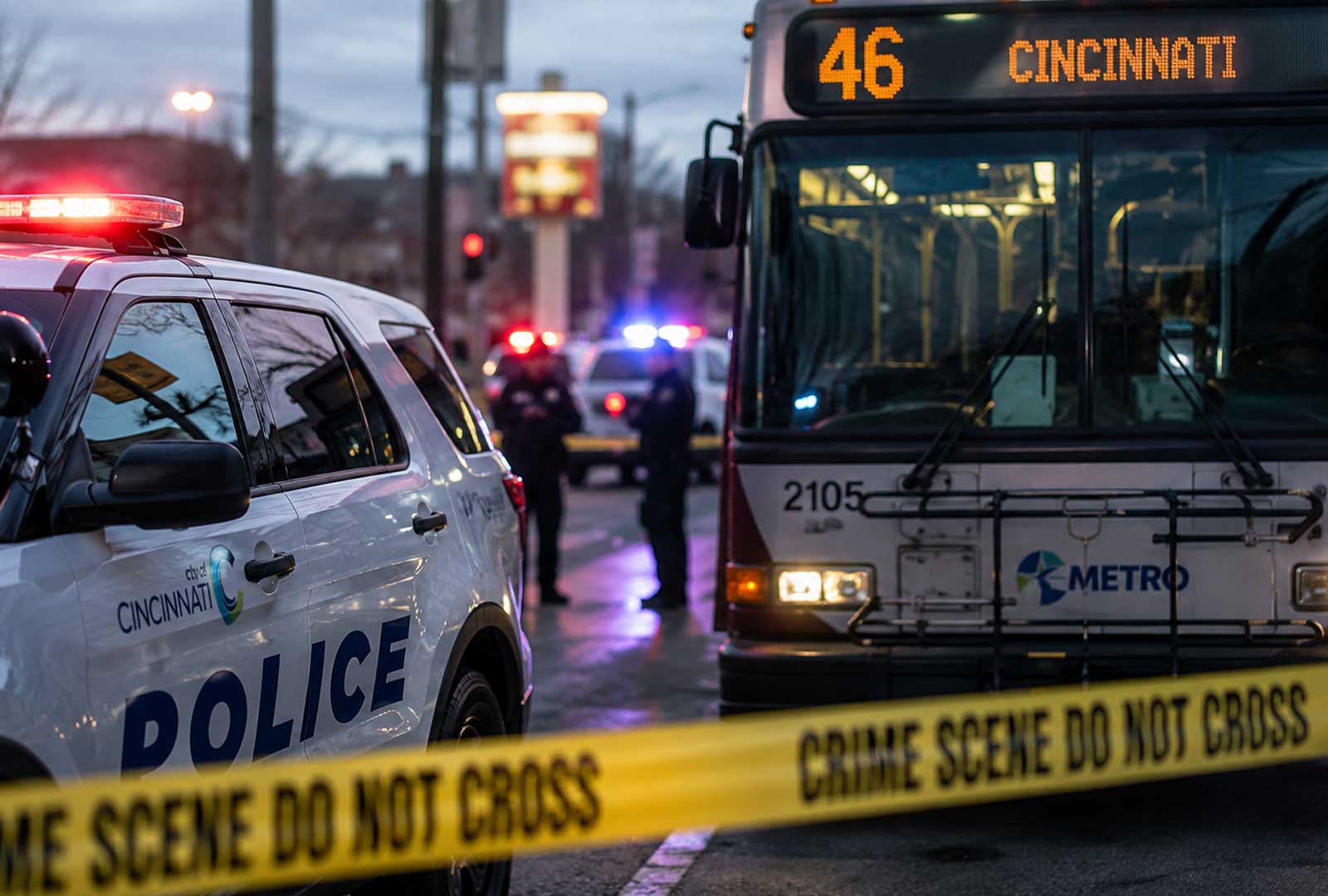
- A man was fatally shot aboard Metro Route 46 near the Cincinnati Zoo.
- Two women were shot in North Fairmount.
- Another victim was shot in the hand in South Cumminsville.
- A man was critically wounded outside a bar near 9th & Madison in Covington.
- A fatal vehicular hit-and-run occurred Monday morning in Price Hill.
- Comedian assaulted in broad daylight.
Taken together, these incidents create something more damaging than any single crime: the sense that violence and disorder are no longer confined to isolated pockets, but are becoming part of the broader atmosphere residents navigate every day.
The Gap Between Crime Statistics and Daily Reality
City leaders often point to year-over-year declines in certain categories of violent crime. In some cases, they are right. Shootings dropped to a three-year low in 2025, with 241 incidents recorded.
But statistics alone do not determine whether people feel safe. Residents are reacting not just to homicide charts, but to repeated clusters of shootings, reckless driving, viral fight videos, and stories that increasingly reach places once considered safely removed from serious violence. Many lower-level crimes — car break-ins, vandalism, thefts, aggressive harassment, and literal broken windows — go unreported because residents no longer believe reporting them will accomplish much.
This underreporting creates its own distortion. Official dashboards look better while the street-level reality feels worse. The 2025 Cincinnati Resident Survey found only 32% of residents satisfied with overall safety (down from 40% in 2023 and far below the 53% average in peer cities).
People change their behavior long before official numbers fully reflect it. They stop going downtown after certain hours. They avoid particular gas stations, transit routes, or entertainment districts. Businesses quietly increase security costs. Parents rethink where their kids spend time.
Citywide Unrest Is No Longer Fitting Neat Narratives
What makes weekends like this feel different is how scattered the violence has become. These incidents touched public transit near the zoo, residential West Side neighborhoods, urban core communities, Northern Kentucky nightlife areas, and family neighborhoods near schools.
A family strangulation near a suburban high school, a fatal bus shooting near a major family destination, or a vehicular homicide in Price Hill do not fit neatly into standard political talking points. The root causes may all be different. Residents still experience them collectively — and that cumulative effect shapes how safe the city feels far more than any individual statistic.
Why Leaders Often Miss the Warning Signs That Lead to Weekend Incidents
Part of the disconnect comes down to differing moral priorities. Many progressive leaders and institutions focus heavily on compassion, equity, and addressing root causes. Those concerns matter. But when maintaining order, enforcing swift consequences, and protecting everyday public civility become secondary priorities, visible disorder tends to spread.
This is where broken windows theory becomes relevant. Small signs of neglect — broken windows, open-air drug activity, reckless driving, repeated public fights — send a powerful psychological signal that no one is fully in control. When those signals are ignored or downplayed, disorder escalates.
Reputation Damage Now Spreads Instantly
View this post on Instagram
This wasn’t a murder or a mass shooting, but the story spread nationally and internationally because a recognizable comedian documented it in real time. What might once have been a minor police report or local blotter item became a symbol of unchecked street-level chaos in Cincinnati.
That’s the new reality for cities.
When visitors, entertainers, or influencers experience (and broadcast) brazen public harassment or low-level assaults, the reputational hit lands instantly. One viral clip can reach hundreds of thousands or millions, shaping perceptions far beyond the city limits. Potential tourists, convention planners, performers, investors, and young professionals see the footage and think twice about booking a trip, a show, or a move to the area.
Cincinnati, like many mid-sized cities, competes fiercely for tourism, nightlife spending, talent, and economic development. A narrative that everyday public spaces feel unpredictable or unsafe — even if violent crime stats tell a more nuanced story — carries real economic and cultural costs. Nightlife districts, entertainment venues, and walkable neighborhoods thrive on a sense of safety and civility. When that erodes, so does the willingness of outsiders to spend time and money there.
When incidents like this one happen in daylight and require a victim’s personal hustle (plus social media pressure) to result in an arrest, it reinforces the perception that order depends more on individual initiative than reliable systems. In the social media age, reputation is currency. Cities ignore these visible breakdowns at their peril.
Cincinnati’s Real Problem Is Trust
Most residents understand that a few violent summer weekends in Cincinnati are not a sign of collapse. Large portions of the metro remain safe, economically active, and vibrant.
But there is growing frustration with what many see as institutional minimization of obvious public safety concerns. When violent weekends like this occur while officials emphasize broad reassurances that conditions are improving, trust fractures. People feel their lived experience is being managed rather than honestly confronted.
Public confidence affects investment, nightlife, tourism, transit usage, downtown recovery, and neighborhood stability. Once residents begin psychologically retreating from parts of their own city, the consequences spread well beyond crime data.
The Normalization Problem
The most dangerous trend may not be the violence itself, but how quickly everyone adapts to it. When multiple shootings, assaults, homicides, and fatal crashes become just another weekend news cycle, the civic standard quietly lowers.
Expectations shrink. People go out less. Businesses hesitate before investing. Families quietly relocate. Investment slows. Communities grow more fragmented.
Cincinnati is nowhere near beyond saving. The city has real strengths, good people, and pockets of genuine progress. But pretending another violent weekend in Cincinnati is normal — or too politically uncomfortable to discuss honestly — carries its own long-term cost.
More residents are beginning to feel the cost in their everyday lives. The question now is whether leaders will continue to manage the messaging or finally prioritize the visible order and accountability that rebuild trust and bring people back into the city.
FAQs
Is violent crime increasing in Cincinnati?
Some categories of violent crime have declined year-over-year according to official statistics, while others fluctuate depending on the timeframe and neighborhood. However, many Cincinnati residents say repeated clusters of shootings, reckless driving incidents, and public disorder are shaping a growing perception that safety is deteriorating in everyday life.
What violent incidents happened in Cincinnati this weekend?
The weekend included a strangulation death near Oak Hills High School, multiple shootings across Cincinnati neighborhoods, a fatal Metro bus shooting near the Cincinnati Zoo, a bar shooting in Covington, and a fatal hit-and-run in Price Hill.
Why do residents feel crime is worse even if statistics improve?
Public perception is influenced by more than annual crime reports. Residents react to repeated violent incidents, viral videos, visible disorder, reckless driving, and personal experiences that affect daily routines and neighborhood confidence long before broader statistics fully reflect those concerns.
What is the “normalization” concern around crime in Cincinnati?
Many residents worry that repeated shootings, assaults, and public disorder are becoming accepted as normal parts of city life. Critics argue that when violent weekends stop feeling shocking, civic expectations decline and public trust erodes over time.
How does public safety perception affect Cincinnati economically?
Public safety perception influences downtown activity, tourism, nightlife, neighborhood investment, business confidence, transit usage, and whether families choose to remain in or move to certain parts of the metro area.
All data referenced is from public city reports and reputable local news outlets as of May 2026. This article was created with the support of our proprietary AI-powered newsroom tools and reviewed by our editorial team for accuracy and clarity.