
Share This Article
Article Summary
In 2026, Cincinnati’s urban agriculture sector expanded significantly, bolstered by 48 Green Cincinnati Plan Seeds of Change grants awarded to local growers and organizations. Networks like the Civic Garden Center now manage over 60 community gardens, while commercial plots such as the USDA-certified Eden Urban Gardens utilize organic practices to grow fresh produce. These ongoing initiatives are transforming vacant city lots into productive green spaces, which directly improves local food security, manages ecological issues like stormwater runoff, and creates green-collar jobs.
The rise of urban farming Cincinnati initiatives is transforming local food systems across the city.
From neighborhood plots to commercial spaces, urban farming Cincinnati provides sustainable agriculture solutions.
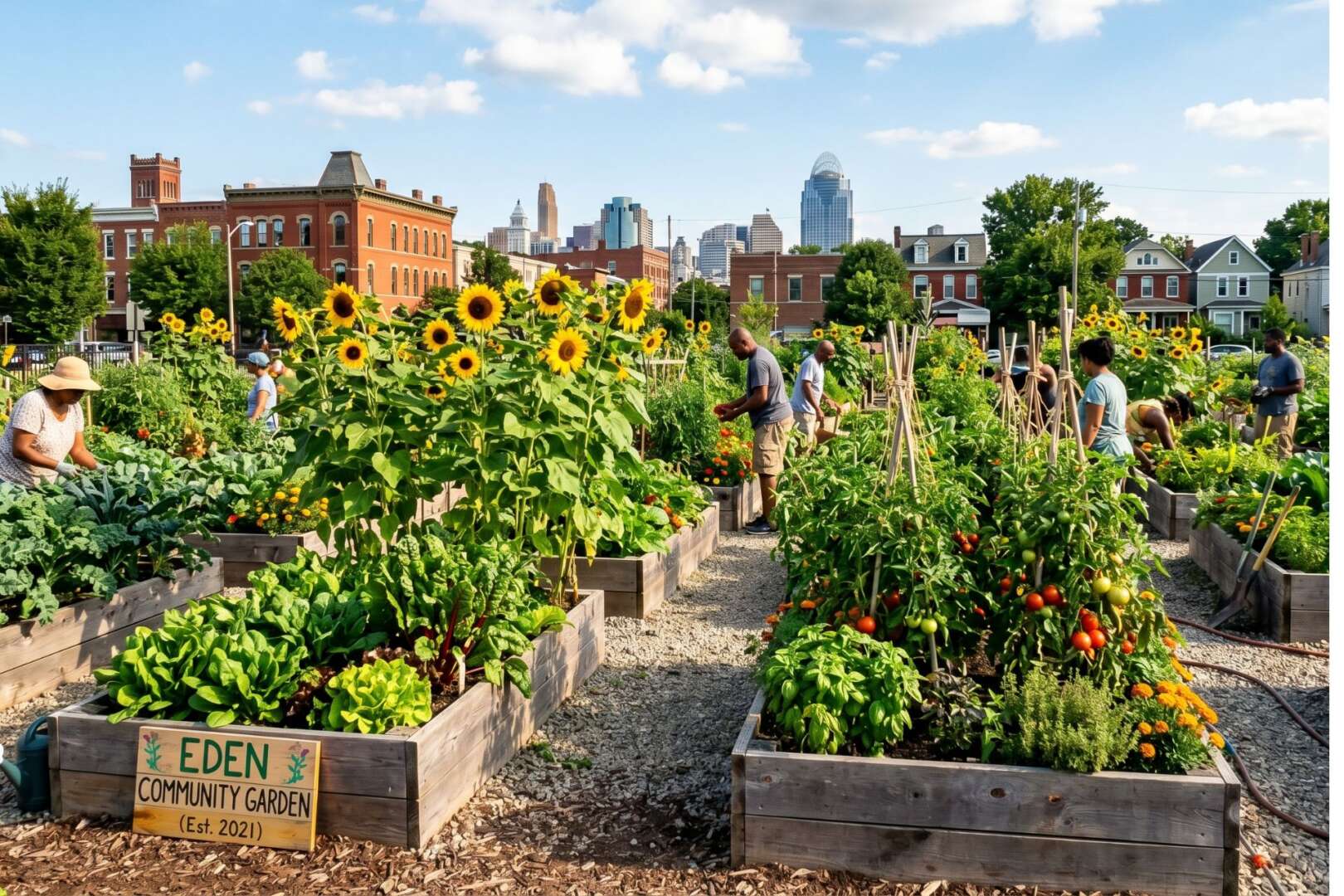
The landscape of urban farming Cincinnati is experiencing a rapid and exciting agricultural transformation. This surge in urban farming Cincinnati provides fresh produce and strengthens community bonds across various neighborhoods. City officials and community leaders constantly push for greater food independence. They recognize the environmental and social benefits of growing food locally. Green spaces now proudly replace vacant lots and empty lawns. This shift brings fresh produce directly to residents. The city consequently enjoys better food security and community engagement.
The movement gains incredible momentum through robust local funding. The City of Cincinnati strongly supports these vital green initiatives. The Office of Environment and Sustainability recently announced new grant awards. They aim to increase local food production and distribution networks. This financial backing helps small growers rapidly expand their reach.
How urban farming Cincinnati initiatives received a funding boost
Local government support plays a vital role in this agricultural boom. The City of Cincinnati Office of Environment and Sustainability offers Green Cincinnati Plan Seeds of Change Urban Agriculture Grants. According to official municipal reports, the city received 54 grant applications in fiscal year 2026. Officials ultimately awarded funding to 48 local proposals. This high approval rate highlights the city’s serious commitment to sustainability.
Funding for these urban farming Cincinnati projects comes from two primary sources. The city’s general fund covers a significant portion of the costs. The Green Cincinnati Fund at the Greater Cincinnati Foundation provides additional financial support. These resources help community gardens, foraging sites, and market garden businesses thrive. By funding these projects, the city actively increases access to healthy foods.
A few notable grant recipients include community food hubs and independent growers. These organizations work tirelessly to build a resilient local food system. They tackle health, social, and economic issues through active community engagement. The funding allows them to buy necessary tools, seeds, and soil.
Exploring agriculture trends 2026 in the city
Urban agriculture looks vastly different today than it did a decade ago. When examining urban farming Cincinnati, growers now prioritize high-density planting and regenerative soil practices. Many local farms eagerly convert unproductive lawns into vibrant, organic vegetable beds. For example, local businesses like Cincy Urban Farm use completely natural methods. They strive to reshape the food system while minimizing fossil fuel usage.
Another major trend involves official organic certification for city plots. Eden Urban Gardens operates right in the heart of the city limits. This women-owned farm purchased vacant, blighted land and beautifully revitalized it. They recently achieved USDA Certified Organic production status. This remarkable achievement proves that urban soils can indeed support high-quality, safe produce.
Beyond food production, these green spaces significantly improve local ecology. Urban farms help manage stormwater runoff during heavy spring rains. They also reduce the urban heat island effect caused by excess concrete. Many growers intentionally integrate native plants into their crop layouts. Organizations encourage this essential biodiversity through native plant sales and public education.
Key trends driving the industry forward include:
- Utilizing raised beds to prevent soil contamination.
- Implementing intensive organic farming practices in small spaces.
- Creating local food hubs for easier neighborhood distribution.
- Adopting smart composting systems to manage waste efficiently.
The crucial role of community gardens cincinnati
While commercial farms grow, neighborhood gathering spaces remain equally important. The Civic Garden Center of Greater Cincinnati plays a central role here. They manage a sprawling Community Garden Network across the metropolitan area. As reported by the center, the network currently boasts more than 60 active member gardens. They offer free membership, tool access, and seasonal seed distributions to locals.
Other organizations also champion highly collaborative neighborhood growing spaces. The Lower Price Hill Community Gardens provide vital nature pockets in dense settings. Residents gather to design, plant, and harvest food together. The gardens even employ local teen apprentices during each growing season. These young adults learn essential budgeting, leadership, and plant maintenance skills.
Similarly, the Turner Farm Community Garden Program connects people directly to their food. They use a collectively managed market-style approach for their gardens. Participants work cooperatively rather than maintaining completely isolated individual plots. They carefully research neighborhood needs to avoid duplicating existing services. This strategy ensures every new garden serves a genuine community purpose.
Expanding local farming ohio networks
The local push reflects much broader statewide agricultural movements. Urban farmers face complex, multi-layered regulatory landscapes across the state. They must navigate local zoning codes, noise ordinances, and health department rules. Operations that process food require specific retail food establishment licenses. Education remains absolutely critical for growers trying to stay compliant.
To meet this educational need, agricultural groups offer extensive training programs. The Civic Gardener Development Training program covers everything from seed starting to funding. Graduates often become dedicated garden coordinators within their own neighborhoods. Meanwhile, local urban farms offer hands-on seasonal internships for aspiring growers. Interns learn organic growing, small animal husbandry, and critical soil restoration.
According to guidelines published by the Ohio State University College of Food, Agricultural, and Environmental Sciences, farmers receive vital guidance. They guide urban farmers through proper soil testing and safety best practices. Proper soil management ensures safe, healthy harvests for the entire community. Residents interested in similar developments can read our recent coverage on Cincinnati small business expansions.
The future of urban farming Cincinnati and regional food security
The upcoming years look incredibly promising for local agriculture. Growers continuously diversify routes for accessing affordable fresh food. These dedicated efforts directly bolster food security in historically deprived neighborhoods. They also reduce the city’s heavy dependency on extended, vulnerable supply chains. When global shipping faces delays, local farms keep grocery shelves stocked.
These agricultural enterprises also positively stimulate the local economy. They create valuable green-collar jobs for residents across various neighborhoods. From farm managers to market vendors, exciting new career paths continue to emerge. This regional economic growth aligns perfectly with the city’s broader environmental sustainability goals.
Moreover, urban agriculture addresses deep-rooted issues of local food equity. Many neighborhoods previously lacked access to fresh, affordable, and nutritious produce. Corner stores often stock heavily processed foods rather than fresh vegetables. Urban farms disrupt this negative cycle by growing food directly in communities. Residents can finally purchase affordable greens within walking distance of their homes.
Ultimately, urban farming Cincinnati proves that cities can sustainably grow their own food. The transformation of vacant lots into vibrant green spaces completely changes neighborhoods. It fosters deep connection, improves public health, and actively protects the environment. As more residents grab a trowel and dig in, the local food movement will only grow stronger.
FAQs
What city grants support urban farming in Cincinnati?
The City of Cincinnati provides financial backing through the Green Cincinnati Plan Seeds of Change Urban Agriculture Grants. In fiscal year 2026, officials awarded funding to 48 local proposals using resources from the city’s general fund and the Greater Cincinnati Foundation.
How do local organizations support neighborhood gardens?
Organizations like the Civic Garden Center manage a comprehensive Community Garden Network consisting of over 60 active sites. They provide local residents with free memberships, tool access, seasonal seed distributions, and agricultural training programs.
What specific growing practices are urban farms utilizing?
Cincinnati growers prioritize high-density planting, regenerative soil management, and the use of raised beds to avoid soil contamination. Many farms are also pursuing official certifications, demonstrating that urban soils can support USDA Certified Organic production.
What impact does urban farming have on the city?
Urban agriculture increases local food security by providing fresh, affordable produce to neighborhoods that traditionally rely on extended supply chains. These green spaces also improve the local ecology by reducing the urban heat island effect and mitigating stormwater runoff.