
Share This Article
Article Summary
Cincinnati officials are reviewing recommendations for the final five undeveloped parcels at The Banks development. The plan outlines a mix of residential, commercial, and public spaces aimed at expanding year-round use of the riverfront district. The proposal will go through the Cincinnati Planning Commission and requires city and county approval. If approved, the framework will guide future private development of the remaining lots.
The future of Cincinnati’s riverfront district now hinges on city approval of a long-awaited plan to complete its remaining spaces.
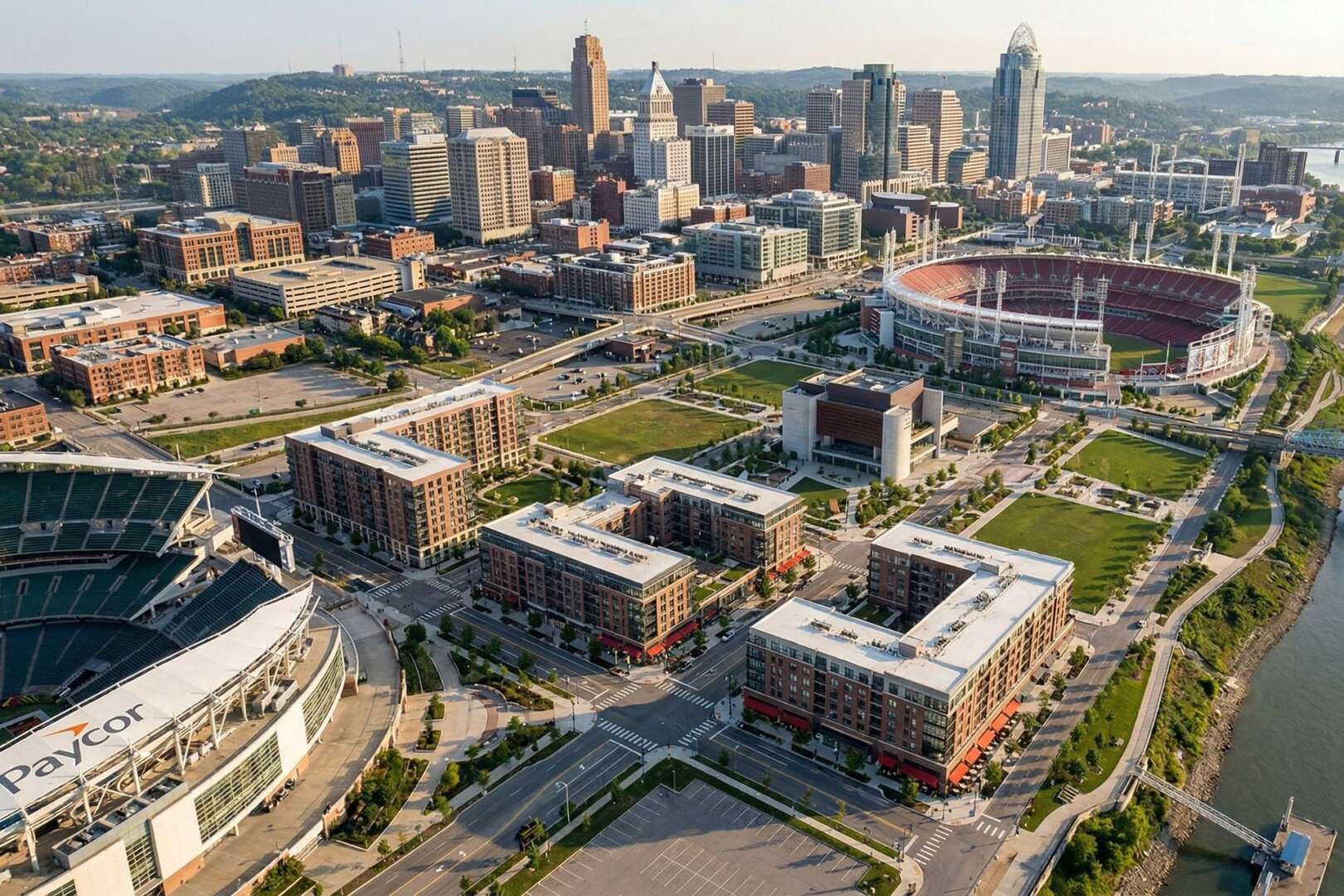
Leaders are reviewing recommendations that would shape the final five undeveloped parcels at The Banks, a mixed-use area between Paycor Stadium and Great American Ball Park.
The proposal reflects nearly a year of planning and public input. Officials say it aims to balance economic growth with public access and community use. If approved, the plan would guide development for years to come. The outcome could define how the riverfront evolves beyond its current entertainment focus.
The Banks development plan outlines vision for final parcels
The Banks development plan focuses on completing the district with a mix of residential, commercial, and public spaces. City and county leaders worked with consultants for about 11 months to shape the proposal, according to reporting by WCPO 9 and Local 12. The goal is to ensure the final phase builds on the area’s success while addressing gaps in connectivity and daily use.
The proposal includes several key elements designed to make the district more livable and accessible:
- New residential buildings to increase population density
- Ground-floor retail and restaurant space
- Office and hotel development opportunities
- Expanded public plazas and gathering areas
- Improved pedestrian connections to downtown
Planners also emphasized stronger links between the riverfront and central business district. This includes better walkability and more seamless access across major streets and public spaces. The design reflects a shift from an event-driven destination to a neighborhood that supports daily activity.
Renderings show updated concepts near the National Underground Railroad Freedom Center, including redesigned open spaces and pedestrian-friendly features. These additions aim to create a more cohesive environment across the entire district.
Cincinnati approval process for The Banks development
The Banks development now moves into the approval phase, which involves multiple layers of city and county review. The Cincinnati Planning Commission is expected to evaluate the recommendations before any final decisions.
City officials will assess how the plan aligns with broader development goals, infrastructure capacity, and community needs. Because The Banks operates under a joint city-county partnership, both governments play a role in approving next steps. This shared structure has guided the project since its inception.
According to reports by Local 12, the recommendations are not binding but serve as a framework for future development agreements. That means private developers would still need to submit specific proposals for each parcel.
The approval process does not follow a fixed timeline. However, officials say they want to maintain momentum while ensuring careful review. Delays could affect investment interest and construction timelines.
For more background on large-scale projects shaping the region, see our coverage of major infrastructure projects in Cincinnati and how they connect to riverfront development.
The Banks development shifts toward year-round use
The Banks development has already transformed Cincinnati’s riverfront into a major destination for sports and entertainment. However, leaders say the next phase must expand beyond game-day activity.
Currently, the district attracts large crowds during events at nearby stadiums. But outside those times, foot traffic can drop significantly. The new plan aims to address that imbalance by adding housing and everyday amenities.
Key priorities include:
- Increasing full-time residents
- Supporting local businesses with steady foot traffic
- Creating spaces for community events and daily use
- Enhancing public safety through consistent activity
According to WCPO 9, planners want the area to function as a “complete neighborhood.” This concept emphasizes a mix of uses that keep the district active throughout the day and week.
The addition of residential units could play a major role in achieving that goal. More residents would support restaurants, retail shops, and services year-round. This would also reduce reliance on seasonal or event-based revenue.
FAQs
What is The Banks development plan about?
The plan focuses on completing the final five undeveloped parcels at The Banks. It outlines a mix of housing, retail, office, and public space to support year-round activity.
Who needs to approve the plan?
The Cincinnati Planning Commission will review the recommendations first. Final decisions will involve both city and county leadership due to the joint partnership governing the site.
What changes are included in the proposal?
The proposal includes new residential buildings, retail spaces, public plazas, and improved pedestrian connections. It also aims to strengthen links between downtown and the riverfront.
When could construction begin?
There is no fixed timeline for construction. Development will likely happen in phases after approvals and once private developers submit and secure project plans.