



Share This Article
Article Summary
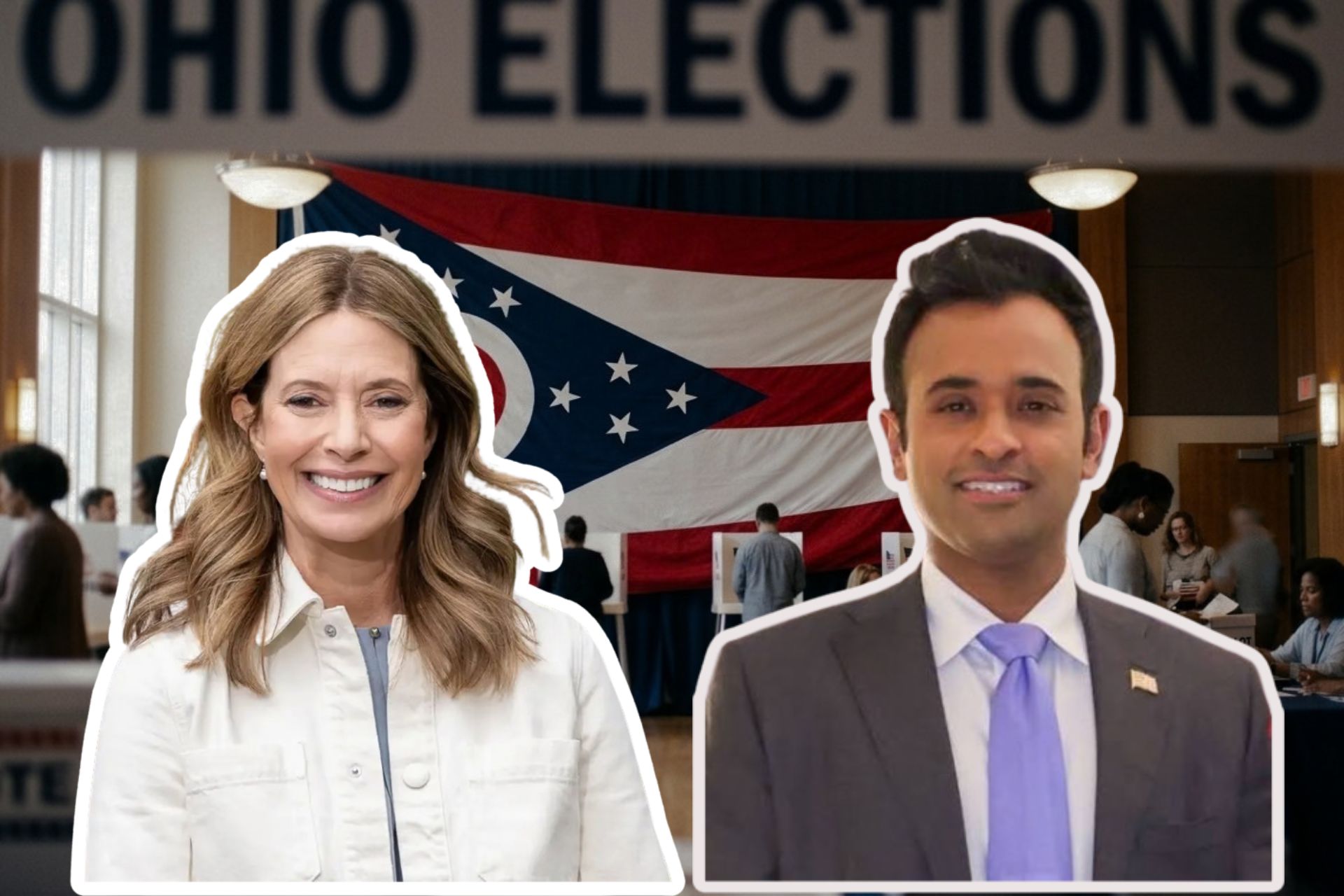
The Ohio governor’s race between Republican Vivek Ramaswamy and Democrat Amy Acton remains closely contested, with recent polls showing both candidates holding leads. University of Cincinnati political analyst Dr. David Niven says the competitiveness reflects voter concerns about the economy, President Donald Trump’s approval ratings, rising costs and other issues affecting Ohio. He also discussed the candidates’ campaign strategies, negative advertising and the unusual nature of a race between two candidates who have never held elected office.
With only a few weeks before the elections, the tight race between the gubernatorial candidates is noticeable.
A question for thought: What drives the competitiveness of the race at this stage?
Based on the publicly listed polls in 2026, Republican and Cincinnati-native candidate Vivek Ramasway has led in several earlier surveys including:
- Echelon Insights: Ramaswamy +5
- Bowing Green (April): Ramaswamy +1
- Fox News (June): Ramaswamy +1
- Fox News August: Ramasway +2
Meanwhile, Democrat candidate Amy Acton led in other polls, including EMC Research (+10), AARP (+3), Wedgewood (+1), and the latest Bowling Green poll (+3).
Ramaswamy has led in several Ohio governor polls this year, but the latest poll gives Acton a 3-point advantage, while polling averages show the race within about one point.
A political analyst from the University of Cincinnati (UC) shared with The Cincinnati Exchange some viewpoints on the tightness of the gubernatorial candidates’ race.
“Ohio has been reliably Republican in recent years, but the plummeting popularity of Donald Trump has reset the election landscape in 2026,” said Dr. David Niven, professor for School of Public and International Affairs at UC.
Niven, who teaches American politics and conducts research on political campaigns, said that “Republicans are stuck with a general unease, anger over skyrocketing costs and the proliferation of data centers.”
“More than the candidates, it is the mood that is driving this race,” he added.
Moreover, he said that Ramaswamy has proved to be a “tough sell,” saying that his ads featured more of his wife rather than himself.
For context, Ramaswamy’s first campaign ad featured his wife, Apoorva Ramaswamy, speaking about his priorities and family.
“He’s created trouble for this campaign with statements like his vow to shut down several Ohio universities. And now scrutiny of how he made his fortune – as a pharmaceutical investor – are causing further complications for his campaign,” Niven added.
What are voters actually responding to–negative or positive?
Both campaigns have spent heavily trying to define their opponent.
When asked what are voters actually responding to, was it the candidates’ positive messages or the negative attacks—Niven said that “both campaigns have gone heavily into negative ads.”
“For Ramaswamy, the positive message just never took hold so he has been left with nothing but negatives on Acton’s role during the Covid outbreak and her personal life. For Acton, there has been a little positive introduction of her life story, but she is turning heavily negative emphasizing Ramaswamy’s role peddling a failed Alzheimer’s drug,” he said.
Seeing the factors
With only seven weeks remaining before the elections, Niven said that the race is unlikely to undergo major shifts.
Moreover, the analyst pointed to President Donald Trump’s current approval ratings, as well as the economic effects of his trade policies that hit Ohio’s economy. These are among the defining features of the race, Niven said.
Ramaswamy is presenting his business background and outsider status as qualifications.
To the analyst, “Ramaswamy set out in his brief presidential campaign to run on his experience as a pharmaceutical investor in glowing terms.”
Niven sees that the “storyline did not hold together well.”
To recall, during his 2024 presidential campaign, Ramaswamy highlighted his experience as a pharmaceutical investor and entrepreneur.
“Instead of a story of science and entrepreneurship, media reports highlighted greed and hyperbole,” Niven said.
Unusual race to note
Furthermore, the analyst also sees that this Ohio governor’s race is also “unusual” because neither Ramaswamy nor Acton has previously held elected office.
Historically, Ohio governors have often entered office after building extensive records in public service or elected positions.
In terms of issues, Niven said that Ramaswamy’s vow to impose massive tax cuts would have huge implications for the city and for the suburbs around Cincinnati.
“The lack of discussion in the campaign of transportation and issues that are central to the urban experience is striking,” he added.
Acton declines debate
Last September 2, Ramaswamy publicly announced his acceptance of debate invitations from CNN and WLWT-TV on that Wednesday afternoon.
Meanwhile, Acton’s campaign officially declined the invitations later that same evening, stating she would not participate in televised debates before the November election.
The political analyst has also a take on this:
“Ramaswamy agreed to debate, and Acton declined. Does Acton remain confident enough that she doesn’t need to debate. Or does she change her mind and let the state get a good look at her and Ramaswamy against each other on state,” he said.
With the race still within a few points in recent polling, the Ohio gubernatorial contest remains shaped by more than the two candidates themselves.
Voters are weighing concerns about the economy, the direction of the state and national politics, and the candidates’ records and campaign messages.
With weeks remaining before Election Day, the debate over those issues—and how effectively Ramaswamy and Acton respond to them—could continue to define the final stretch of the campaign.
FAQs
Why is the Ohio governor’s race considered competitive?
Recent polls have shown relatively small margins between Ramaswamy and Acton, with different surveys giving each candidate a lead. Political analyst David Niven said broader voter concerns about the economy, costs and national politics are contributing to competitiveness.
What issues are shaping the Ohio governor’s race?
The campaign has focused on issues including the economy, taxes, education, data centers, abortion and the candidates’ records and backgrounds. Niven also pointed to concerns about rising costs and the effects of national economic policies on Ohio.
When is the 2026 Ohio gubernatorial election?
The 2026 Ohio gubernatorial election is scheduled for November 2026. The general election will determine who serves as Ohio’s next governor.


