
Share This Article
Article Summary
Cincinnati officials launched the Build Ready initiative in 2026 to encourage the development of smaller multifamily housing projects and expand housing options. The city already has examples of micro-unit housing, including The Blonde apartment tower and the Reakirt Building redevelopment, both of which incorporated compact living spaces.
Micro-apartments typically range from 200 to 500 square feet and are being discussed as one potential response to housing affordability challenges. Supporters say they can increase housing choices and lower costs, while critics argue that broader increases in housing supply are still needed to address long-term affordability concerns.
As Cincinnati continues to address housing affordability concerns, a growing conversation centers on micro-apartments—compact residential units designed to maximize functionality within a smaller footprint.
Supporters argue that these units can provide lower-cost housing in desirable neighborhoods, while critics question whether shrinking living spaces offer a sustainable long-term solution.
The discussion comes as Cincinnati faces continued pressure from limited housing supply, rising rents, and growing demand for urban living. According to reporting by WVXU, city leaders launched a “Build Ready” initiative in 2026 aimed at accelerating small multifamily housing development and expanding housing choices throughout the city.
Why micro apartments Cincinnati developers are watching closely
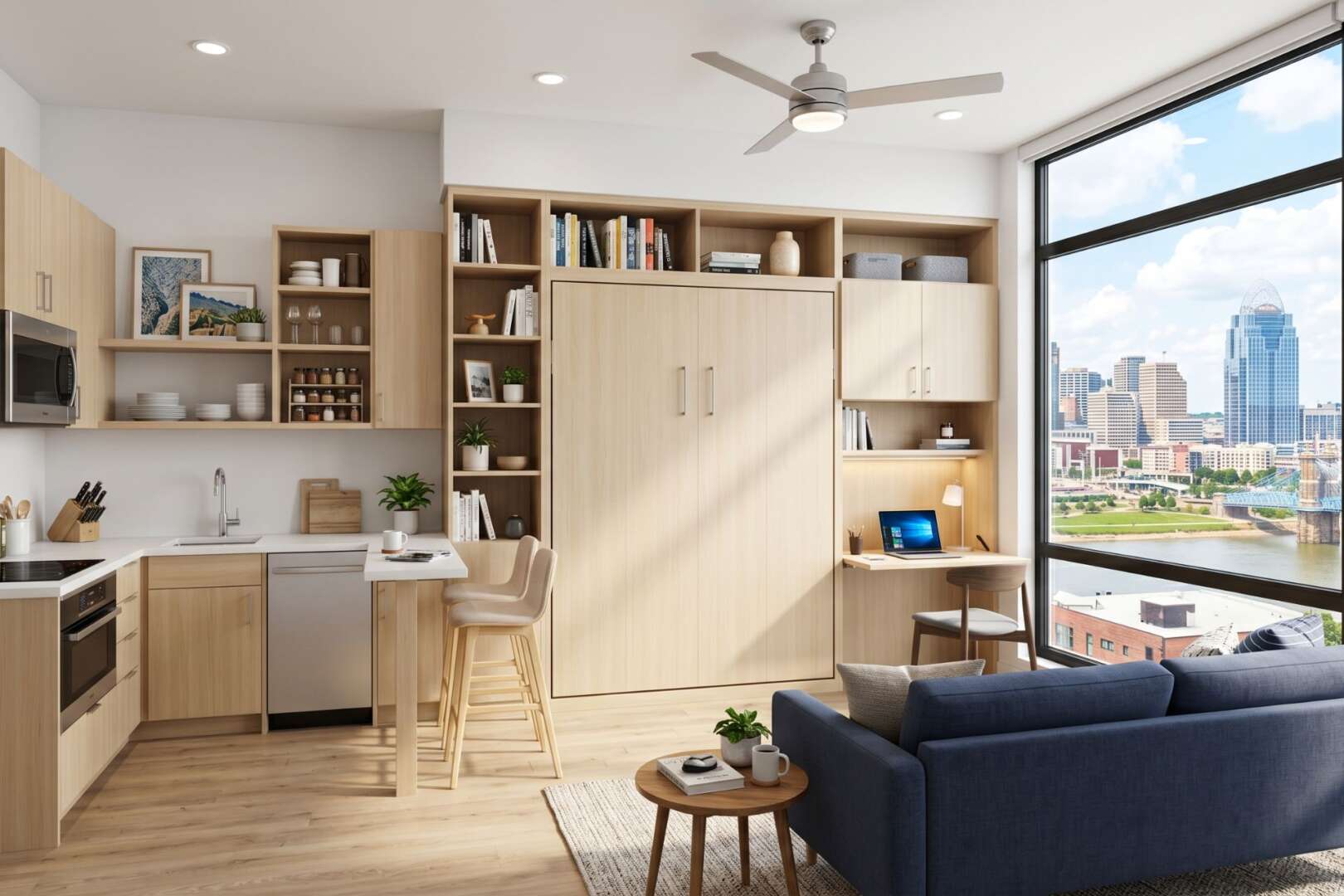
Micro-apartments typically range from 200 to 500 square feet and focus on efficient layouts, built-in storage, and shared amenities. The concept has gained popularity in larger cities such as New York, Seattle, and San Francisco, where housing costs have pushed developers to create smaller units.
While Cincinnati has not experienced the same housing pressures as coastal markets, affordability challenges have become increasingly visible.
Cincinnati already has examples of micro-unit development. The 13-story The Blonde apartment tower (formerly 8th & Main) in downtown Cincinnati was designed with a significant share of smaller units. Project documents show that approximately 40% of its 125 apartments are either micro-units of about 395 square feet or studios of about 525 square feet, reflecting developers’ efforts to provide more economical housing options in the urban core. The project was completed in 2020 and includes shared amenities such as a fitness center, community space, bike repair facilities, and rooftop gathering areas.
Another example is the historic Reakirt Building redevelopment in downtown Cincinnati. The project incorporated several micro-units ranging from roughly 320 to 705 square feet. According to project designers, the micro-units were among the first apartments leased after completion, suggesting market interest in smaller living spaces within the city’s urban core.
According to The Cincinnati Exchange’s previous reporting, demand for smaller and attached housing options continues to grow as many residents struggle with rising housing costs.
Developers and housing advocates point to several factors driving interest in micro-apartments:
- Rising rental costs in urban neighborhoods
- Growing numbers of single-person households
- Increased demand from young professionals
- Demand for walkable neighborhoods near employment centers
- Limited availability of affordable new housing
Recent housing reports indicate that Cincinnati’s rental market remains competitive, with occupancy levels remaining high and vacancy rates relatively low.
As a result, smaller living spaces may become one tool for increasing housing supply without requiring large-scale developments.
Can micro apartments in Cincinnati improve affordability?
Housing advocates remain divided on whether micro-apartments represent a meaningful affordability solution.
Supporters argue that smaller units generally cost less to rent because tenants pay for fewer square feet. In neighborhoods where larger apartments command premium prices, micro-units may provide access to locations that would otherwise be unaffordable.
The broader affordability challenge remains significant. According to reporting cited by The Cincinnati Exchange, many Ohio renters continue to spend a substantial portion of their income on housing, while housing supply struggles to keep pace with demand.
City officials and planners have also focused on increasing overall housing production. Cincinnati’s Connected Communities zoning reforms and newer housing initiatives aim to encourage more residential development, including smaller multifamily projects and “missing middle” housing.
Affordable housing remains a major priority across the region. Recent projects in neighborhoods such as Westwood and Clifton Heights demonstrate ongoing efforts to increase housing options for residents at different income levels.
However, some housing experts caution that micro-apartments alone cannot solve the affordability crisis. They argue that significant increases in overall housing supply remain necessary to stabilize rents over the long term.
Small living spaces reshape urban apartment trends
The rise of remote work and changing lifestyle preferences have altered how renters evaluate housing.
Before the pandemic, proximity to downtown offices often drove apartment demand. Today, many renters seek flexibility, neighborhood amenities, and lower housing costs. For some residents, a smaller apartment paired with access to shared workspaces, fitness centers, and walkable districts may offer an attractive tradeoff.
National housing trends suggest developers continue experimenting with unit sizes and building formats. Builder Magazine reported that Cincinnati’s housing market is balancing economic stability with affordability pressures and changing demand patterns.
At the same time, multifamily market reports show strong demand for mid-priced and lower-priced apartment inventory across the region. Vacancy rates remain relatively tight, supporting continued interest in alternative housing formats.
Some developers view micro-apartments as part of a broader shift toward housing diversity rather than a replacement for traditional apartments.
Residents weigh benefits and drawbacks
Potential renters often have mixed reactions to micro-apartments.
For individuals living alone, students, and professionals who spend significant time outside the home, smaller units can offer lower monthly housing costs and access to desirable neighborhoods.
Others raise concerns about long-term livability, especially for families, remote workers, or residents requiring additional storage and workspace.
Common advantages include:
- Lower monthly rent
- Reduced utility costs
- Access to urban locations
- Simplified maintenance
- Efficient use of space
Common concerns include:
- Limited storage capacity
- Reduced privacy for couples
- Challenges for remote work
- Less flexibility for future needs
- Potential impact on quality of life
Public discussions around housing development frequently reflect these competing priorities. Community conversations reported by local media often balance support for increased housing density with concerns about neighborhood character and livability.
What comes next for micro apartments Cincinnati?
Housing experts generally agree that Cincinnati needs more housing across multiple price points and unit types.
The city’s recent zoning reforms, affordable housing initiatives, and development programs indicate a continued push toward greater housing diversity. According to WVXU, officials hope streamlined approval processes will make it easier to build the housing residents need.
Whether micro-apartments become a major part of Cincinnati’s housing landscape remains uncertain. Current development activity suggests demand exists for smaller and more affordable living options, but market acceptance will ultimately determine how widely the concept expands.
For now, micro-apartments represent another chapter in Cincinnati’s ongoing effort to balance affordability, density, and quality of life. As housing costs remain a concern throughout Ohio, the debate over how small is too small is likely to continue.
For additional housing coverage, read The Cincinnati Exchange’s reports on Cincinnati housing market stability and Cincinnati housing permits and construction trends.
FAQs
What is a micro-apartment?
A micro-apartment is a compact residential unit that typically ranges from about 200 to 500 square feet. These units are designed to maximize functionality through efficient layouts, built-in storage, and access to shared building amenities.
Are there micro-apartments in Cincinnati?
Yes. Cincinnati has examples of micro-unit housing, including The Blonde apartment tower in downtown Cincinnati and the Reakirt Building redevelopment. Both projects incorporated smaller residential units as part of their housing mix.
Why are micro-apartments being discussed in Cincinnati?
Housing affordability, limited supply, and demand for urban living have increased interest in alternative housing formats. City initiatives and zoning reforms are also encouraging a wider range of housing types, including smaller multifamily developments.
Can micro-apartments solve Cincinnati’s housing affordability challenges?
Housing experts generally view micro-apartments as one potential tool rather than a complete solution. While smaller units may offer lower rents for some residents, many analysts argue that increasing overall housing supply across multiple price points remains necessary to improve affordability over the long term.