
Share This Article
Article Summary
The Ohio Department of Transportation reported that its Green T intersection at the State Route 32 and Interstate 275 interchange has reduced crashes by 65 percent since the redesign was completed. The project added a third lane, installed a concrete barrier, and separated conflicting traffic movements to improve safety and traffic flow. The interchange serves one of Greater Cincinnati’s busiest commuter corridors in Clermont County.
The Ohio Department of Transportation (ODOT) says a redesigned intersection in Clermont County has produced a major improvement in roadway safety.
State officials reported that crashes at the State Route 32 and Interstate 275 interchange have dropped by 65 percent since the agency converted the area to a Green T intersection.
The results highlight how targeted infrastructure upgrades can reduce collisions while improving traffic flow on one of the Cincinnati region’s busiest transportation corridors. ODOT released the updated crash data as it continues promoting proven safety treatments across Ohio. According to the agency, the project demonstrates that redesigning intersections can deliver measurable benefits without constructing entirely new highways.
Green T intersection separates conflicting traffic movements
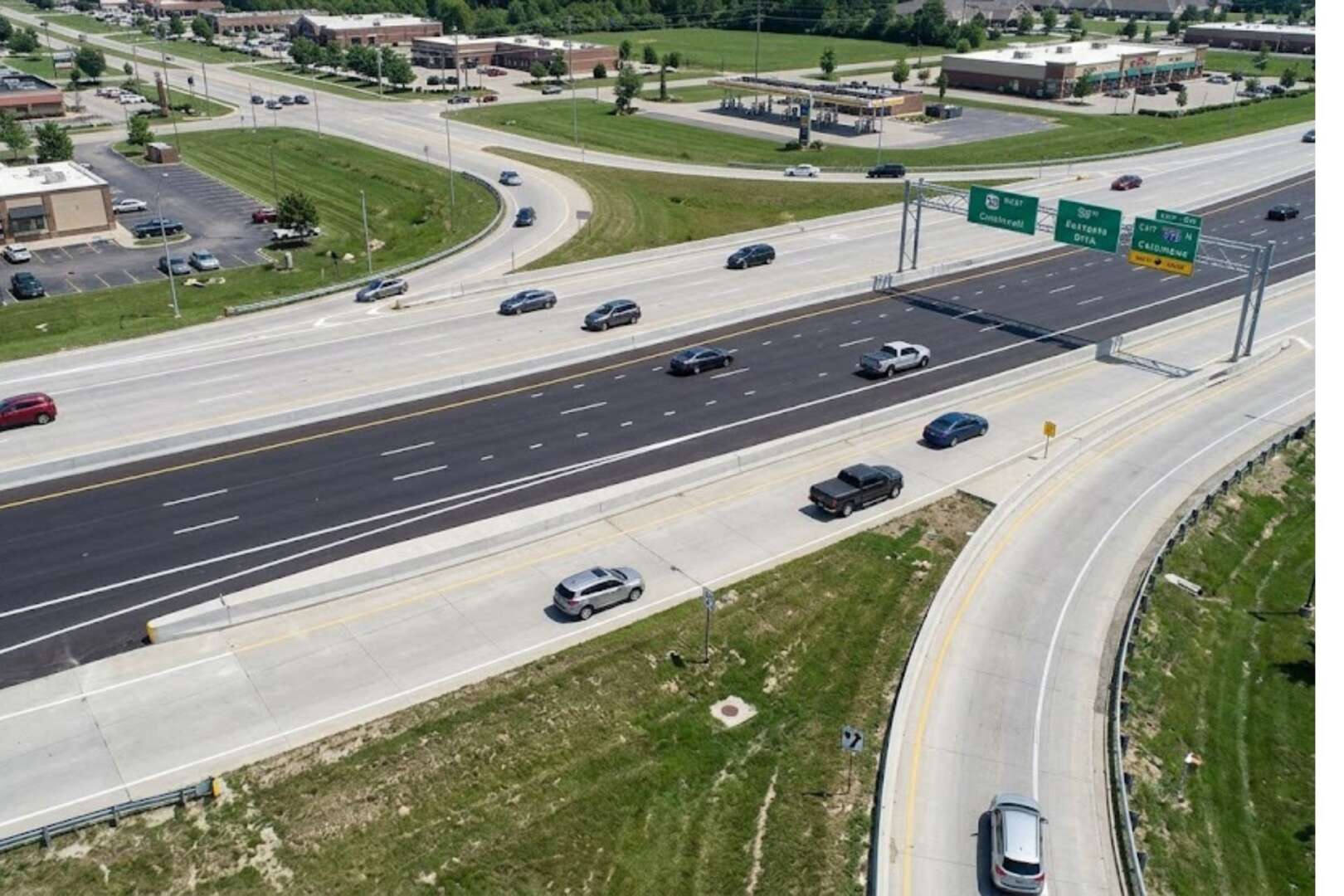
Before construction, motorists traveling from Eastgate Boulevard faced a challenging driving pattern. Drivers had to merge into westbound State Route 32 traffic while simultaneously watching for vehicles stopped near the Interstate 275 northbound exit ramp. ODOT said the layout created multiple conflict points that increased the risk of rear-end and sideswipe crashes. The redesigned Green T intersection removes much of that conflict by allowing through traffic on State Route 32 to continue without stopping while separating merging traffic. According to ODOT, the new configuration also improves traffic flow during busy commuting periods.
The project included several major improvements completed during 2023 and 2024, including:
- Adding a third westbound lane on State Route 32.
- Installing a permanent concrete barrier.
- Reconfiguring traffic into a Green T intersection.
- Separating merge movements from through traffic.
- Reducing the number of traffic conflicts at the interchange.
According to transportation officials, these upgrades make the corridor safer while reducing congestion for thousands of daily drivers. The Green T intersection design allows vehicles traveling along the main highway to continue moving while directing merging traffic through dedicated lanes.
The Green T design is one of several innovative intersection treatments transportation agencies have adopted nationwide. The Kentucky Transportation Cabinet describes a Continuous Green T as a design that provides free-flow traffic on the primary roadway while using acceleration and merge lanes to reduce conflict points. The agency cites federal case studies showing similar designs can significantly reduce crashes at T-intersections.
Green T intersection supports broader ODOT safety strategy
The successful Green T intersection aligns with ODOT’s broader effort to improve roadway safety through engineering rather than simply expanding highways. Across Ohio, the department has introduced roundabouts, Reduced Collision U-Turns (RCUTs), all-way stop conversions, and other intersection redesigns based on crash history. Recent ODOT data from other projects also show fewer crashes and reduced injury severity after similar safety improvements.
The SR 32 corridor has long served as one of eastern Hamilton and Clermont counties’ most heavily traveled commuter routes. Previous improvement projects focused on reducing congestion, eliminating weaving traffic, and providing safer access between Interstate 275 and surrounding commercial areas in Eastgate. The Clermont County Transportation Improvement District has previously identified the interchange as an area with high accident rates and increasing traffic demand before reconstruction began.
Other local media also reported the latest safety results. Spectrum News 1 highlighted ODOT’s announcement that crashes have fallen by 65 percent following completion of the Green T intersection. The report explained that separating traffic movements reduced the need for drivers to merge while monitoring stopped vehicles at the interstate exit. WCPO has also previously reported on longstanding safety concerns along the SR 32 corridor and ongoing projects intended to eliminate signalized intersections and improve traffic flow in the Eastgate area.
Green T intersection could guide future highway improvements
Transportation officials frequently evaluate completed projects to determine whether similar designs should be used elsewhere. The results from the Green T intersection may provide additional evidence supporting future investments at high-crash locations across Ohio. Rather than relying solely on widening roads, engineers increasingly examine ways to reduce conflict points where vehicles merge, cross, or turn.
Safety experts generally agree that reducing opportunities for vehicle conflicts lowers crash frequency and severity. By separating traffic movements, adding dedicated merge lanes, and improving roadway geometry, transportation agencies can often improve safety without major disruptions to surrounding communities.
For drivers in Greater Cincinnati, the SR 32 improvements represent another step toward a safer regional transportation network. The interchange serves commuters traveling between Clermont County, Hamilton County, and eastern Cincinnati suburbs every day. Fewer crashes also mean fewer traffic backups, shorter travel times, and improved reliability for motorists using one of the area’s busiest corridors.
Additional construction continues elsewhere along the SR 32 corridor as ODOT works to improve connectivity around Eastgate and Glen Este-Withamsville Road. Those projects aim to further reduce congestion while supporting future growth in Clermont County.
FAQs
What is a Green T intersection?
A Green T intersection is a roadway design that allows through traffic on the main highway to continue moving while separating merging and turning vehicles. The design reduces conflict points that can contribute to crashes.
Where is the Green T intersection located?
The redesigned intersection is located where State Route 32 meets Interstate 275 near Eastgate Boulevard in Clermont County. It serves commuters traveling between Clermont County, Hamilton County, and the eastern Cincinnati suburbs.
How much did crashes decrease after the redesign?
According to the Ohio Department of Transportation, crashes at the interchange have declined by 65 percent since the Green T intersection was implemented. The agency attributes the reduction to changes that improved traffic flow and reduced merging conflicts.
What improvements were made as part of the project?
The project added a third westbound lane on State Route 32, installed a permanent concrete barrier, and reconfigured the interchange into a Green T design. These changes were intended to improve safety and reduce congestion for motorists using the corridor.