
Share This Article
Article Summary:
Fitness wearables are transforming personal health monitoring by continuously tracking heart rate, sleep quality, oxygen saturation, and physical activity to detect potential health issues before symptoms appear. Devices like smartwatches and fitness bands now integrate directly with patient portals, providing healthcare providers with real-time data to support earlier intervention and more proactive care.
Over the past decade, fitness wearables have evolved.
What started as a simple step counter has evolved into sophisticated health monitoring devices. These devices are now capable of generating valuable insights into an individual’s overall health.
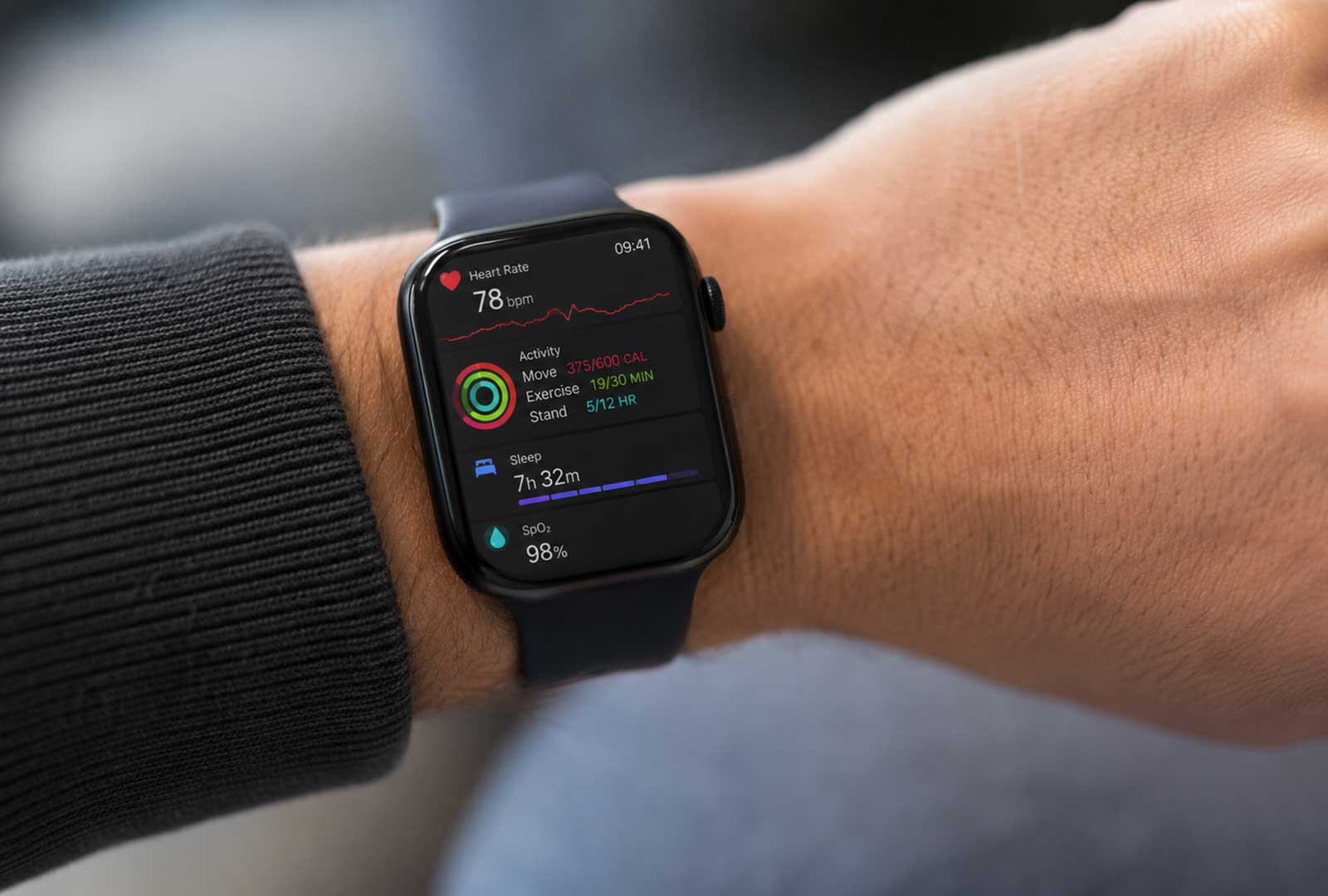
Wearables such as smartwatches, fitness bands, and health trackers now continuously collect information about physical activity, heart rate, sleep patterns, heart rate variability, oxygen saturation, and other physiological measurements. As these technologies become more accurate and widely adopted, they are creating new opportunities for individuals and healthcare providers. In particular, they can help to identify health risks earlier, monitor chronic conditions, and improve preventive care.
The earliest fitness trackers focused primarily on counting steps and estimating calories burned. While these metrics remain useful, today’s wearables provide a much more comprehensive view of health. Most modern devices can continuously monitor heart rate throughout the day and night. Additionally, they track exercise intensity, measure sleep quality, and detect changes in physiological patterns that may indicate emerging health concerns.
How Wearables Support Activity and Heart Health Monitoring
Activity monitoring remains one of the most valuable features of wearable technology. Numerous studies have demonstrated the relationship between physical activity and improved cardiovascular health, weight management, reduced risk of diabetes, and overall longevity. Wearables provide users with immediate feedback on daily movement, encouraging healthier behaviors through goal setting, reminders, and performance tracking. Rather than relying on occasional self-reporting, individuals can access objective data about their activity levels. Through this, they can track trends over time.
Heart rate monitoring has become another cornerstone of wearable health technology. Continuous pulse measurement provides insights into resting heart rate, exercise performance, recovery, and overall cardiovascular fitness. More importantly, some devices can detect irregular heart rhythms and notify users when abnormalities occur. In recent years, wearable technologies have demonstrated the ability to identify potential cases of atrial fibrillation, a common cardiac arrhythmia associated with increased stroke risk. Early detection can prompt medical evaluation and treatment. This can happen before serious complications occur.
Wearables and Sleep Health Monitoring
Sleep monitoring represents another significant advancement in consumer health technology. Poor sleep is increasingly recognized as a contributor to numerous health conditions, including hypertension, obesity, diabetes, depression, and cardiovascular disease. Wearables can estimate sleep duration, identify sleep interruptions, and characterize sleep stages. For example, REM (Rapid Eye Movement) sleep focuses heavily on your mind, mood, and mental performance, serving as a restorative period for your brain. This is the dream cycle.
Deep sleep, also known as slow-wave sleep or Stage 3 non-REM sleep, is the period of rest during which your body heals and rebuilds itself. During deep sleep cycles, your brain activates a type of “dishwasher cycle” called the glymphatic system that actively flushes out metabolic waste, including beta-amyloid plaques. This mechanism is one of the most vital discoveries in modern neuroscience regarding the prevention of Alzheimer’s disease.
These devices provide valuable information that can help users recognize patterns affecting their health. Consistent monitoring can reveal chronic sleep deprivation, poor sleep quality, or other issues. Consequently, these issues may warrant further evaluation by a healthcare professional.
Wearable Health Monitoring Alerts and Early Warning Signals
Many modern wearables also provide alerts and notifications based on detected physiological changes. Elevated resting heart rates, unusual sleep patterns, abnormal oxygen saturation levels, and irregular heart rhythms can trigger notifications that encourage users to seek medical advice. While these alerts are not diagnostic, they can serve as early warning signals. As a result, users are prompted to seek further investigation. In some cases, users have reported seeking medical care after receiving alerts generated by wearables, leading to the identification of previously undiagnosed health conditions.
Integrating Fitness Data with Your Healthcare Provider
The growing integration of wearable data with healthcare systems presents perhaps the greatest opportunity for improving patient care. Increasingly, individuals can share wearable-generated information with their primary care physicians through patient portals, mobile applications, and electronic health record integrations. Rather than relying solely on measurements obtained during periodic office visits, healthcare providers can review longitudinal health data. This data is collected continuously over weeks, months, or even years.
This continuous stream of information offers several advantages. First, it can help identify trends that may not be apparent during isolated clinical encounters. For example, a gradual increase in resting heart rate over several months may indicate worsening cardiovascular fitness, infection, medication side effects, or other emerging health issues. Similarly, declining activity levels or deteriorating sleep quality may signal developing medical or behavioral health concerns.
Second, wearable data may contribute to earlier disease detection. Changes in heart rate variability, physical activity, sleep patterns, and physiological responses can sometimes precede the onset of clinical symptoms. Although wearable devices are not intended to diagnose disease independently, they may provide valuable clues that encourage timely medical evaluation.
Third, wearable data can help identify adverse events and treatment-related complications. Patients managing chronic conditions may experience subtle physiological changes before recognizing symptoms themselves. Therefore, physicians monitoring wearable data may gain additional insight into treatment effectiveness, medication tolerance, recovery following procedures, and disease progression.
The Future of Proactive Health Management
Perhaps most importantly, wearable technologies support a shift from reactive healthcare toward proactive health management. Instead of waiting until symptoms become severe enough to require intervention, individuals and healthcare providers can use continuously collected data to identify risk factors earlier. Then, they can implement preventive strategies. This approach aligns closely with the broader goals of population health, preventive medicine, and personalized care.
As wearable technologies continue to evolve, their role in healthcare will likely expand significantly. Improvements in sensor accuracy, artificial intelligence, predictive analytics, and interoperability with electronic health records will further enhance their value. While wearables will not replace physicians or traditional medical evaluations, they are becoming powerful tools. They empower individuals to better understand their health and provide healthcare professionals with valuable insights. This supports earlier intervention and more informed decision-making.
The future of healthcare may increasingly depend on the ability to transform everyday health data into actionable knowledge. Modern fitness wearables are helping make that future a reality by turning continuous monitoring into meaningful health insights. As a result, this can improve outcomes, reduce risks, and support healthier lives.
Traditional watches tell you the time. Fitness wearables tell you the time — and so much more about the life you’re living inside it.
FAQs
hat do fitness wearables monitor?
Fitness wearables monitor a range of health metrics including heart rate, sleep quality, oxygen saturation, physical activity, and heart rate variability. Some advanced devices can also detect irregular heart rhythms such as atrial fibrillation.
Can a fitness wearable detect heart problems?
Yes. Many modern fitness wearables can detect abnormal heart rhythms, including atrial fibrillation, and alert users to seek medical evaluation. While these devices are not diagnostic tools, they have prompted users to discover previously undiagnosed cardiac conditions.
How do fitness wearables improve sleep health?
Fitness wearables track sleep duration, interruptions, and stages, including REM and deep sleep. This data can reveal patterns like chronic sleep deprivation that may contribute to conditions such as hypertension, diabetes, and cardiovascular disease.
Can I share my wearable health data with my doctor?
Yes. Most fitness wearables allow users to share health data with their physicians through patient portals, mobile apps, and electronic health record integrations, giving providers a continuous picture of your health between office visits.
Are fitness wearables accurate enough to use for health monitoring?
Fitness wearables are not medical-grade diagnostic devices, but research supports their value as early warning tools. They are most effective when used alongside regular medical care to identify trends, flag potential concerns, and support more informed conversations with your healthcare provider.
This article was written by Brett Harnett. AI tools were used in the editing and SEO optimization process.