



Share This Article
Article Summary:
Fifth Third has completed the largest conversion in its history, moving Comerica’s accounts and branches onto its platform. The Cincinnati bank now oversees more than $300 billion in assets, but branch closures, customer retention and $850 million in promised savings will show whether the merger delivers on its terms.
Fifth Third Comerica conversion puts a $300 billion bank under Cincinnati control
The Labor Day systems change moved 600,000 customers and 293 banking centers onto Fifth Third’s platform. Delivering the merger’s promised savings without losing customers will be the harder test.
At 38 Fountain Square Plaza, the Fifth Third Comerica conversion has placed a bank spanning from Michigan to California under Cincinnati management.
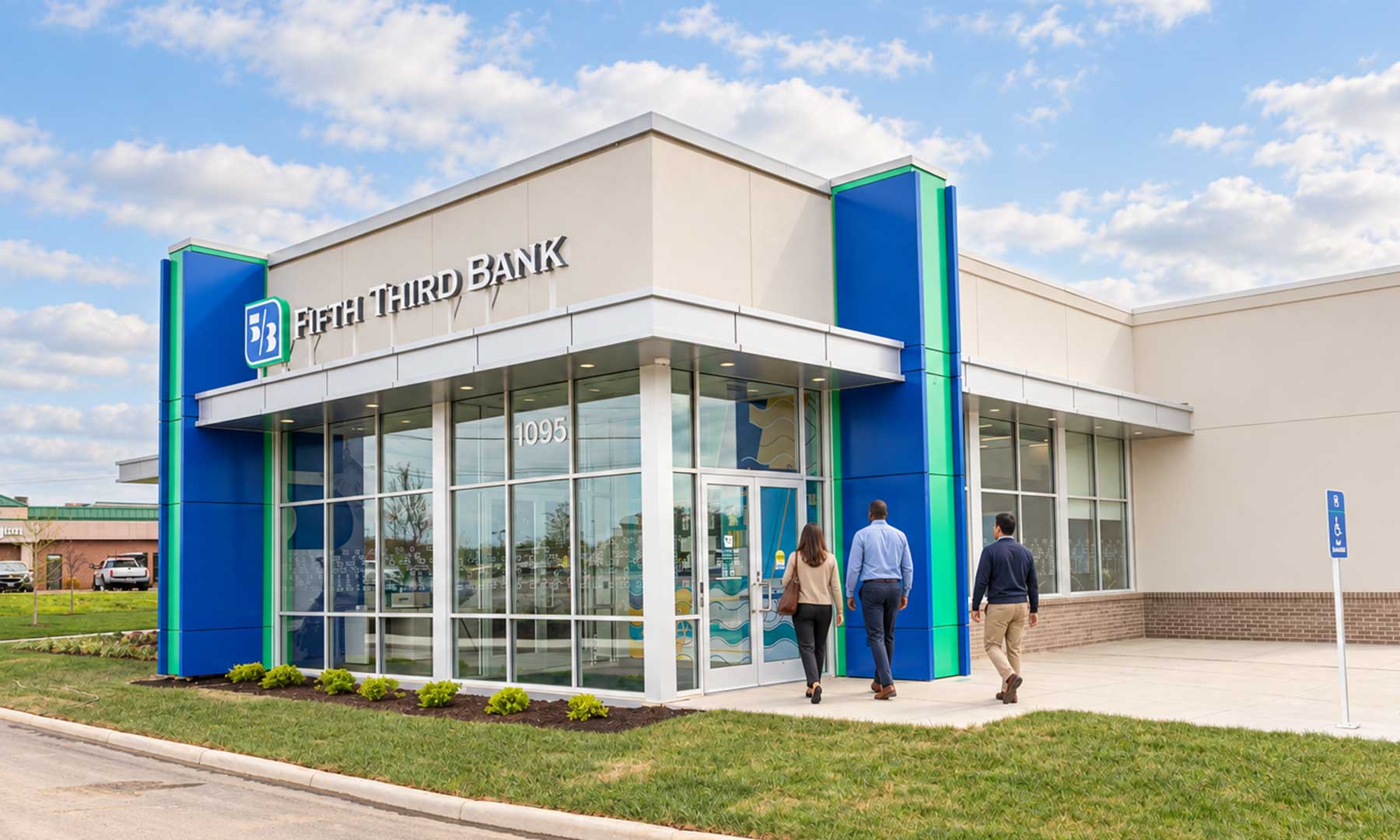
The company completed the technology and brand conversion over Labor Day weekend. It moved approximately 600,000 customer accounts and 293 banking centers onto Fifth Third’s systems. The branches span Arizona, California, Florida, Michigan and Texas.
The conversion completes the most visible stage of a merger that legally closed Feb. 1. Fifth Third said the combined company now holds more than $300 billion in assets. This makes it the ninth-largest bank in the United States and one of eight Fortune 500 companies still headquartered in the region. Comerica customers gained access to Fifth Third’s mobile platform and products. Meanwhile, customers of both banks received access to a larger branch network.
“Our teams planned, trained and tested for this moment, and they delivered a disciplined conversion this weekend,” Fifth Third Chairman, CEO and President Tim Spence said in the bank’s Sept. 8 announcement. He added that the company was continuing to monitor customers’ experiences after the transition.
A national conversion centered in Cincinnati
Fifth Third’s application to acquire Comerica identifies It as a national banking association headquartered in Cincinnati. Comerica had been based in Dallas, with roots in Detroit stretching back to 1849. Its disappearance as a stand-alone company places another major regional banking franchise under a Cincinnati corporation.
The Federal Reserve approved the acquisition in January. The combination then became effective Feb. 1.
Cincinnati did not suddenly gain 600,000 customers or hundreds of new branches. Most of the physical expansion occurred outside Ohio. Fifth Third has not announced a comparably large influx of Comerica employees into the city.
What Cincinnati gained is the headquarters itself: the office that allocates capital, sets strategy and oversees a bank operating across several of the country’s fastest-growing metropolitan areas. Headquarters functions generate legal, accounting, technology and professional-services work, even when the customers and branches sit several states away.
Fifth Third is adding workers downtown
Fifth Third is also reinforcing its physical presence in Cincinnati’s center. This is part of a broader pattern of corporate headquarters concentrating downtown in recent years. The bank announced in April that it would relocate approximately 750 local employees from Madisonville into Fifth Third Center and additional space at Columbia Plaza.
The move expands its downtown workforce by nearly 30%, according to local reporting.
The Comerica conversion and the employee move point in the same direction: more people working around Fountain Square, not fewer, while the bank’s authority extends across a wider footprint than before.
The savings will come with closures and job cuts
The counterargument is that bank mergers create their financial value through elimination, not accumulation.
Fifth Third has projected approximately $850 million in annual pretax expense savings from the Comerica deal by the end of 2026. It expects total merger and integration expenses of about $1.3 billion, according to an investor presentation filed with the Securities and Exchange Commission. Those expenses include systems work, facilities consolidation and employment-related costs.
The bank identified about 80 branches that it expected to close after completing a more detailed review. In 45 cases, the receiving branch would be within one mile of the location being eliminated, according to information Fifth Third supplied to the Federal Reserve. Therefore, Fifth Third argued that customers would still have substantially more branch access across the combined network.
That is a reasonable defense where two banks operated locations within blocks of one another. Maintaining duplicate branches is expensive, especially as customers conduct more business by phone and online. A larger network can also give Comerica customers products and locations their former bank could not provide.
But $850 million in savings cannot come solely from changing signs. Fifth Third’s SEC disclosures identify employee separation expenses and facilities consolidation among the merger costs. Notably, investors are being asked to judge the deal partly on how efficiently it removes duplication. Customers and communities are being asked to judge it on expanded access.
Customer retention is the next test
The Labor Day conversion offered the first large test. Fifth Third described the operation as disciplined, and the bank emerged with its core systems functioning across the expanded footprint.
Scattered customer complaints appeared online about login trouble and long waits, but those reports do not establish a widespread breakdown. A conversion involving hundreds of thousands of accounts was unlikely to pass without individual problems. However, the more useful measure will be whether complaints, account closures or service disruptions persist.
For Cincinnati, the merger matters more than one difficult weekend. Fifth Third has moved from a large regional institution to a bank approaching national scale. Importantly, it has kept its headquarters in downtown Cincinnati.
Comerica’s branches in five states now carry the Fifth Third name. Decisions about how to run them are still made on Fountain Square.
FAQs
What is the Fifth Third Comerica conversion?
The Fifth Third Comerica conversion is the technology and brand transition that moved approximately 600,000 Comerica customer accounts and 293 banking centers onto Fifth Third’s systems, completed over Labor Day weekend 2026.
When did the Fifth Third Comerica merger close?
The merger legally closed on Feb. 1, 2026, after the Federal Reserve approved the acquisition in January. The September conversion completed the technology and branding integration on top of that legal close.
Is Fifth Third now the ninth-largest bank in the US?
Yes. Following the Comerica combination, Fifth Third holds more than $300 billion in assets, making it the ninth-largest bank in the United States.
Which states have Fifth Third branches from the Comerica conversion?
The converted branches span Arizona, California, Florida, Michigan and Texas, added to Fifth Third’s existing footprint.
Will Fifth Third close branches after the Comerica merger?
Fifth Third has identified about 80 branches it expects to close following a more detailed review, with 45 of those cases having a receiving branch within one mile of the closing location.
This article was reported, fact-checked and edited using The Cincinnati Exchange’s proprietary AI article system as part of our editorial process.