



Share This Article
Article Summary
Cincinnati residents are facing significant utility rate increases of up to 35 percent in 2026, driven primarily by the rapid expansion of power-intensive data centers and the resulting surge in PJM Interconnection capacity auction prices. To accommodate this unprecedented demand and prevent grid failures, utility providers are investing heavily in infrastructure modernizations and new natural gas generation facilities. Ratepayers are absorbing these capital costs through higher base rates, though consumers can mitigate the financial impact by improving home energy efficiency and utilizing Ohio’s competitive retail energy market.
Understanding the rising energy costs Cincinnati families face is crucial for household budgeting this year.
The primary drivers of energy costs Cincinnati residents pay include natural gas rates and grid upgrades.
The current state of utility bills
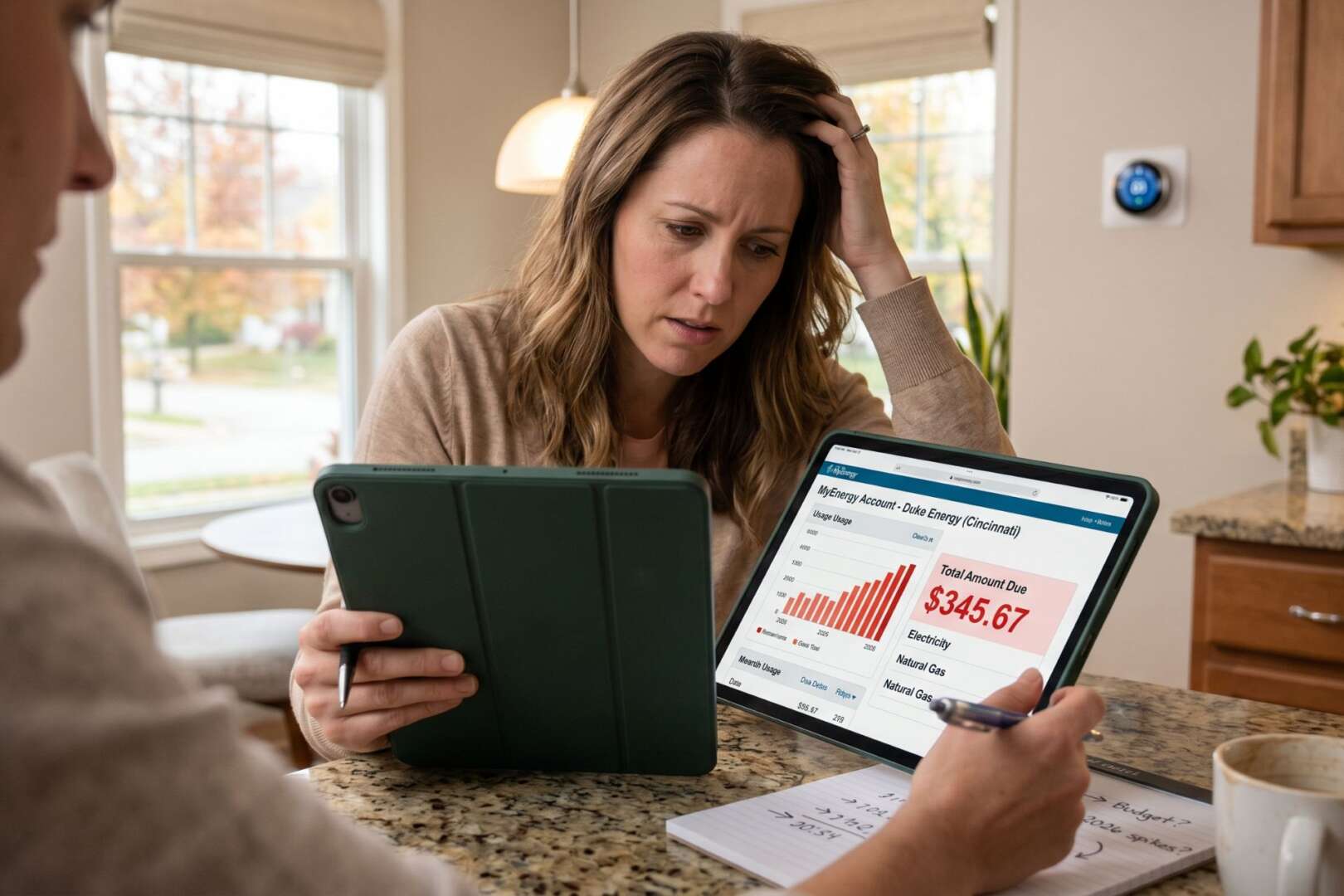
Rising monthly utility bills are putting immense pressure on local budgets across the tri-state area. Many homeowners are actively searching for reasons behind the sudden spikes in their statements. The reality is that the energy landscape in Ohio has shifted dramatically over recent months. Increased electricity demand is severely straining the local power grid’s capacity to deliver reliable service.
Meanwhile, natural gas prices continue to climb steadily on the national and global markets. These combined factors create a perfect storm for residential and commercial utility customers alike. Consequently, understanding these ongoing utility trends is essential for consumers trying to manage their finances.
Some Ohioans have seen electricity price increases anywhere between 10 percent and 35 percent recently. The Office of the Ohio Consumers’ Counsel confirmed these staggering figures as of June 2025. These immediate hikes were triggered directly by the PJM Interconnection capacity auctions, where prices for the 2025–2026 delivery year surged by over 800%. This massive jump clearly highlights the heavy financial burden placed on everyday citizens and small businesses.
Power companies are systematically passing the costs of necessary infrastructure upgrades down to the end consumer. As more power-hungry industrial facilities enter the region, this inflationary trend is highly likely to continue. It is an especially harsh reality for older people and families living on fixed incomes.
Why energy costs Cincinnati residents pay are surging
A major underlying factor driving up prices is the rapid expansion of digital and technological infrastructure. Modern data centers and artificial intelligence facilities require massive, uninterrupted amounts of electrical power. In fact, recent projections from regional grid operators indicate total electricity demand could rise between 16% and 25% over the next five years.
This unprecedented growth is forcing utility providers to drastically overhaul and expand existing transmission systems. Those necessary grid improvements and substation expansions certainly do not come cheap. Ultimately, everyday ratepayers are the ones footing the bill for these extensive capital projects.
According to Signal Ohio, industry analysts attribute recent electric price spikes directly to these new data facilities. Power companies simply must upgrade the electrical grid to physically accommodate them and prevent rolling blackouts. As these massive facilities spread rapidly through regions like Appalachia and central Ohio, the local market feels the immediate impact. The inherent infrastructure inertia makes quick, painless fixes virtually impossible for local governments to implement. Therefore, the long-term market outlook strongly points to sustained higher rates for the foreseeable future.
- Data centers run continuously 24/7 and consume vast, unprecedented amounts of electricity.
- Artificial intelligence workloads demand high-capacity, energy-intensive liquid cooling systems.
- Grid infrastructure requires immensely costly modernizations to handle the newly added load.
- Consumer base rates artificially inflate to cover these massive utility capital investments.
- Federal clean energy incentives are shifting, causing a reevaluation of future generation projects.
The impact of data centers on electricity prices Ohio
The massive boom in technology is fundamentally reshaping the state’s broader economic landscape. However, it also brings significant, immediate challenges for residential power grids that were not designed for such loads. Facilities are popping up rapidly across rural and suburban areas, drawing massive base energy loads.
This sudden shift forces energy providers to scramble for adequate, reliable dispatchable generation. To successfully maintain reliable service, investment capital is shifting heavily toward natural gas and nuclear power. Renewable energy projects alone currently cannot support the constant, heavy, and inflexible demand.
You can learn more about local economic shifts in our recent coverage on Cincinnati business growth in 2026. The corporate influx undoubtedly provides excellent local jobs but severely strains shared public resources. Residents must constantly balance the long-term economic benefits against their rapidly rising monthly expenses.
Unfortunately, the most immediate consequence for the average citizen is a significantly higher electric bill. Local policymakers and state regulators are only just beginning to address this highly complex dynamic.
How gas rates affect the energy costs Cincinnati households pay
Natural gas remains an absolutely critical fuel for both winter heating and summer power generation. Recently, the volatile energy market has seen notable, structural shifts in both pricing and overall demand. Natural gas prices have gradually risen over the past year and are projected to continue rising into 2026. This directly and negatively impacts winter heating bills for local families trying to stay warm. It also drastically increases the fundamental base cost of generating commercial electricity. When the raw fuel costs significantly more, the final generated power costs more as well.
Interestingly, the difference between raw fuel costs and wholesale power prices is actively widening. This profitable gap makes new gas-fired generation highly attractive to corporate energy developers.
As a direct result, more natural gas power plants are being rapidly constructed across Ohio. While this provides a reliable, dispatchable power source, it firmly tethers utility rates to gas market fluctuations. Consumers are thus permanently exposed to ongoing price volatility driven by international energy markets.
If you want to track national energy policies, the U.S. Energy Information Administration offers comprehensive data. Their detailed market reports frequently highlight how regional shifts closely mirror broader national trends.
Global consumption of natural gas recently hit unprecedented record highs. This massive, unyielding global demand effectively keeps local utility prices heavily elevated.
Strategies to manage energy costs Cincinnati utility bills
Homeowners are not entirely helpless against these constantly rising utility tides. Taking immediate, proactive steps can easily mitigate some of the severe financial damage to your budget. First, systematically conducting a comprehensive home energy audit is a remarkably wise initial investment.
Identifying hidden drafts and upgrading poor insulation can confidently save families hundreds of dollars annually. Simple, cost-effective upgrades like weatherstripping doors and installing LED lighting also yield very quick returns. Every single kilowatt saved directly keeps hard-earned money securely in your pocket.
Another excellent option is to carefully explore competitive retail electric service providers and municipal aggregation programs. Many local townships and communities negotiate bulk rates through aggregators to shield residents from sudden market volatility.
Ohio legally allows informed consumers to shop around for their actual energy generation supplier. Securing a long-term, fixed-rate contract can effectively shield you from sudden, unpredictable market price spikes. However, customers must always carefully read the fine print regarding sneaky cancellation fees and variable transitions. The Public Utilities Commission of Ohio provides excellent, unbiased resources to compare available offers safely.
- Seal drafty windows and exterior doors to successfully prevent expensive winter heat loss.
- Upgrade to a programmable smart thermostat for highly efficient, automated climate control.
- Actively compare local energy generation suppliers to lock in much better fixed rates.
- Maintain your residential HVAC system regularly to ensure peak operational performance.
- Unplug idle electronics to eliminate wasteful “vampire” power drains in your home.
Looking ahead to future Ohio utility trends
The remainder of 2026 will undoubtedly bring continued, structural adjustments throughout the entire utility sector. Massive infrastructure projects will stubbornly keep pushing utility capital costs higher for the next decade. The national focus has tangibly shifted from pure clean energy initiatives to ensuring strict energy reliability and abundance. This pragmatic shift means significantly more investments in traditional, proven energy sources. While this strategic pivot ensures the lights stay on, it practically guarantees higher baseline operational costs.
For more helpful insights on local living, routinely check out our comprehensive guide to budgeting for homeownership in Hamilton County. Staying well-informed is absolutely your best, most reliable defense against sudden utility rate shock. As the greater Cincinnati region rapidly adapts to this harsh new energy reality, consumers must remain highly vigilant. Monitor your monthly billing statements very closely for any unexpected, hidden fee increases. Consistently adapting your daily household habits remains the most immediately effective way to successfully combat energy inflation.
FAQs
Why did Cincinnati electricity rates increase so drastically in 2025 and 2026?
The recent electricity rate spikes are primarily driven by massive surges in regional power demand from new data centers and artificial intelligence facilities. Additionally, the PJM Interconnection capacity auctions for the 2025–2026 delivery year surged by over 800%, passing significantly higher infrastructure costs down to utility consumers.
How do new data centers directly impact my monthly utility bill?
Data centers operate continuously and require immense amounts of electricity, forcing regional providers to undertake costly grid modernizations to prevent power grid overloads. These extensive capital investments in transmission systems and new generation plants are funded directly by increasing the base utility rates for all consumers.
What role does natural gas play in my overall electricity costs?
Natural gas is a critical fuel source for commercial electricity generation across Ohio’s power grid. As global demand and market volatility drive up the cost of raw natural gas, the expense of generating wholesale power increases. This widening gap directly results in higher retail electricity bills for local households.
What actions can homeowners take to lower their energy bills?
Homeowners can effectively reduce costs by improving physical home efficiency through professional energy audits, strategic weatherstripping, and the installation of programmable thermostats. Furthermore, Ohio consumers can actively shop for competitive retail electric providers or participate in municipal aggregation programs to lock in fixed rates and avoid sudden market volatility.


