
Share This Article
Article Summary
Cincinnati parks ranked fifth nationally in the 2026 ParkScore survey by the Trust for Public Land, dropping one spot from last year’s fourth-place ranking. The city remained the top-ranked major park system in Ohio based on park access, amenities, investment, acreage, and equity. The report highlighted Cincinnati’s strong accessibility to public parks and continued investment in riverfront and neighborhood green spaces. Officials and park advocates said ongoing improvements and recreational upgrades helped the city remain in the national top five.
Cincinnati parks continue to rank among the best urban park systems in the United States.
The parks remained the top-rated major park system in Ohio after placing fifth in the 2026 ParkScore survey released by the Trust for Public Land.
The latest rankings showed Cincinnati slipped one position from fourth place last year, but the city still outperformed larger metro areas including Chicago, San Francisco, and Seattle.
According to the Trust for Public Land ParkScore index, the rankings measure park access, acreage, investment, amenities, and equity across the nation’s 100 largest cities. Washington, D.C. again claimed the top spot, followed by Irvine, Minneapolis, and Saint Paul.
Local officials and park advocates said the Cincinnati parks system continues to benefit from decades of investment in riverfront development, neighborhood green spaces, and recreational upgrades. The city has consistently ranked inside the national top 10 over the past several years. According to reporting from WVXU, Cincinnati’s extensive network of parks and trails helped maintain its strong national standing despite increased competition from other cities.
The report also reaffirmed Cincinnati’s leadership among Ohio cities. Cleveland and Columbus ranked lower in the national survey, while Cincinnati maintained one of the highest park accessibility rates in the Midwest. Previous ParkScore data showed that more than 90% of Cincinnati residents live within a 10-minute walk of a public park.
Cincinnati parks remain a major civic asset
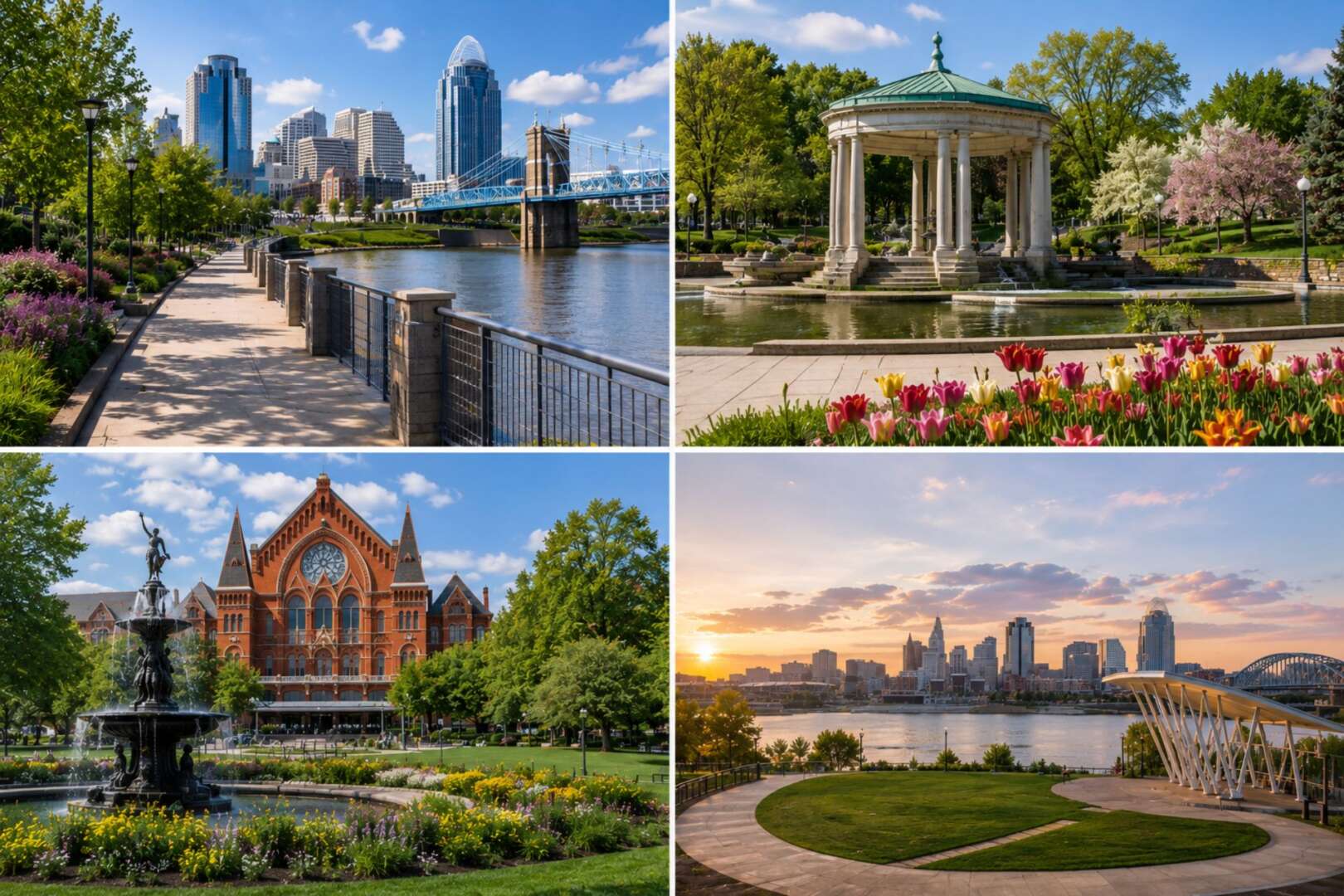
City leaders said the Cincinnati parks system plays a major role in recreation, tourism, and neighborhood development. Parks including Smale Riverfront Park, Eden Park, Washington Park, and Sawyer Point remain among the city’s most visited outdoor destinations.
The riverfront transformation along the Ohio River continues to shape Cincinnati’s national reputation for public spaces. Over the last decade, the city invested millions into pedestrian-friendly areas, playgrounds, walking paths, event venues, and public art installations. Those projects helped create year-round activity downtown and along the riverfront corridor.
According to the ParkScore methodology, Cincinnati scored particularly well in park access and recreational amenities. Residents benefit from playgrounds, sports courts, splash pads, trails, and community gathering spaces spread throughout the city.
Several community organizations also contribute to park improvements through private fundraising and volunteer programs. Groups such as the Cincinnati Parks Foundation support maintenance projects, tree planting, and neighborhood programming that supplement city funding.
Recent projects tied to the Cincinnati parks system include:
- Trail and sidewalk upgrades in neighborhood parks
- Expanded outdoor fitness and recreation areas
- Renovated playgrounds and sports facilities
- Riverfront beautification and landscaping improvements
- Increased tree canopy and environmental restoration work
City officials said these improvements helped strengthen both public health and tourism activity across Cincinnati.
Why Cincinnati parks dropped one spot
Despite remaining in the national top five, Cincinnati parks fell from fourth to fifth place in the newest survey. Analysts said the drop does not reflect a major decline in park quality. Instead, other cities improved investment levels and expanded park accessibility programs at a faster pace.
According to the Trust for Public Land, cities nationwide increased spending on public green spaces after strong public demand for outdoor recreation during recent years. Some cities expanded park acreage, while others introduced new environmental resilience projects and equity-focused investments.
Urban planning experts noted that maintaining a top national ranking requires consistent long-term funding. Park systems face rising maintenance costs, aging infrastructure, and staffing pressures as cities compete for limited municipal resources.
Cincinnati also faces several ongoing park-related challenges, including:
- Deferred maintenance in older neighborhood parks
- Funding gaps for long-term capital improvements
- Pressure from rising operational costs
- Uneven access to amenities in some communities
- Increased demand for environmental sustainability projects
Local advocates warned that slowing investments could eventually impact future rankings if peer cities continue expanding their park systems more aggressively.
Cincinnati parks contribute to economic growth
Park advocates argue that Cincinnati parks generate economic benefits beyond recreation. Public parks often attract tourism, increase nearby property values, and encourage business activity around entertainment districts.
According to the Trust for Public Land’s economic research, investments in public parks can generate multiple dollars in economic return for every public dollar spent. Researchers said parks also help cities improve air quality, reduce heat, and strengthen public health outcomes.
Downtown Cincinnati has increasingly used public spaces to host concerts, festivals, sporting events, and cultural programming. Washington Park and Smale Riverfront Park regularly host community events that attract both residents and tourists.
Business leaders have also promoted Cincinnati’s park system as a quality-of-life advantage for attracting workers and new residents. Urban development experts said access to outdoor spaces became more important after the pandemic shifted priorities toward walkability and public recreation.
According to local tourism groups, Cincinnati’s investment in parks and public spaces helped strengthen the city’s broader redevelopment efforts over the past decade.
National competition for park rankings grows
The ParkScore survey showed growing competition among major cities seeking higher national rankings. Cities across the country expanded environmental programs, green infrastructure, and public recreation projects to improve livability.
Washington, D.C. retained the nation’s top overall ranking in 2026, while several western and southern cities improved significantly from prior years. Analysts said many municipalities increased park funding as part of climate resilience and economic development strategies.
Despite the slight decline, Cincinnati parks still ranked ahead of numerous larger metropolitan systems. Local officials said the city remains committed to maintaining high-quality public spaces through future investments and partnerships.
Regional planners also said Cincinnati’s continued success reflects long-term public support for preserving green spaces in both urban and residential neighborhoods.
The city is expected to continue several park modernization projects throughout 2026, including infrastructure upgrades and environmental restoration efforts tied to long-term sustainability goals.
For Cincinnati residents, the newest rankings reinforced the city’s reputation as one of the nation’s strongest urban park systems, even as competition continues to intensify nationwide.
FAQs
Why did Cincinnati parks drop from fourth to fifth place?
The ParkScore rankings showed other cities increased investments and expanded park access programs more rapidly this year. The Trust for Public Land did not report a major decline in Cincinnati’s park quality or services.
What factors determine the ParkScore rankings?
The rankings evaluate park access, acreage, amenities, investment, and equity across the 100 largest U.S. cities. Researchers also consider how close residents live to public parks and recreational spaces.
Which Cincinnati parks are most recognized nationally?
Smale Riverfront Park, Eden Park, Washington Park, and Sawyer Point are among the city’s most prominent public spaces. These parks regularly host events, recreational activities, and tourism-related programming.
How do Cincinnati parks affect the local economy?
Public parks support tourism, outdoor events, and nearby business activity. According to Trust for Public Land research, park investments can also improve property values and public health outcomes.