



Share This Article
Article Summary:
Cincinnati police say 18-year-old Jalen Cook is the third suspect arrested in the September 2025 shooting death of 16-year-old Thomas “T.J.” Bell in Over-the-Rhine. The arrest adds to an already troubling case involving multiple suspects, a second juvenile victim, and one defendant who was reportedly on community control after an earlier gun case.
Cincinnati police announced that 18-year-old Jalen Cook has been arrested in connection with the fatal shooting of 16-year-old Thomas “T.J.” Bell in Over-the-Rhine.
The arrest makes Cook the third suspect taken into custody in the case, joining Davon Marcum and a 17-year-old previously charged in Bell’s death.
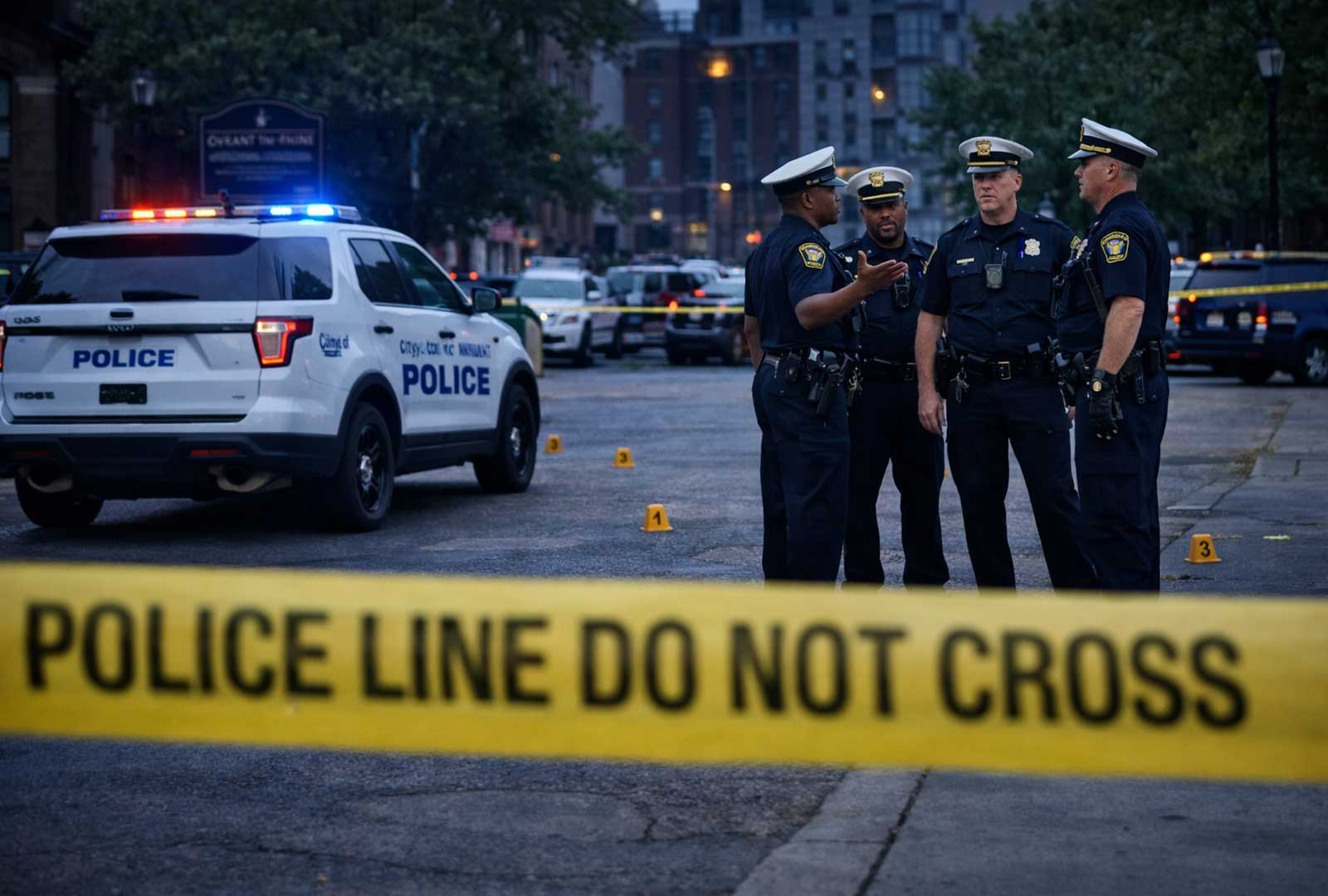
Police said Bell was shot on Sept. 16, 2025, near the intersection of East McMicken Avenue and Walnut Street, close to Grant Park, around 5 p.m. Cook is charged with aggravated murder. The Cincinnati Over-the-Rhine shooting has drawn attention from multiple local news outlets. FOX19 reported the arrest, while WLWT and Local 12 confirmed the same basic timeline.
The Cincinnati Drive-by Shooting Investigation Has Expanded Over Time
Bell’s death did not appear to be the work of a single person.
Police first arrested Davon Marcum, 18, in late September 2025. A second suspect, a 17-year-old, was later charged in January 2026. Now Cook has been added to the case as a third defendant in the Cincinnati Over-the-Rhine shooting. FOX19 previously reported the second arrest, and WCPO reported that Bell was one of two people shot that day.
That detail matters. Cases involving multiple shooters or multiple participants are harder to prosecute, take longer to resolve, and often force prosecutors to build separate theories of responsibility for each defendant.
Davon Marcum’s Earlier Gun Case Makes This More Serious
The most disturbing part of the case may not be the third arrest itself. It may be what came before it.
According to earlier reporting, Marcum had already been arrested by Cincinnati police with a loaded firearm on April 30, 2025. He was later convicted on a weapons under disability charge and placed on community control. But that did not hold. FOX19 reported that Marcum missed probation reporting dates in July and September and also failed to complete the required programming before Bell was killed.
That timeline raises a harder question than the arrest announcement itself.
If someone is arrested with a loaded gun, convicted, placed on community control, and then almost immediately begins violating supervision, what exactly is the system accomplishing?
This is where the case stops being just a murder story and becomes a public safety and accountability story. The community asks, could we avoid situations like the Cincinnati Over-the-Rhine shooting?
Thomas “T.J.” Bell Became Another Young Victim of Cincinnati Gun Violence
Bell was 16 years old.
Police said officers responded to reports of shots fired and found Bell wounded. He was taken to the hospital, where he later died. A second juvenile was also shot and injured. FOX19’s original coverage placed the shooting near Grant Park and Wesley Chapel Mission Center in Over-the-Rhine.
His death added another name to Cincinnati’s long list of young victims caught in gun violence. That broader pattern has remained a major concern even during periods when overall shootings citywide have declined. Our recent reporting on Cincinnati shootings noted that total shootings fell in 2025, but youth involvement did not improve in the same way.
Over-the-Rhine Still Carries a Heavy Share of the Safety Debate
Over-the-Rhine is one of the city’s most visible neighborhoods, which means violence there rarely stays local for long.
Incidents in OTR quickly become part of a wider argument about nightlife, policing, repeat offenders, and whether city leaders are actually getting ahead of violent crime or just reacting after the fact. That has been especially true as concerns about nightlife-related violence in OTR have grown and as broader debates around Cincinnati crime and safety data have intensified.
The contradiction is familiar by now. Citywide numbers may look somewhat better on paper, yet families still see teenagers dying in broad daylight in neighborhoods that are central to the city’s identity and redevelopment story.
The Larger Question Is Not Just Who Pulled the Trigger
Cook’s arrest matters. So do the earlier arrests.
But the case also points to something larger than the criminal charges alone.
Marcum was arrested with a loaded firearm in April. He was convicted in July. He reportedly began violating community control almost immediately. Bell was killed in September.
That sequence does not prove the system caused the shooting. It does force a question that city leaders, probation officials, and courts cannot avoid: how many warning signs have to pile up before intervention becomes real?
For families in Cincinnati neighborhoods already living with recurring violence, that question is not theoretical. It is what public safety looks like when prevention fails.
What Happens Next With Cincinnati Gun Violence?
With three suspects now charged, the case is likely to move more slowly and become more legally complex. Prosecutors will need to establish what role each defendant allegedly played in Bell’s death and whether the shooting supports separate counts tied to murder, aggravated murder, assault, or weapons violations.
What the court decides will determine legal responsibility.
But the public is likely to keep asking a different question: whether this case could have been interrupted earlier, before a 16-year-old ended up dead near Grant Park.
Read More
Cincinnati street penalties advance after large takeover arrests
This article includes reporting based on publicly available records and local news coverage, along with contextual analysis intended to clarify the broader public safety issues surrounding the case. Details may be updated as additional court filings or police information become available.