
Share This Article
Article Summary
Cincinnati is currently experiencing intense rental housing competition, driven by a structural inventory shortage after multifamily construction completions slowed down from a 2023–2024 peak. National real estate data platforms rank Cincinnati as the most in-demand rental market in the United States, marked by an 81% surge in prospective tenants saving local listings. Consequently, landlords in premium downtown submarkets like Mount Adams and Over-the-Rhine are receiving multiple offers above asking prices, with applicants utilizing higher deposits and upfront rent to secure units.
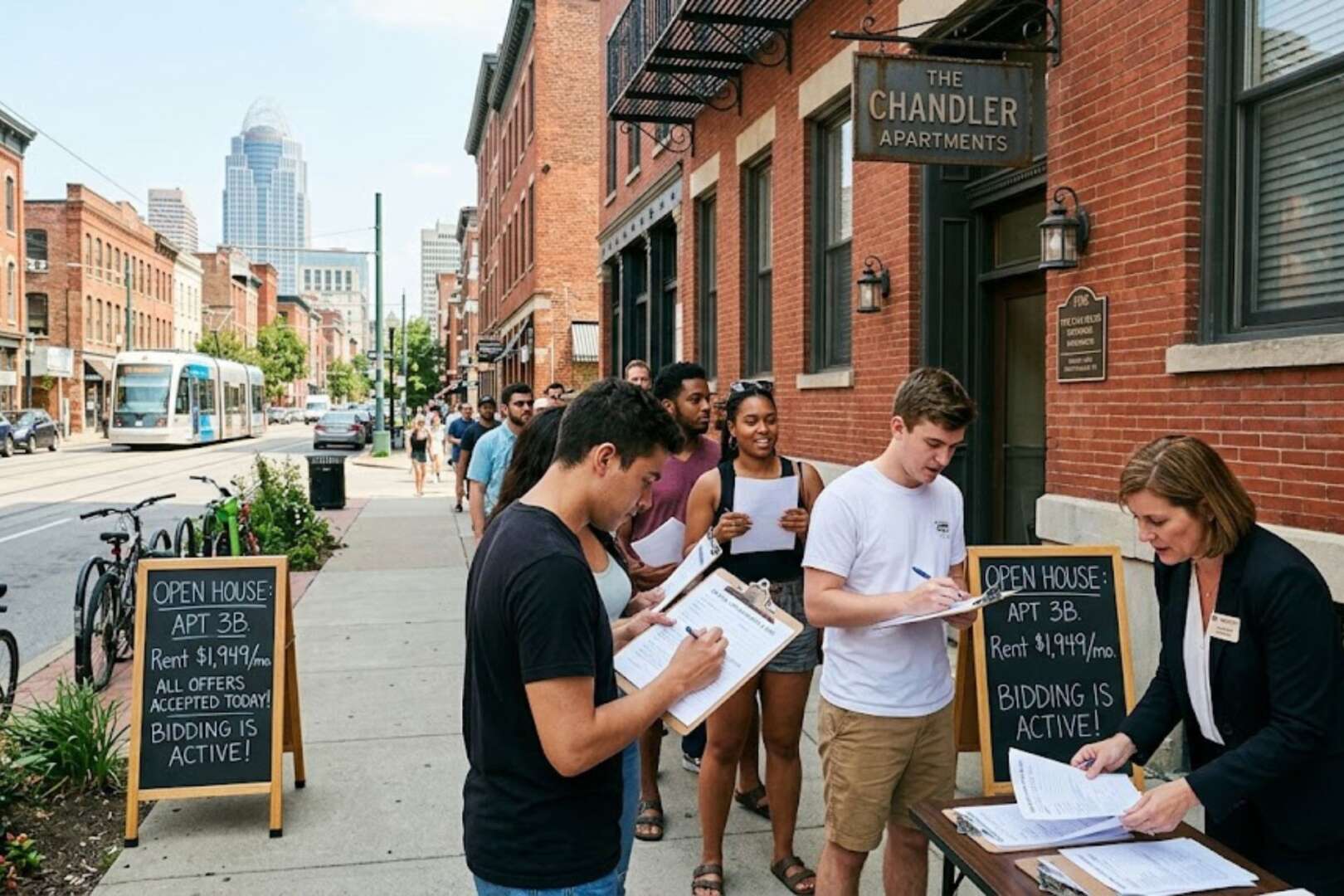
Cincinnati apartment rent bidding wars are returning to the local housing market this summer as peak moving season intensifies.
Landlords in highly sought-after neighborhoods report receiving multiple offers above their initial asking prices as the regional housing competition hits a fever pitch
The return of aggressive rental strategies
According to a report by the University of Cincinnati Lindner College of Business, the city now ranks among the top five markets nationally for apartment rent growth. Local property management firms note that prospective tenants frequently offer to pay an extra $50 to $150 per month to secure desirable units. This trend marks a visible shift in rental demand Ohio residents must navigate, especially when targeting premium properties.
Property managers highlight several factors driving this fierce housing competition across the Queen City:
- A major influx of out-of-state remote workers seeking regional affordability.
- Local young professionals choosing to lease longer due to high mortgage rates.
- A severe lack of newly constructed units hitting the urban core this year.
Economists note that when multiple applicants vie for the same location, the process inevitably transforms into an unstructured auction. Prospective tenants frequently offer larger security deposits or full years of rent upfront to beat out competitors. This behavior mimics the chaotic homebuying environment seen in recent years, now transferring directly into the local apartment sector.
Breaking down downtown apartment trends
The impact of this localized inventory squeeze is felt most severely in urban neighborhoods like Over-the-Rhine, Pendleton, and the Central Business District. Recent real estate metrics from RentCafe reveal that the average rent in Mount Adams has climbed to $2,258, while Over-the-Rhine averages $1,949 per month. These rising prices reflect the intense traffic clustering around walkable metropolitan hubs.
Data published by national real estate platform Norada Real Estate Investments indicates that Cincinnati holds the top position as the most in-demand rental market in the United States heading into the warmer months. The site reported a massive 81% surge in users saving local apartment listings to their online favorites. This digital tracking translates directly into physical foot traffic and competitive applications during weekend open houses.
As a result, properties in the urban core rarely remain vacant for more than a few days if they are priced accurately. Landlords who initially feared a market cooldown are discovering that high-end amenities still command premium bids. This specific submarket behavior highlights how localized the current inflation remains across different zip codes.
Supply shortages fuel Cincinnati apartment rent bidding wars
The underlying catalyst for these Cincinnati apartment rent bidding wars remains a distinct structural gap between household formation and physical construction. Real estate development data shows that regional apartment completions are tapering off after two consecutive record-breaking years of construction. Local submarkets welcomed roughly 3,900 new units in 2023 and another 3,800 units in 2024, but current pipelines have dropped significantly.
Fewer projects are crossing the finish line this summer, leaving incoming residents to fight over existing inventory. University of Cincinnati economist Gary Painter recently told WVXU’s Cincinnati Edition that the city simply has not built enough units to keep pace with the increasing inbound migration. Because local prices started lower than coastal metropolises, the percentage jumps appear much sharper to long-term residents.
While major mixed-use developments are slowly progressing near the university corridor, they will not deliver units quickly enough to alleviate this summer’s immediate pressure. Tenants must either expand their geographic search parameters or prepare to absorb higher housing expenses.
Navigating the competitive regional landscape
As individual households adjust to these historic downtown apartment trends, real estate experts advise renters to treat the application process like a professional presentation. Securing a lease in a high-demand area requires preparation well before the initial property viewing. Applicants who arrive at showings with completed background checks, proof of income, and references hold a distinct advantage.
Industry veterans suggest using the following strategies to improve your chances in a crowded applicant pool:
- Have your electronic deposit funds ready for immediate transfer upon approval.
- Offer flexibility on the move-in date to align perfectly with the landlord’s timeline.
- Consider signing a longer 18-month or 24-month lease to show long-term stability.
Expanding your search to adjacent communities can also provide financial relief without sacrificing proximity to downtown employment hubs. Neighborhoods like West Price Hill and Northside offer average monthly lease rates well below the citywide average. Navigating this changing environment requires a mix of financial vigilance and quick decision-making.
Our previous coverage of the Cincinnati real estate outlook detailed how mid-priced units face the most consistent occupancy pressures this year. As long as regional job markets remain robust and single-family home prices stay high, the local rental arena will likely maintain its competitive edge well into autumn.
Here’s what the market looks like in 2026:
- Bidding is happening mostly in high-demand areas. Neighborhoods such as Over-the-Rhine (OTR), Downtown, Hyde Park, Oakley, Mount Adams, and parts of Walnut Hills have seen strong competition for newer apartments, particularly those offering amenities like gyms, coworking spaces, and covered parking.
- Multiple applications are common. Instead of formal bidding wars, many landlords receive several qualified applications within days of listing a desirable unit. They often choose the applicant with the strongest financial profile or the earliest completed application.
- Some renters voluntarily offer more. In especially competitive situations, prospective tenants may offer to pay above the advertised rent, pay several months upfront (where permitted), or sign longer leases to make their applications more attractive. This is more common with independent landlords than with large apartment management companies.
- Large property managers rarely encourage bidding. Most professionally managed apartment communities use fixed pricing that changes based on market demand rather than accepting competing offers from applicants.
- Luxury apartments are seeing the strongest competition. High-end developments near employment centers and entertainment districts continue to attract young professionals, contributing to faster leasing and occasional rent bidding.
Why competition has increased
Several factors are contributing to stronger rental demand:
- Higher mortgage rates have kept some would-be homebuyers in the rental market.
- Cincinnati continues to attract new residents because its housing costs remain lower than many larger metropolitan areas.
- Population growth in urban neighborhoods has increased demand for modern apartments near jobs, restaurants, and entertainment.
- New apartment construction has helped add supply, but demand remains strong in the city’s most desirable locations.
Is rent bidding common?
Overall, rent bidding is still the exception rather than the rule. Most Cincinnati renters can expect to pay the advertised rent, but highly desirable units in popular neighborhoods may receive multiple offers, giving landlords the opportunity to select the strongest applicant—or, in some cases, accept a higher rent offer.
FAQs
What are the current average rent prices in Cincinnati’s top urban neighborhoods?
According to recent RentCafe metrics, the average monthly rent has climbed to $2,258 in Mount Adams and $1,949 in Over-the-Rhine. These figures reflect high demand and heavy foot traffic clustered around walkable downtown hubs.
What core factors are driving Cincinnati's rental bidding wars?
The competition is fueled by an influx of out-of-state remote workers and local young professionals opting to rent longer due to high mortgage rates. This demand is hitting the market at a time when newly constructed housing completions in the urban core have significantly tapered off.
Is the entire Cincinnati rental market experiencing price increases?
No. While premium units in the urban core face intense bidding wars and sharp percentage jumps, broader regional data shows that the wider Cincinnati metro median rent has stabilized and dipped slightly overall by roughly 2.36% year-over-year.
What strategies can renters use to secure an apartment in this competitive market?
Applicants should attend showings with completed background checks, proof of income, and references already prepared. Additionally, offering immediate electronic deposit transfers, flexibility on move-in dates, or signing a longer 18-to-24-month lease can improve an applicant’s chances.