



Share This Article
Article Summary
Cincinnati’s identity reflects key chapters of American history, including westward expansion, immigration, industrial growth, and cultural development. Founded along the Ohio River, the city became a major commercial center, welcomed large immigrant communities, and played an important role in the Underground Railroad. Today, Cincinnati continues to blend its historic heritage with modern industries, arts, sports, and economic innovation.
Cincinnati’s identity grew from the meeting of the Ohio River, immigration, and American expansion.
This identity continues to reflect the nation’s history through its economy, neighborhoods, culture, and traditions.
When people ask what makes Cincinnati uniquely American, the answer extends beyond its skyline or famous foods. Cincinnati identity reflects many of the forces that shaped the United States itself, including westward expansion, immigration, industrial growth, entrepreneurship, and cultural diversity. Few American cities illustrate the country’s evolution as clearly as Cincinnati, which transformed from a frontier settlement into one of the nation’s most influential inland cities during the 19th century.
Founded in 1788 on the banks of the Ohio River, Cincinnati quickly became a gateway to the expanding American frontier. The city’s strategic location connected eastern markets with western territories, allowing goods, people, and ideas to move throughout the growing nation. According to the National Park Service, Cincinnati became one of the country’s earliest commercial centers because of its position along major transportation routes. The city’s early success helped earn it the nickname “Queen of the West.”
That history still shapes the city’s identity today. Cincinnati blends historic neighborhoods with modern industries, major corporations, professional sports, renowned arts institutions, and a growing technology sector. The result is a city that often represents both traditional American values and contemporary innovation.
How Cincinnati identity reflects America’s history
Cincinnati’s development mirrors several defining chapters of American history.
The city emerged during westward expansion, when settlers crossed the Appalachian Mountains in search of new opportunities. River transportation made Cincinnati a critical economic hub decades before railroads connected much of the country.
During the 1800s, Cincinnati became one of America’s largest cities and one of its busiest manufacturing centers. It earned the nickname “Porkopolis” because it led the nation in pork processing, demonstrating the rise of American industry before the Civil War. Its factories, warehouses, and transportation networks helped supply growing markets across the United States.
The city also played an important role in the fight against slavery. Located just north of the Ohio River, Cincinnati sat directly across from the slave state of Kentucky. Freedom seekers crossed the river into Ohio while abolitionists organized throughout the region. Today, the National Underground Railroad Freedom Center preserves that history and continues to educate visitors about civil rights and freedom.
Other milestones include:
- Growth as one of America’s first major inland commercial cities
- Expansion through riverboats, canals, and railroads
- Industrial leadership during the 19th century
- Contributions to manufacturing and consumer goods
- Continued investment in education, healthcare, and advanced manufacturing
These developments reflect broader trends that shaped the United States.
Cincinnati identity is rooted in immigration
Immigration remains one of the strongest influences on Cincinnati identity.
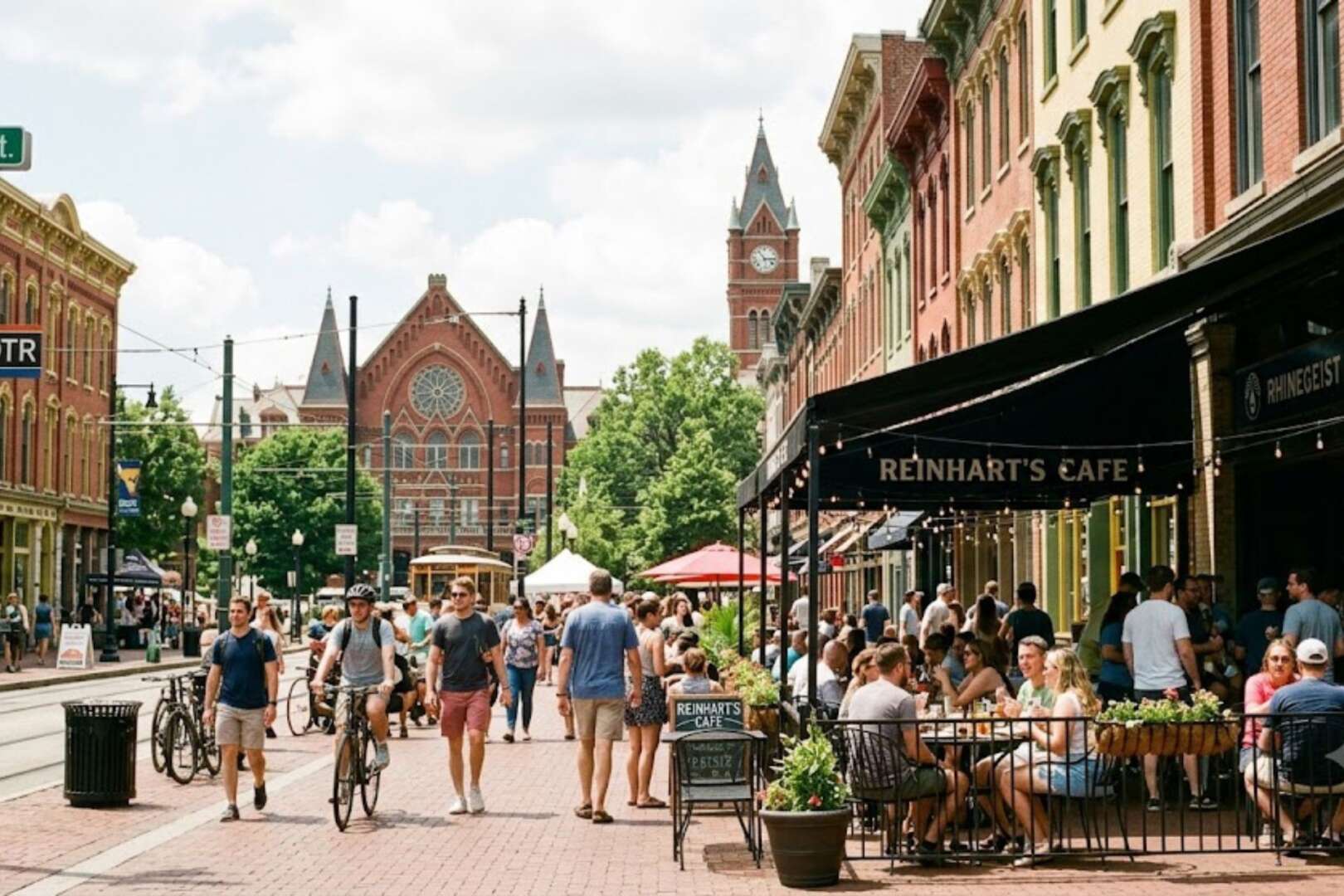
German immigrants arrived in large numbers during the 19th century and transformed nearly every aspect of city life. By the mid-1800s, Cincinnati had one of the largest German populations in the United States. Entire neighborhoods, particularly Over-the-Rhine, developed around German traditions, businesses, churches, breweries, and social clubs. According to National Geographic, Cincinnati’s brewing industry became one of America’s largest, and its German heritage remains visible in its architecture and annual festivals.
Today, Oktoberfest Zinzinnati attracts hundreds of thousands of visitors and remains the largest Oktoberfest celebration in the United States. Historic breweries, restored lager tunnels, and preserved Italianate buildings continue to connect residents with the city’s immigrant past.
German influence extends beyond festivals.
Residents still celebrate traditions through:
- Local breweries and beer gardens
- Historic churches
- Neighborhood festivals
- Traditional bakeries
- Community organizations
- Preserved architecture
Like many American cities, Cincinnati also welcomed immigrants from Ireland, Italy, Eastern Europe, Appalachia, and more recently Asia, Africa, and Latin America. Those communities continue to shape neighborhoods, restaurants, businesses, and civic life.
Cincinnati identity combines local traditions with national culture
Many aspects of Cincinnati have become symbols of regional American culture.
Perhaps no example is more recognizable than Cincinnati-style chili. Unlike traditional Texas chili, Cincinnati chili combines Mediterranean-inspired spices with spaghetti or hot dogs and generous amounts of shredded cheese. The unique recipe has become one of the nation’s most recognizable regional foods and demonstrates how immigrant influences adapted into distinctly American traditions.
Professional sports also play a major role.
The city is home to Major League Baseball’s Cincinnati Reds, the nation’s oldest professional baseball franchise, and the NFL’s Cincinnati Bengals. Baseball itself holds a special place in Cincinnati’s history, reinforcing the city’s longstanding connection to one of America’s favorite pastimes.
Arts and culture further strengthen Cincinnati’s national reputation.
Institutions such as the Cincinnati Symphony Orchestra, Cincinnati Art Museum, and Music Hall have earned national recognition while serving generations of local residents.
Cincinnati identity continues to evolve
Modern Cincinnati reflects changing economic and demographic trends seen across the United States.
Manufacturing remains important, but healthcare, logistics, finance, technology, education, and professional services now drive much of the regional economy. Global companies headquartered in the region continue to influence consumer products used around the world.
Neighborhoods such as Over-the-Rhine have experienced significant revitalization, attracting new businesses, restaurants, apartments, and entertainment venues while also raising discussions about affordability and redevelopment. According to National Geographic, Over-the-Rhine has become one of America’s most notable historic urban neighborhoods because of its preservation efforts and renewed investment.
The city’s geography also sets it apart.
Unlike many Midwestern cities built on flat terrain, Cincinnati’s hills, riverfront, and historic neighborhoods create a landscape that often resembles older European cities. Those physical characteristics contribute to its distinctive character while remaining deeply connected to American urban development.
Recent reporting from National Geographic has highlighted Cincinnati’s historic brewing tunnels, German heritage, and architecture as examples of how the city preserves its past while adapting for future generations. Local tourism organizations have similarly emphasized Cincinnati’s immigrant history and cultural diversity as defining features of the city’s identity.
Ultimately, what makes Cincinnati American is not one landmark or one tradition.
It is the combination of frontier history, immigration, industry, entrepreneurship, cultural diversity, civic institutions, and continual reinvention. Like the United States itself, Cincinnati has grown by welcoming new people, adapting to economic change, and preserving important parts of its past while building toward its future.
For readers interested in Cincinnati’s ongoing growth, see our coverage of Fort Washington Way funding moves Cincinnati cap project closer to construction and our report on apartment rent Cincinnati trends as housing competition reshapes the local market.
For additional historical information, readers can explore the National Park Service’s history of Cincinnati and the National Underground Railroad Freedom Center.
Also read:
Fourth of July events bring fireworks, concerts, America 250 celebrations to Cincinnati
FAQs
Why is Cincinnati considered an American city?
Cincinnati represents many of the historical forces that shaped the United States, including frontier settlement, manufacturing, immigration, and commerce. Its location on the Ohio River helped it become a major gateway for trade and westward expansion.
What role did immigration play in Cincinnati’s development?
German immigrants significantly influenced Cincinnati’s neighborhoods, architecture, breweries, and cultural traditions during the 19th century. Other immigrant communities also contributed to the city’s economy, cuisine, religious institutions, and civic life over time.
Why is the Ohio River important to Cincinnati’s history?
The Ohio River served as a major transportation route that connected Cincinnati to national markets and supported its early economic growth. It also marked the boundary between free and slave states, making the city an important location in the history of the Underground Railroad.
What makes Cincinnati unique today?
Cincinnati combines historic districts, nationally recognized arts organizations, professional sports teams, Fortune 500 headquarters, and a diverse local culture. The city continues to preserve its historical landmarks while expanding in sectors such as healthcare, technology, manufacturing, and logistics.