



Share This Article
Article Summary:
Former Bengals cornerback Pacman Jones was sentenced to five years of probation after pleading guilty to assaulting a police officer and a bar employee in Covington. The judge rejected the jail recommendation and instead imposed a structured rehabilitation plan with strict conditions. The decision puts Jones in a familiar position: one more chance, with real consequences if he fails.
Pacman Jones sentencing ends without jail time
Pacman Jones sentencing in Northern Kentucky ended Tuesday with a result that will draw mixed reactions across Cincinnati and Covington.
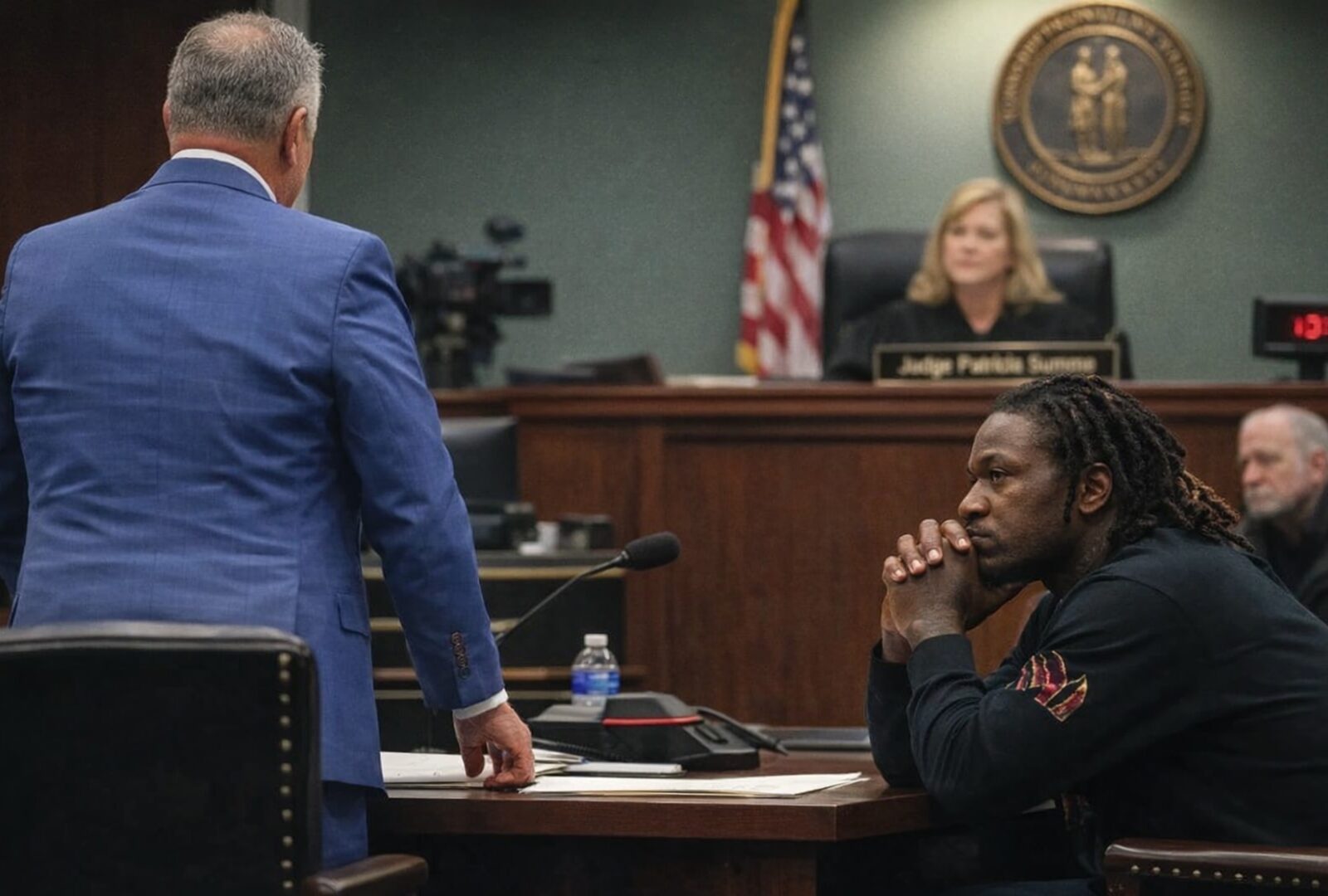
The former Bengals cornerback was given five years of probation after pleading guilty to assaulting a police officer and a bar employee, avoiding the 18-month prison recommendation prosecutors had asked the court to impose.
Kenton County Circuit Judge Patricia Summe did not give Jones a clean pass. The sentence came with a long list of requirements, including face-to-face apologies, treatment, therapy, parenting classes, and a court-approved improvement plan. If he violates probation, he could still face as much as five years in prison.
That makes this less of a free break and more of a conditional bet. The court is effectively saying Jones gets one more structured chance to show that this latest incident was a turning point rather than another repeat. For a player whose name still carries weight with Bengals fans, that distinction matters.
What happened at Second Story Bar in Covington
The case stems from a late-night disturbance on June 7, 2025, at Second Story Bar in Covington. Police responded around 12:45 a.m. to a report of an altercation involving a customer and an employee. Authorities later said Jones, who was a passenger in a vehicle trying to leave the scene, was arrested for public intoxication and disorderly conduct.
According to reporting from Local 12 and WLWT, Jones admitted through his attorney that he struck a bar employee in the chin. Police also said he elbowed an officer during transport and booking, causing a minor injury. That turned the case into a felony assault matter instead of just another bar disturbance.
Jones initially pleaded not guilty. He later changed his plea in February 2026, shortly before trial.
Why probation may matter more than the original jail request
On paper, avoiding jail looks like the headline. In practice, the more important part may be how long the court kept this case hanging over him.
Prosecutors wanted 18 months behind bars. Instead, the judge imposed five years of probation with detailed conditions tied to alcohol treatment, behavioral management, therapy, and personal accountability. That is a softer immediate punishment, but it creates a much longer test. One serious violation and the sentence could become harsher than the original recommendation.
That tradeoff is what makes this outcome more complicated than it looks. A short jail sentence would have been cleaner and easier to understand. This ruling puts the burden on Jones to prove, over time, that the court’s restraint was justified.
Why Pacman Jones sentencing still resonates in Cincinnati
Jones has been out of the league for years, but he is still tied to Cincinnati sports memory. He was drafted in the first round in 2005 and became one of the Bengals’ most recognizable players, first as a volatile talent and later as a key part of several playoff-era teams. His on-field ability was real. So was the baggage that followed him.
That is part of why this case is bigger locally than a routine Northern Kentucky court story. Across the river, people still know the name. Bengals fans remember the playmaking, but they also remember the pattern. This sentencing lands in a city that has spent a lot of time arguing about accountability, public order, and whether repeated chances eventually stop looking like mercy and start looking like avoidance.
That broader tension is part of what has driven interest in other recent Cincinnati public accountability stories, including our reporting on the Theetge report and CPD leadership failures and our coverage of how city budget pressure is forcing harder choices. The details are different, but the recurring local question is similar: when leaders or public figures get another chance, what does meaningful accountability actually look like?
Rehabilitation is the argument. Skepticism is the response.
There is a real case for the sentence Judge Summe handed down. Jones told the court he now sees alcohol as the root issue and is committed to sobriety. His wife also spoke in support of him and said she has seen genuine change in recent months. If the actual problem is substance abuse and behavior control, then structured treatment may do more than a brief jail term ever would.
Still, skepticism is not hard to understand here. Jones has a long record of legal trouble, and that history changes how the public reads this outcome. A first-time defendant getting treatment-focused probation is one thing. A well-known former athlete with repeated incidents getting another off-ramp is something else entirely.
That does not mean the judge was wrong. It means the sentence comes with a credibility burden. People will not judge this ruling by the language used in court. They will judge it by whether Jones disappears from the police blotter for the next five years.
What this means for Covington and the Cincinnati side of the river
This case also hit two groups that matter in everyday city life: a bar employee and a police officer. In a busy nightlife district like Covington’s West Sixth Street corridor, that is not a minor detail. Restaurant workers, security staff, bartenders, and officers are the people expected to keep these spaces functional when nights get messy. When one of them ends up assaulted, it lands differently than a celebrity headline stripped of context.
For Cincinnati readers, the location matters too. Covington is not some distant outpost. It is part of the same weekend ecosystem as The Banks, OTR, downtown, and Newport. Plenty of Tri-State residents move back and forth across that river without thinking twice. So when a recognizable former Bengal ends up in a Northern Kentucky courtroom over a bar incident, it still feels local.
The real story starts after Pacman’s sentence
Pacman Jones sentencing is over. The part that matters now is whether the next five years look any different from the years that came before.
If Jones follows through, stays sober, completes the required programs, and avoids further incidents, this ruling will look like a court using discretion the right way. If he does not, critics will have an easy argument: that the system once again treated a famous defendant like someone who deserved one more exception.
That is why this is not really a story about whether he avoided jail on Tuesday. It is a story about whether the court just created a path to rehabilitation or extended a pattern that Cincinnati already knows too well.
FAQs
Why did Pacman Jones receive probation instead of jail time?
Pacman Jones sentencing resulted in probation because the judge chose a rehabilitation-focused approach over immediate incarceration. The court required treatment, therapy, and strict conditions, with the understanding that any violation could lead to prison time.
What were the charges in the Pacman Jones Covington case?
The charges included felony assault on a police officer, along with misdemeanors such as disorderly conduct, menacing, resisting arrest, and assault related to an incident at a Covington bar.
What happens if Pacman Jones violates his probation?
If Jones violates the terms of his probation, he could face up to five years in prison. The sentence is structured so that the consequences become more severe if he fails to comply.
When did the Pacman Jones incident in Covington happen?
The incident occurred on June 7, 2025, at Second Story Bar in Covington, Kentucky, leading to his arrest and eventual guilty plea in early 2026.
This article is based on court records and reporting from multiple local outlets.


