



Share This Article
Article Summary:
Ohio Secretary of State Frank LaRose voluntarily handed the DOJ unredacted voter data on nearly 8 million residents, including roughly 602,000 Hamilton County voters, back in February. A federal judge in Kentucky just blocked the same request there on procedural grounds, part of a pattern in which courts have sided against the DOJ in at least eight states, while the department’s underlying push to verify voter rolls continues through other channels, including a pending Supreme Court case.
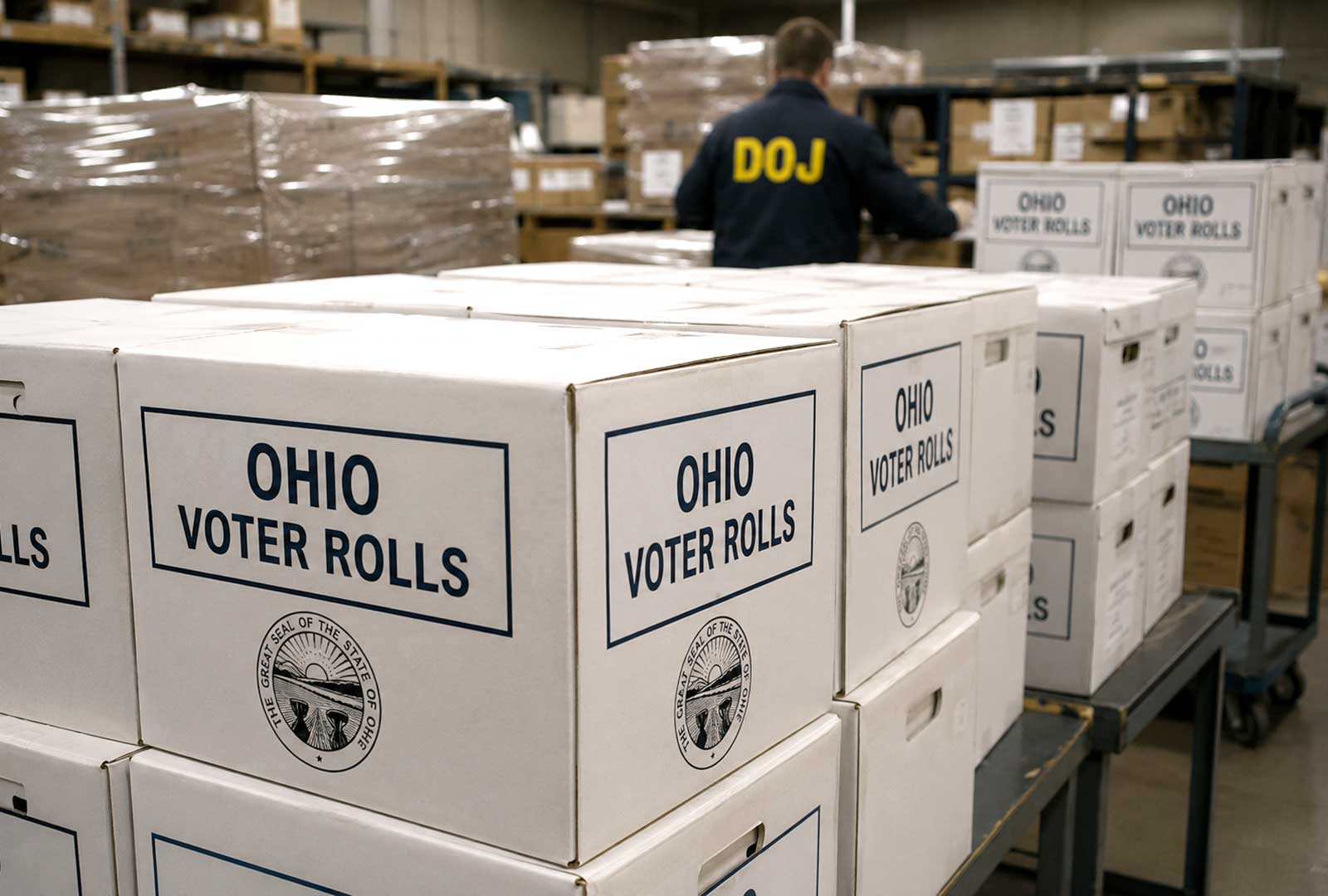
Nearly 602,000 Hamilton County voters were included when Ohio turned over its statewide voter database to the U.S. Department of Justice in February.
Six months later, a federal judge across the river ruled Kentucky didn’t have to hand over that same kind of information.
Ohio voter data from Hamilton County and every other county in the state has been in federal custody since February. A federal judge in Kentucky just ruled the Justice Department can’t get that same Ohio-style access. Not under its current request, anyway.
Both states received the same kind of demand. Only one, however, produced the information the DOJ says it needs to catch ineligible registrations.
Ohio Voter Data: A Decision Made in Columbus, Not Cincinnati
Hamilton County has one of Ohio’s largest voter rolls. Its roughly 602,000 registered voters make up one of the largest single pools of data now held by federal officials. The decision to send it, though, didn’t come from Hamilton County’s Board of Elections. Like every other county’s data, it came from Columbus, through Secretary of State Frank LaRose’s office.
LaRose’s office confirmed the handoff in a February 13 letter to the DOJ. According to spokesperson Ben Kindel, the data included driver’s license numbers, birth dates and the last four digits of Social Security numbers. The DOJ had requested the data twice since August 2025. LaRose said his staff consulted the Ohio Attorney General’s Office before releasing it. He’s since said he’s confident the data remains secure under federal privacy law.
Why the DOJ Wants This Ohio Voter Data
The Justice Department’s stated goal is voter roll accuracy. Specifically, it wants to identify noncitizens and other ineligible registrants who remain on state voter lists. The department has argued in filings now before the Supreme Court that noncitizen registrations don’t receive the same protections as other removals. That case centers on the National Voter Registration Act. The law normally shields voters from removal during the 90-day window before an election, but the DOJ argues that window never covered people who were ineligible to register in the first place.
Acting Solicitor General Hashim Mooppan therefore called a lower court’s contrary ruling “badly mistaken” in a May filing. Under that reading, he warned, a state could never remove a noncitizen from its rolls “once registered.”
House Administration Committee Chairman Bryan Steil has pushed the DOJ from the other direction. He wants the department to actively help states clean their rolls of noncitizens and other ineligible voters. In his view, obstructing the effort works against the goal. That’s the broader context behind the Ohio voter data request and its equivalents elsewhere. The DOJ wants to cross-reference state voter files against the Department of Homeland Security’s citizenship-verification database. The goal is to catch registrations that current state processes might miss.
Ohio Secretary of State Frank LaRose framed his decision to comply in exactly those terms. “The federal law is very clear,” LaRose told Ohio’s Statehouse News Bureau in April. He added that the DOJ “has legal authority to compel Ohio to comply.” Those requests, he said, tie directly to the enforcement of federal voter-list-maintenance law.
What Kentucky’s Ruling Actually Decided
Roughly a dozen states complied with similar Ohio voter data-style requests without a legal fight. Ohio was one of them. By contrast, twenty-nine states and the District of Columbia refused and got sued instead.
Kentucky didn’t convince the judge that the DOJ lacked authority to verify voter rolls. Instead, the court said the department’s demand letter didn’t satisfy the procedural requirements Congress wrote into federal law. Judge Claria Horn Boom, a Trump appointee, leaned on a recent 6th Circuit ruling in a similar Michigan case. Courts have now made similar procedural rulings against the DOJ in at least eight states.
Not Every Conservative Agrees on the Method
The roll-cleaning goal draws broad support on the right. Still, the specific method the DOJ has used to pursue it doesn’t.
Even some longtime election-integrity advocates have questioned the DOJ’s approach. Logan Churchwell, research director at the Public Interest Legal Foundation, has argued that the Department of Homeland Security lacks the authority to directly access state voter files. That’s a different objection than the DOJ’s broader goal. “DHS cannot touch a voter file,” Churchwell said. “That’s nonsense. They have no power to do that.” The disagreement shows that support for voter-roll maintenance doesn’t necessarily mean agreement on how federal agencies should carry it out.
What This Means Going Forward
Kentucky’s ruling doesn’t change anything for Ohio. The state already transferred its voter data, including records from nearly 602,000 Hamilton County voters. What the decision does signal is different. The Justice Department may need to draft future Ohio voter-data-style requests differently if it wants the same level of cooperation from states that have resisted so far.
FAQs
Why did Ohio give the DOJ its voter data?
Secretary of State Frank LaRose said federal law gives the U.S. Attorney General authority to inspect state voter rolls to verify compliance with the National Voter Registration Act, including identifying noncitizens and other ineligible registrants who remain on the rolls.
What information did Ohio actually send to the DOJ?
The February 13 handoff included driver’s license numbers, birth dates and the last four digits of Social Security numbers for the state’s registered voters, according to LaRose spokesperson Ben Kindel.
Why did Kentucky's lawsuit turn out differently?
The judge didn’t rule that the DOJ lacked authority to request the data. She ruled that the department’s demand letter failed to meet the specific procedural requirements Congress wrote into federal law, the same technical defect that has sunk DOJ’s requests in at least eight other states.
Do all conservatives support how the DOJ is pursuing this?
No. Even some longtime election-integrity advocates, including Logan Churchwell of the Public Interest Legal Foundation, have argued that the Department of Homeland Security lacks authority to directly access state voter files, even as they support the broader goal of accurate voter rolls.
Can Ohio get its voter data back now that Kentucky won its case?
This article was produced using a combination of original reporting, publicly available information, and AI-assisted editing and was reviewed and fact-checked by a human editor before publication.