



Share This Article
Article Summary:
Hunter Greene’s Fourth of July return was supposed to give the Reds a jolt. Instead, Baltimore’s 8-5 win made Cincinnati’s trade-deadline question harder to ignore.
Great American Ball Park had the setup the Reds would have chosen if they could have scripted it in February.
Fourth of July. Fireworks night. Baltimore in town. There was anticipation for Hunter Greene, the fireballer, to step onto the field once again.
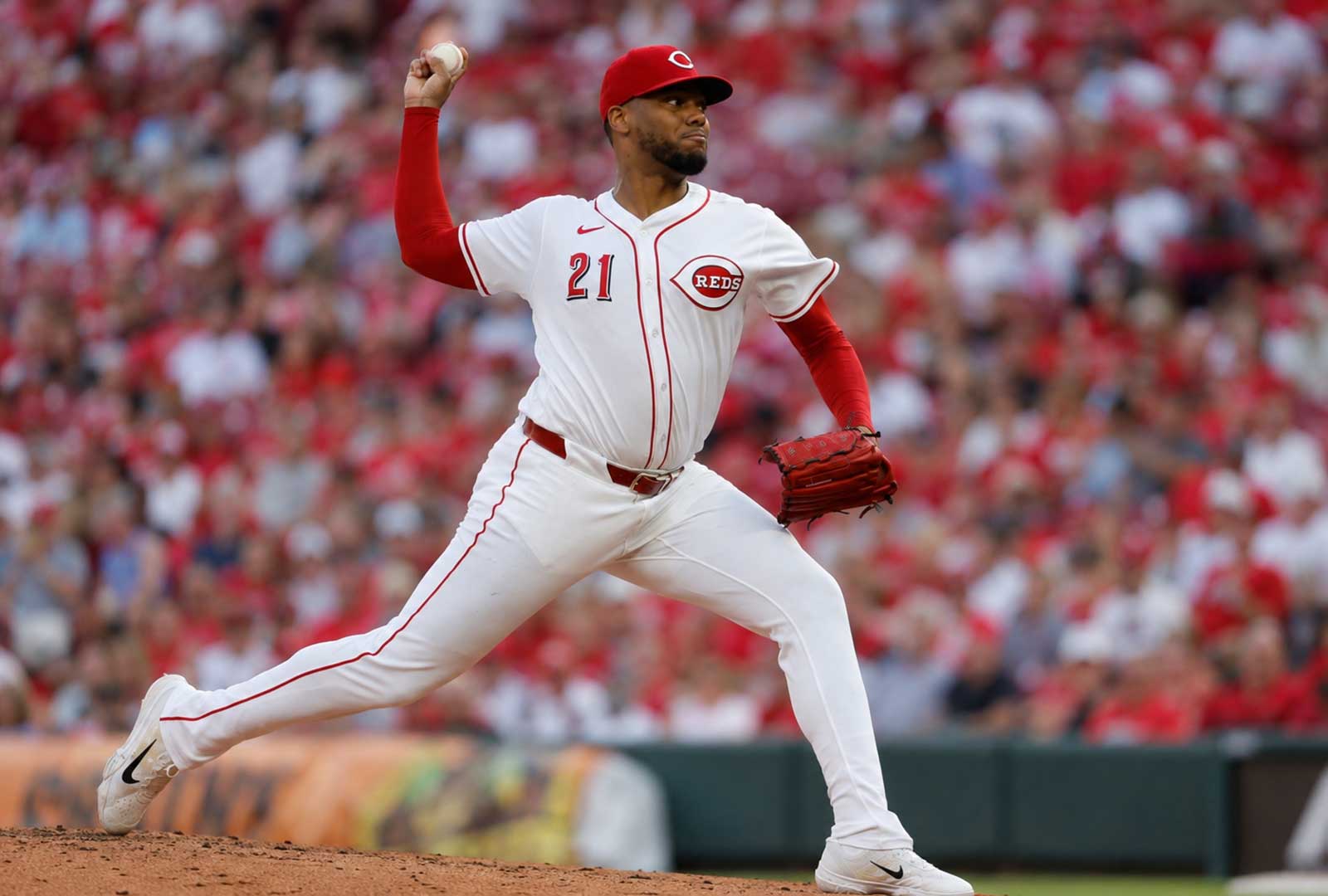
Hunter Greene walking back to the mound for his season debut after elbow surgery, with Cincinnati still close enough to pretend the summer had not slipped away.
Then the Orioles scored eight runs before Greene finished the fourth inning.
Baltimore beat Cincinnati 8-5 on Saturday night. Greene allowed eight runs on seven hits and four walks over 3⅓ innings. Rookie Samuel Basallo hit a three-run homer in the first. Adley Rutschman added a two-run double during a five-run fourth that ended Greene’s night. By morning, the Reds sat 40-48 — a season-high eight games below .500 — with the August 3 trade deadline sitting less than a month away.
The Reds were not lifeless. Jose Trevino had three hits and an RBI. Elly De La Cruz and Eugenio Suárez each drove in runs. Cincinnati out-hit Baltimore 11-10. That is part of the frustration. The Reds had enough offense to stay in the game, and still not enough pitching or situational execution to change the result. They left nine runners on base.
Hunter Greene’s Return Was Supposed to Reset the Reds
Greene’s return mattered because Cincinnati needed more than another starter. The reason for hope was clear: Hunter Greene represented more than just an arm. The Reds needed a reason to believe the second half could look different from the first.
He had missed the entire first half after March surgery to remove bone chips from his right elbow. His rehab work gave the organization reason for optimism: three minor league starts, 14⅓ scoreless innings, 13 strikeouts, five hits and two walks allowed. His final outing was 6⅓ innings at Triple-A Louisville.
That is why Saturday carried more weight than a typical July start. Greene was not simply coming off the injured list. He was returning into a standings crisis. After Saturday’s loss, the Reds had dropped six of their last seven. A team can absorb one bad stretch. It is harder to absorb one when its ace finally returns and adds to the pile, especially when that ace is Hunter Greene.
“Thought the ball came out good,” Reds manager Terry Francona said after the game. “Had some deep counts. They fouled off a number of two-strike fastballs. He just wasn’t commanding.”
Greene’s own assessment was blunter. “I was constantly behind,” he said. “Obviously, that’s not a good recipe for success.”
The four walks were one off his career high. The eight earned runs tied a career worst. He threw 89 pitches, recorded only 10 outs, and left with the Reds already chasing the game. All eyes had been on Hunter Greene throughout the night.
The Deadline Question Is Bigger Than One Start
The strongest case for patience is straightforward. Greene had not thrown a major-league pitch all season. One rough debut after elbow surgery does not define him, the rotation, or the front office’s deadline strategy. Velocity and command are not always fully recovered the first night a pitcher returns.
That argument is fair. But the Reds do not have the luxury of evaluating Greene in isolation. His rough return landed during the exact week the organization needed clarity on its direction. According to CBS Sports’ trade deadline analysis, Cincinnati’s collapse has been severe enough that it is now difficult to envision the Reds as buyers. The report identified Nathaniel Lowe, Brady Singer, Tyler Stephenson, and Eugenio Suárez as potential rentals available if the club chooses to sell.
The Reds also enter Sunday’s series finale still mathematically alive — but with five teams ahead of them for the final NL Wild Card spot. That gap narrowed or widened depending on Saturday night’s results across the league. Now, the focus turns again toward players like Hunter Greene as fans watch for a late-season run.
Cincinnati’s deadline problem is not whether Greene is good enough. It is whether the team around him is close enough to justify staying the course. A healthy Greene still matters. So do De La Cruz, Matt McLain, Spencer Steer, Andrew Abbott, Nick Lodolo, and the young core the organization has pointed to for years. However, pointing to a young core only works as long as the standings allow it.
What Happens Next at Great American Ball Park
The Reds and Orioles close the series Sunday at 1:05 p.m. at Great American Ball Park. One game will not settle the trade deadline. One series will not answer every question about Greene’s elbow, the rotation, or whether the front office should buy, sell, or stand still. For now, Hunter Greene remains central to the Reds’ hopes.
But Saturday sharpened the argument for both sides in the same game. The offense kept competing. Greene is finally back. The park still had a holiday atmosphere. There are enough names on the roster to make quitting feel premature.
The scoreboard offered the counterargument. Baltimore did not need anything special to beat Cincinnati. The Orioles waited out Greene, punished mistakes, built an early lead, and held on after the Reds threatened late. That is what teams do when they are turning another club’s hope into another club’s standings problem. Clearly, the return of Hunter Greene was not enough to sway the outcome this time.
The fireworks came after the game Saturday night. The harder noise for the Reds came before them — when Baltimore turned Cincinnati’s best holiday storyline into another reminder of where this season actually stands. As the Reds showed in their opening series win over Boston, this roster has the talent to beat good teams. The question the deadline will force is whether that talent is enough to make a run — or whether the front office decides the math no longer adds up.
FAQs
How did Hunter Greene pitch in his 2026 season debut?
Greene allowed eight runs on seven hits with four walks and seven strikeouts in 3⅓ innings. He threw 89 pitches (53 strikes) in the Reds’ 8-5 loss to the Baltimore Orioles on July 4 at Great American Ball Park.
What is the Reds' record after Saturday's loss?
Cincinnati fell to 40-48, a season-high eight games below .500. The Reds are fifth in the NL Central and trail the final NL Wild Card spot by six games, with five teams ahead of them.
When is the 2026 MLB trade deadline?
The MLB trade deadline is August 3, 2026, at 6 p.m. ET.
Are the Reds buyers or sellers at the deadline?
CBS Sports’ trade-deadline analysis has already begun to treat Cincinnati more as a seller than a buyer. CBS Sports identified Nathaniel Lowe, Brady Singer, Tyler Stephenson, and Eugenio Suárez as potential trade candidates. The Reds have not publicly indicated their deadline direction.
When do the Reds play next?
Cincinnati hosts Baltimore in the series finale on Sunday, July 5 at 1:05 p.m. ET at Great American Ball Park. The Reds then open a home series against the Philadelphia Phillies on Tuesday, July 7.
This article is for informational purposes only. Standings, statistics, and roster information are subject to change. For official Reds news and roster updates, visit MLB.com/reds.


