


Share This Article
Hamilton County commissioners now approve Paycor Stadium funding.
Paycor Stadium funding aims to modernize the Bengals’ facilities and benefit regional events.
Hamilton County commissioners have officially approved more than $200 million in Paycor Stadium funding. This will begin a new phase of comprehensive upgrades at the home of the Cincinnati Bengals.
The decision follows a broader lease agreement struck earlier this year. It outlines a shared investment in the stadium’s future, WLWT reported.
The approved funding marks a significant milestone in efforts to bring state-of-the-art improvements to the stadium. It also secures the Bengals’ long-term presence in Cincinnati.
Under the terms of the new agreement, the county will invest up to $350 million, while the team contributes $120 million toward renovation efforts.
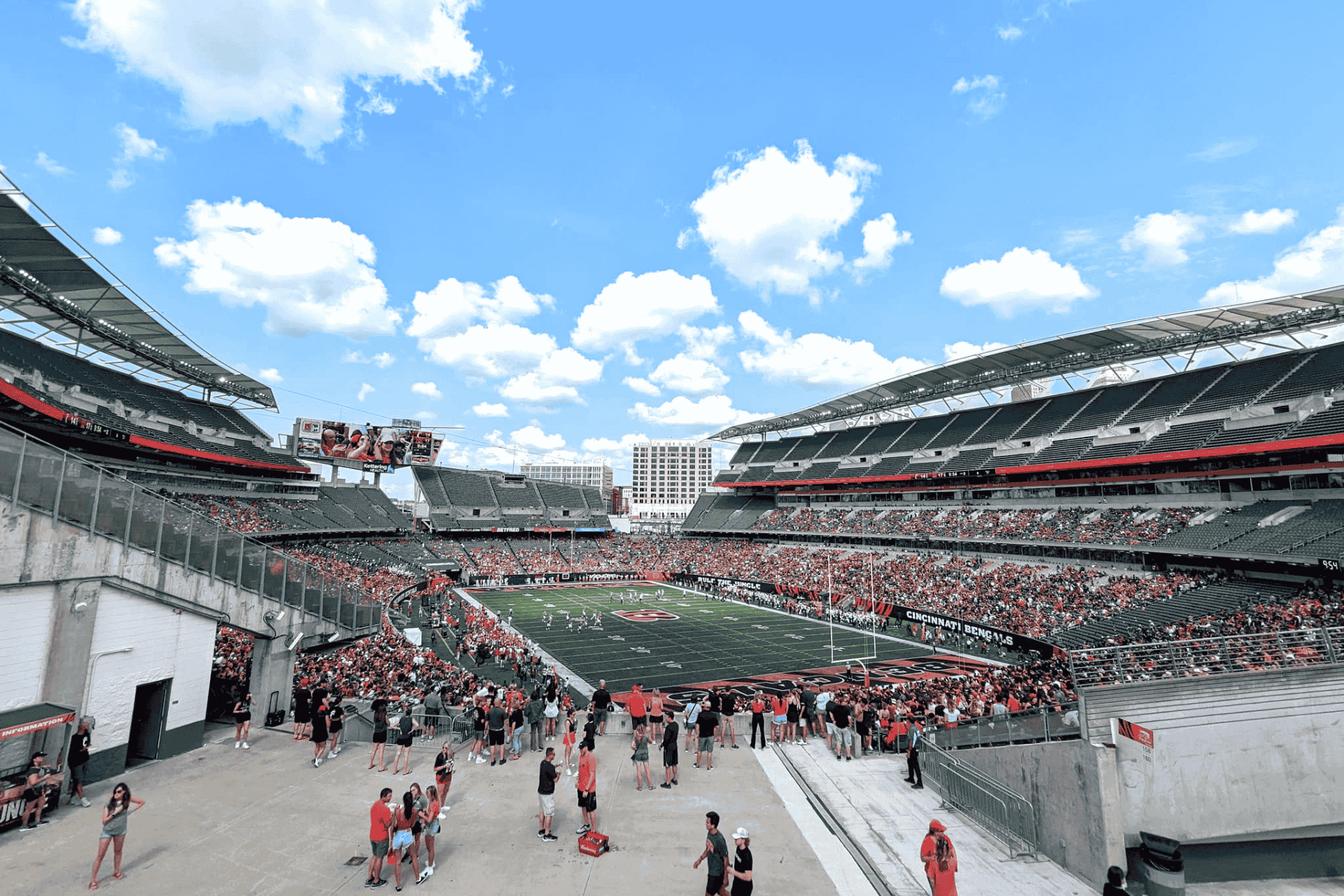
Moreover, Paycor Stadium upgrades will touch multiple aspects of the facility. The first wave focuses on technology and infrastructure improvements. This includes enhancements to the stadium’s famed “Jungle Vision” screen system and other digital components.
The funding is drawn from the longstanding half-cent stadium sales tax that Hamilton County voters approved in 1996, a funding source county officials repeatedly noted does not come from the general county budget, according to a report from WKRC.
Breaking down the investment
Under the terms of the master lease finalized this summer, the county agreed to invest up to $350 million in total renovations, while the Bengals organization committed $120 million.
The funding approved this week releases the first $200+ million tranche of that county commitment. According to county documents, this initial wave of capital will target critical “back-of-house” and fan-facing improvements, including:
- Technology Overhaul: Complete replacement of the stadium’s “Jungle Vision” scoreboard system and other digital displays.
- Infrastructure: Modernization of elevators and escalators to improve fan mobility.
- Fan Amenities: Expanded club seating, new lounge areas, and renovated restrooms.
“It’s the Bengals game, but it’s also the concerts, the high school football games, all the things that we anticipate in the years moving forward. And so, we are simply upgrading the asset, which belongs to the taxpayers,” said Hamilton County Commission President Denise Driehaus.
Funding sources and fiscal debate
The capital for these improvements is drawn from the dedicated half-cent stadium sales tax approved by Hamilton County voters in 1996. Commission President Driehaus repeatedly emphasized that these funds are legally restricted to stadium use and do not impact the county’s general operating budget.
However, the approval was not unanimous. Commissioner Alicia Reece abstained from this week’s funding vote, a move consistent with her long-standing criticism of the deal. Reece previously voted “no” on the master lease agreement in August, arguing the deal lacked sufficient taxpayer protections.
“I feel everything should be put on hold until we get the budget together. It’s not a separate thing. It’s not the stadiums and then over here the people,” Reece said regarding the current allocation, citing competing county priorities such as property tax relief and looming budget shortfalls.
A “capped” liability
Despite the friction, county officials stress that the new agreement offers financial certainty that previous leases did not. The 2025 lease includes a “capped liability” clause for the county. It fixes their contribution limit at $350 million.
“There was no limit before,” Driehaus noted, contrasting the current terms with the open-ended maintenance obligations of the original 1990s lease.
Why this matters to Cincinnati
For the Bengals organization, the upgrades and lease extension signal an ongoing commitment to Cincinnati as the team’s long-term home. The stadium improvements also aim to attract more large-scale events to the region, boosting economic activity.
Local officials believe that enhancing the fan experience and modernizing infrastructure will strengthen Cincinnati’s reputation as a destination for both major sports and entertainment events. For local fans, the enhancements promise more comfortable viewing, better technology, and expanded club amenities.
Broadly, this investment ties into ongoing discussions about infrastructure improvements in the region. Earlier this year, commissioners approved stadium investment plans. Those discussions often referenced future needs and the need to balance public priorities, WCPO 9 reported.
Community reactions and next steps
Public reactions have been mixed. Some community members view the Paycor Stadium funding as a necessary step to keep the Bengals in Cincinnati and maintain a competitive, modern venue. Others remain cautious about large public investments while budget concerns persist countywide.
Commissioners noted that discussions about the remaining funding, timelines, and broader budget impacts will continue in future sessions. Voting on the remaining stadium financing and other detailed plans is expected early next year.
For more local context on county and sports infrastructure news, see related Cincinnati Exchange coverage on stadium finance debates and local infrastructure planning.
Also read:
St. Xavier vs Elder: Bombers Rally to Stun Panthers at Paycor Stadium
Elder vs. St. Xavier at Paycor Stadium: A High School Football Showdown