



Share This Article
Article Summary
Retailers across Greater Cincinnati, including market-leader Kroger, are implementing new security measures such as selective receipt checks, additional personnel, and surveillance cameras to mitigate retail theft. While local companies report no citywide surge in shoplifting figures for 2026, organized retail crime remains a significant financial challenge nationwide. These multi-layered security strategies aim to protect high-resale items like meat and over-the-counter medications while balancing store profitability with customer convenience.
Retailers across Greater Cincinnati continue to expand security measures as theft remains a costly challenge for the grocery industry.
While local companies have not reported a citywide surge in shoplifting figures for 2026, several stores have added visible security features over the past few years and continue refining those efforts as organized retail crime affects businesses nationwide.
Industry groups say retailers are balancing theft prevention with customer convenience as losses remain significant. According to the National Retail Federation, organized retail crime continues to pressure retailers to invest in technology, security staff, and loss-prevention programs. Retail experts also report that grocery stores remain attractive targets because they sell high-demand products that are easy to resell.
Cincinnati remains one of Kroger’s most important markets. The company still controls nearly half of the Greater Cincinnati grocery market despite increased competition from other chains, according to the Cincinnati Business Courier. That large footprint means even modest improvements in theft prevention can have a meaningful financial impact across the region.
Grocery theft Cincinnati leads to visible security changes
Many shoppers have already noticed changes inside local grocery stores.
Several Cincinnati-area Kroger stores previously introduced periodic receipt checks after the company cited increased theft incidents. Those locations included stores in Hyde Park, Oakley, Norwood, St. Bernard, Over-the-Rhine, and near the University of Cincinnati. Kroger said the checks were one of several safety measures designed to reduce theft while maintaining customer access to groceries. The company also emphasized that not every customer would be asked to show a receipt. According to WLWT, Kroger received positive feedback from many associates and customers after introducing the program.
Security improvements now commonly seen across grocery retailers include:
- Receipt verification at selected locations
- Additional security personnel
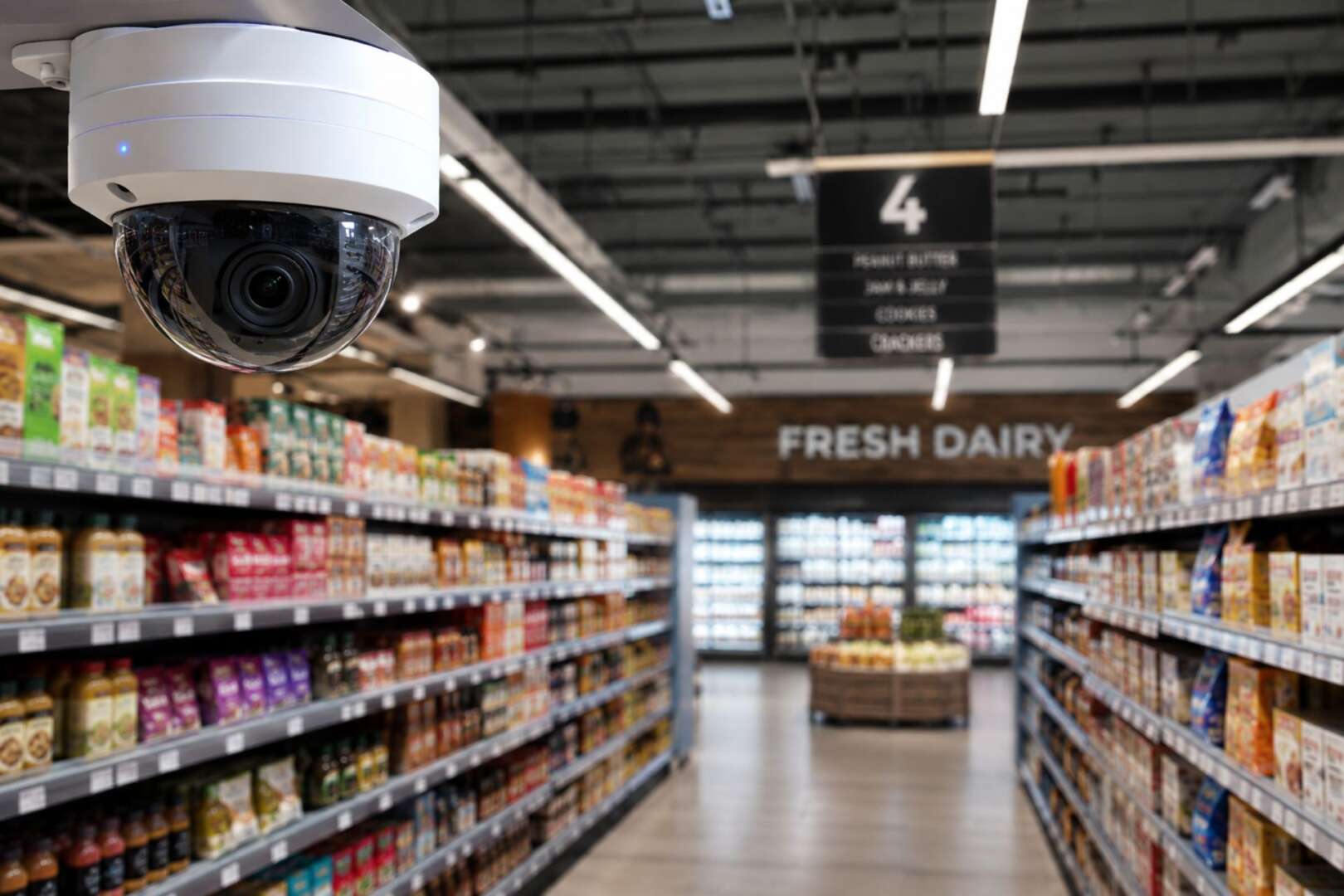
- More cameras covering entrances and self-checkout lanes
- Exit gates or controlled entry systems
- Improved product protection for frequently stolen merchandise
- Enhanced employee training on theft prevention
Many of these strategies also appear at retailers beyond grocery stores, reflecting broader retail crime trends throughout Ohio and the United States.
Retail analysts say stores increasingly rely on multiple layers of security instead of depending on a single solution. Cameras, employee awareness, analytics software, and store layout changes often work together to discourage theft before it occurs.
Retail crime Ohio remains a national concern
The issue extends well beyond Cincinnati.
The National Retail Federation has repeatedly identified organized retail crime as one of the industry’s largest operational challenges. Criminal groups often steal products from multiple stores before reselling them online, at flea markets, or through other channels. Grocery items such as over-the-counter medications, baby formula, health products, alcohol, meat, and personal care products frequently appear on theft lists because they retain resale value.
Industry data estimate that retail shrink, which includes shoplifting, employee theft, fraud, and inventory errors, costs businesses billions of dollars annually. Those losses often increase operating costs and require retailers to devote additional resources to security instead of store improvements or customer services.
Law enforcement agencies across Ohio also continue investigating organized retail crime networks that target multiple businesses instead of isolated shoplifting incidents.
Recent cases demonstrate that grocery stores face broader security risks beyond shoplifting alone. Earlier this year, authorities arrested a suspect in connection with the theft of more than $221,000 during an armored vehicle robbery outside a Greater Cincinnati Kroger location, according to FOX19. Although separate from shoplifting, the case highlighted the range of criminal activity affecting retail operations.
Grocery theft Cincinnati changes the customer experience
Security improvements inevitably affect shoppers.
Receipt checks, surveillance cameras, self-checkout monitoring systems, and controlled exits have become more common in grocery stores nationwide. Some customers appreciate the added security, while others prefer faster checkout experiences with fewer interactions after paying.
Retailers continue adjusting those policies as they collect customer feedback.
According to WLWT, Kroger described receipt verification as a periodic measure rather than a universal requirement. The company said its goal remains providing access to fresh food while keeping associates and customers safe.
Nationally, retailers are also experimenting with:
- Artificial intelligence that detects suspicious shopping behavior
- Improved self-checkout monitoring
- Digital inventory tracking
- Expanded loss-prevention teams
- Better coordination with local police
Researchers continue developing privacy-focused artificial intelligence that identifies suspicious behavior without relying solely on facial recognition. Academic studies suggest these systems could eventually help stores detect theft more efficiently while protecting customer privacy.
Store security trends continue to evolve
Technology will likely play a larger role in grocery security over the next several years.
Retailers increasingly combine traditional security personnel with smarter software capable of identifying unusual shopping patterns. Companies also continue redesigning store layouts to improve visibility around entrances, exits, and self-checkout areas.
Several jurisdictions have begun reconsidering how self-checkout should operate. Rhode Island recently enacted a law requiring minimum staffing levels for grocery self-checkout lanes, while lawmakers in places such as New York City and Tennessee have proposed measures that would require additional employee supervision or limit the number of items customers can purchase through self-checkout. Supporters say the proposals could help reduce theft and improve customer service, while retailers argue they may increase operating costs.
Industry experts generally expect retailers to continue balancing convenience with security rather than eliminating self-checkout altogether.
For Cincinnati shoppers, the most noticeable changes will likely remain additional security personnel, selective receipt checks, enhanced surveillance systems, and continued investments in theft prevention technology. Those measures reflect broader store security trends affecting retailers across Ohio as businesses work to reduce losses while maintaining efficient shopping experiences.
FAQs
Which Cincinnati grocery locations are implementing receipt checks?
Kroger has introduced periodic receipt verification at several area stores, including locations in Hyde Park, Oakley, Norwood, St. Bernard, Over-the-Rhine, and near the University of Cincinnati. The company utilizes these checks selectively as a temporary deterrent rather than as a universal requirement for every shopper.
What types of security upgrades are grocery stores deploying?
Retailers are installing multi-layered systems that include additional security staff, increased camera coverage at entrances and self-checkouts, and controlled exit gates. Stores are also utilizing product protection devices for high-risk merchandise and expanding employee training programs.
Why are grocery items frequently targeted by organized retail crime networks?
Supermarkets sell high-demand, everyday products that retain a high resale value and are easy to flip on secondary markets like online platforms or flea markets. The most frequently targeted items include baby formula, meat, alcohol, and over-the-counter medications.
How does retail theft impact the general consumer?
Security measures like automated exit gates and receipt checks can add friction and alter the overall pace of the shopping experience. Furthermore, the multi-billion-dollar annual cost of retail shrink drives up operating expenses, which can ultimately influence consumer prices.


