
Share This Article
Article Summary: Cincinnati Public Schools reported $21,511.26 in per-pupil operating expenditure for FY2025, about $6,687 more than the University of Cincinnati’s posted 2026-27 in-state tuition and fees of $14,824 for its entering cohort. The gap arrives as CPS asks voters to approve a new earned-income tax levy on the November 2026 ballot, though the comparison alone doesn’t establish whether CPS is overspending.
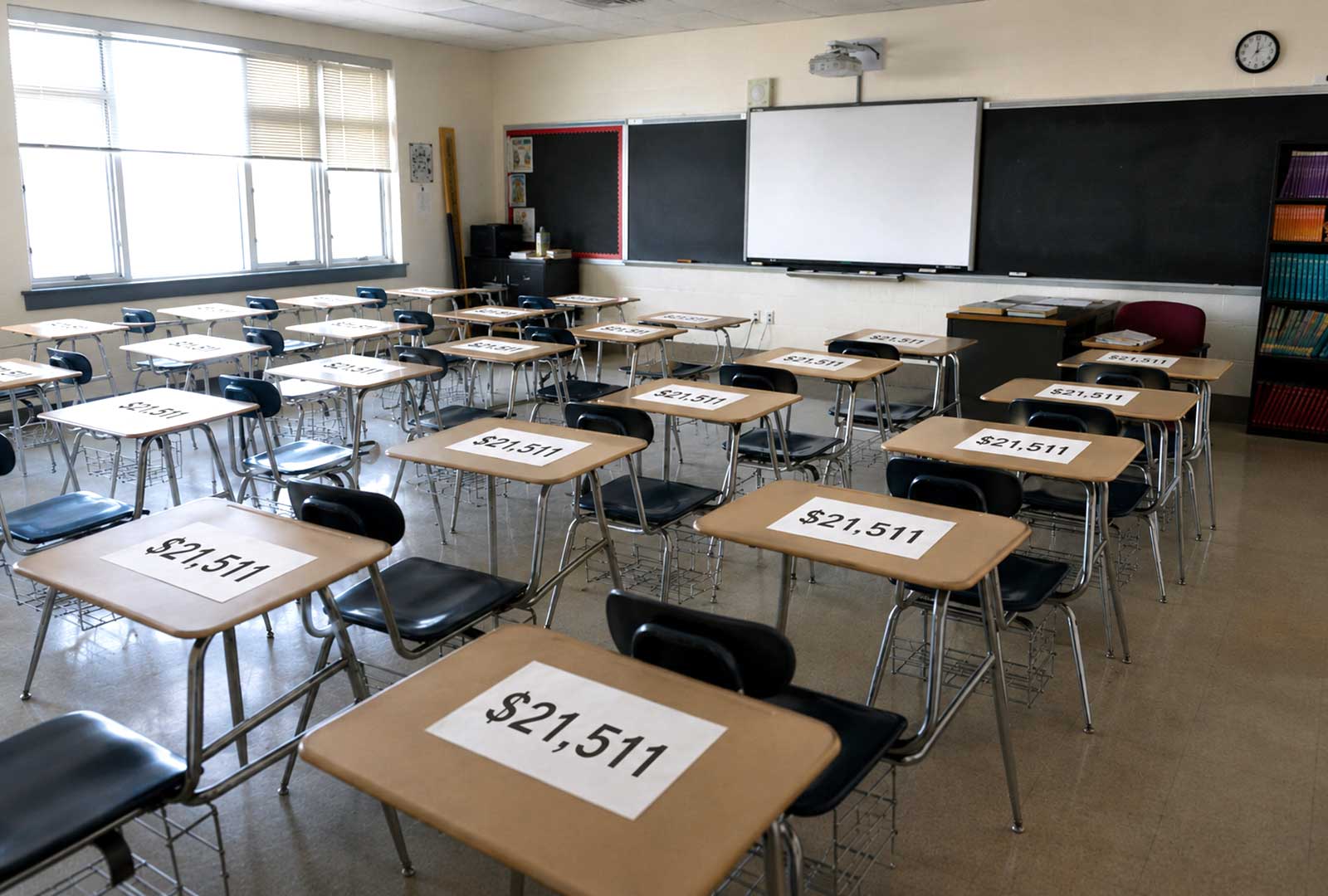
Cincinnati Public Schools is asking residents for $74 million per year in new revenue while reporting a current operating expenditure of $21,511 per pupil.
That per-pupil spending figure is $6,687 higher than UC’s posted tuition and fees for an Ohio undergraduate at its Uptown campus.
The comparison offers another way to understand CPS per-pupil spending as voters weigh a new earned-income tax levy this November, a measure an earlier Exchange story covered in detail.
The Ohio Department of Education’s FY25 District Profile Report lists Cincinnati’s total operating expenditure per pupil at $21,511.26 for fiscal year 2025. Still, UC’s figure comes from a different calendar entirely. The university posts annual tuition and mandatory fees of $14,824 for a full-time Ohio undergraduate entering the Uptown campus in the 2026-27 cohort. Both numbers are accurate for their respective periods. The comparison therefore measures CPS’s FY2025 operating expenditure against UC’s posted 2026-27 entering-cohort tuition, rather than two figures from the same twelve months.
Where CPS Per-Pupil Spending Goes
CPS’s $21,511.26 is broken down into five reported categories.
| CPS operating category | Per pupil |
|---|---|
| Instruction | $11,212.15 |
| Building operations | $4,490.69 |
| Administration | $2,861.89 |
| Pupil support | $1,858.26 |
| Staff support | $1,088.28 |
| Total | $21,511.27 |
In fact, instruction accounts for about 52.1% of CPS’s reported operating expenditure. The remaining categories, though, cover building operations, administration, pupil support and staff support.
This is not a comparison of each institution’s full cost of education. CPS’s figure represents district operating expenditure, including instruction, administration, building operations and student support. UC tuition, by contrast, is the amount billed to an Ohio undergraduate for instruction and mandatory fees. It is not the university’s total institutional spending per student. UC also receives state support, grants, research revenue and other funding streams that a tuition bill never reflects. Housing, meals, books, and transportation are not included in the tuition figure. UC’s own cost-of-attendance estimate for a typical Ohio resident living on campus runs $43,276 a year. The university states plainly, though, that it doesn’t bill the full amount directly.
One Cost Driver: English Learner Services
The district’s spending also reflects the needs of the students it serves.
According to the Ohio Department of Education and Workforce’s FY2025 District Profile Report, 11.06% of Cincinnati Public Schools students are identified as English learners, compared with a statewide average of 6.66%. That means CPS educates English learners at a rate roughly two-thirds higher than the Ohio average.
Federal law requires public schools to identify eligible English learners, assess their English proficiency and provide appropriate language instruction and support services. Those responsibilities require bilingual staff, English-language instruction, translation and interpretation services, specialized assessments and family outreach. Ohio also provides additional funding for English learners through its school funding formula, recognizing that these services increase instructional costs.
CPS has responded by creating multilingual Welcome Centers that help families enroll in school, access interpreters, connect with community services and receive English-language support.
English learner services do not explain the district’s entire $21,511 per-pupil operating expenditure. They are, however, one measurable factor voters may want to consider when evaluating both the district’s current spending and its request for additional revenue.
Why This Per-pupil Spending Number Matters Now
CPS enters the fall facing a third straight year of budget cuts. In July, board members voted 5-2 to place a 0.75% earned-income tax levy on the November ballot. The measure would raise an estimated $74 million annually. The district cut more than 100 positions in June to close a $58.6 million deficit. Enrollment, meanwhile, has fallen from roughly 36,800 students in 2020-21 to about 34,860 this year, a drop of more than 5%.
Spread across those 34,860 enrolled students, that $74 million comes to about $2,123 per pupil per year. That estimate uses current enrollment and collection figures. It does not mean per-pupil spending would rise by that exact amount if voters approve the levy. Still, the figure shows the scale of the request next to CPS’s current $21,511 per-pupil baseline. On a per-enrolled-student basis, the proposed levy equals roughly 9.9% of CPS’s current operating expenditure.
What the Comparison Doesn’t Prove
CPS performs functions a university generally does not. The district provides transportation, special education, school meals, counseling, nursing, building operations and services for children who cannot opt out of the system. UC, by contrast, enrolls adults who applied, got admitted and chose to attend. Those differences don’t make the spending comparison meaningless. Still, they do keep it from serving as a direct measure of institutional efficiency.
Even so, the comparison leaves CPS with real questions to answer. The district spends about $3,902 more per pupil than the statewide district average, a gap of roughly 22%. That premium could reflect the higher cost of educating students in a large urban district, less-efficient spending, or some combination of both. A statewide average mixes urban, suburban and rural districts with very different transportation, special education, poverty and facility costs, so it’s a blunt benchmark. A sharper test would compare CPS directly against Cleveland, Columbus, Toledo, Dayton and Akron, districts that face similar urban cost pressures. That comparison sits outside the scope of this article.
One Cost Driver Behind CPS Per-Pupil Spending
One factor behind CPS’s per-pupil spending is the growing demand for English learner services. District Profile Report data shows that 11.06% of CPS students were English learners, compared with 6.66% statewide. Educating those students calls for additional teachers, interpreters, instructional materials, assessments, and family outreach.
CPS’s English learner population extends beyond immigrant families. Many are U.S. citizens whose first language isn’t English. Language-service obligations trace to Title VI of the Civil Rights Act and the Supreme Court’s 1974 Lau v. Nichols decision. They don’t stem from immigration status. Ohio’s school funding formula also provides additional money for these services. Districts still cover costs, though, that state and federal aid may not fully reimburse.
A related but separate legal question is whether undocumented children can enroll in public school at all. That comes from the Supreme Court’s 1982 Plyler v. Doe decision. That ruling has drawn fresh political pressure. Lawmakers in at least six states introduced bills in 2025 aimed at restricting undocumented students’ school access. A congressional subcommittee then held a hearing on the decision in March 2026. Still, Plyler remains binding law today.
CPS also operates a Welcome Center that helps immigrant and multilingual families enroll, connect with interpreters and access community services. Superintendent Shauna Murphy cited the district’s growing multilingual population this fall as one reason behind the effort.
English learner services don’t explain the entire $21,511 per-pupil figure. Still, the district’s above-average per-pupil spending on this population is one measurable factor. Voters may want to weigh it alongside the district’s levy request.
What Comes Next
The CPS board must file levy paperwork by Aug. 5. After that, the campaign moves from the boardroom to households across the district. At the district’s median earned income of $54,500, the levy would cost a resident about $409 a year. Before voters decide in November, CPS faces a straightforward accounting challenge: show residents what the current $21,511 buys, explain why instruction accounts for about 52% of operating expenditure, and identify what the levy’s estimated $2,123 per enrolled student would change in schools, programs and classrooms.
FAQs
How much does CPS spend to educate one student?
Cincinnati Public Schools reported $21,511.26 in per-pupil spending, officially “total operating expenditure per pupil,” for fiscal year 2025, according to the Ohio Department of Education’s FY25 District Profile Report. Instruction accounts for about 52.1% of that figure, with the rest covering building operations, administration, and pupil and staff support.
How does per-pupil spending compare to University of Cincinnati tuition?
UC posts annual tuition and mandatory fees of $14,824 for a full-time Ohio undergraduate entering the Uptown campus in the 2026-27 cohort. CPS’s per-pupil operating expenditure runs $6,687 higher. The two figures cover different things: CPS’s number is total district operating cost, while UC’s is the amount billed to an entering undergraduate for instruction and fees, not the university’s total spending per student.
Does this prove CPS is overspending?
No. The comparison shows a spending gap, not an efficiency finding. CPS handles transportation, special education, meals, counseling, and other services a university doesn’t provide, and it can’t select which students to enroll. The district does spend about 22% above the Ohio statewide district average, though that average blends urban, suburban, and rural districts with different cost structures. A direct comparison with Cleveland, Columbus, Toledo, Dayton, and Akron would be a sharper test of efficiency.
What would the proposed CPS levy add per pupil?
Spread across CPS’s roughly 34,860 enrolled students, the levy’s estimated $74 million in annual revenue works out to about $2,123 per pupil, or roughly 9.9% of current per-pupil spending. That is a scale comparison, not a projection of how the district would actually spend the money.
What is the status of the CPS levy tied to this spending debate?
The CPS board voted 5-2 in July to place a 0.75% earned-income tax levy on the November 2026 ballot, projected to raise about $74 million a year. The board must file levy paperwork by Aug. 5, and voters decide the question Nov. 3. At the district’s median earned income of $54,500, the levy would cost a resident about $409 a year.