
Share This Article
Article Summary:
Cincinnati’s Board of Education voted 5-2 on July 27, 2026, to place a 0.75% earned income tax on the November ballot, which would give Cincinnati residents a combined city-and-school income tax rate of 2.55%, higher than Columbus, Cleveland, Akron, Dayton, or Toledo.
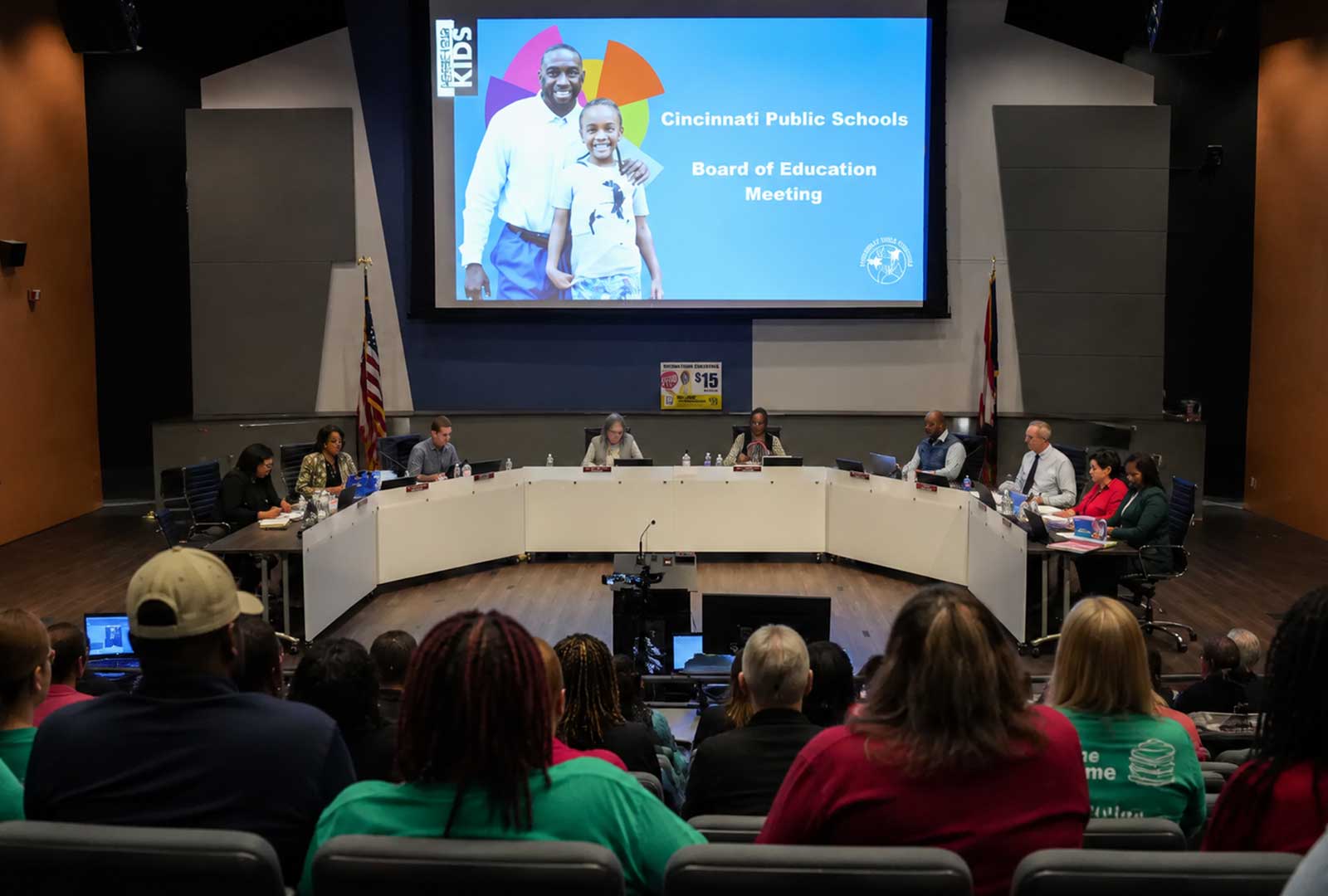
The Cincinnati Board of Education moved Monday night to put an earned income tax on the November ballot.
The proposal would end a rate advantage Cincinnati has held over Ohio’s other major cities for decades.
Cincinnati’s Board of Education voted 5-2 Monday night to put the earned income tax on the November ballot, WVXU education reporter Zack Carreon confirmed. This decision is an important development regarding the Cincinnati earnings tax and its potential impact on public schools and residents.
Board members Ben Lindy and Eve Bolton voted against the resolution. Bolton said her opposition came down to the district’s track record with property taxes at the ballot box. Voters, she said, aren’t as familiar with an income tax for schools. “I have great reservations about having 99 days to make people be able to fully understand,” Bolton said, “or have thousands of more people be directly taxed that have never in 200 years been taxed for schools.” Board Vice President Kareem Moffett voted yes but pushed back hard against the property tax alternative. “I don’t want to hit property owners. I just don’t want to do that,” Moffett told fellow board members. “But I know we need a levy.”
The Cincinnati earnings tax sits at 1.8%, the lowest rate among Ohio’s largest cities. The district’s proposed 0.75% earned-income tax would give residents a combined city-and-school income-tax rate of 2.55%. Non-residents who work in Cincinnati wouldn’t pay the school portion at all. Ohio law limits earned income school taxes to district residents only.
What the Cincinnati Earnings Tax Levy Would Actually Cost
CPS’s own board presentation put real numbers behind the Cincinnati earnings tax comparison. A resident earning the district’s median income of $54,500 would pay about $408.75 a year, or roughly $15.72 per paycheck. Someone earning $100,000 would pay $750 annually. The Ohio tax finder calculated that the 0.75% rate would raise an estimated $74 million a year. Over the levy’s five-year life, the proposed school income tax would generate an estimated $370 million, according to the district’s presentation.
Cincinnati Earnings Tax Compared to Other Ohio Cities
| City | City Earnings Tax | School Income Tax | Combined |
|---|---|---|---|
| Cincinnati (proposed) | 1.80% | 0.75% | 2.55% |
| Columbus | 2.50% | 0% | 2.50% |
| Cleveland | 2.50% | 0% | 2.50% |
| Akron | 2.50% | 0% | 2.50% |
| Dayton | 2.50% | 0% | 2.50% |
| Toledo | 2.50% | 0% | 2.50% |
The Ohio Department of Taxation’s 2026 records list 214 districts with a school income tax. Columbus City Schools, Cleveland Metropolitan School District, Akron Public Schools, Dayton Public Schools and Toledo Public Schools aren’t among them. None of those five districts charge residents a school income tax.
If Cincinnati voters approve the levy, residents would face something specific about their Cincinnati earnings tax: a higher combined city-and-school earned-income tax rate than residents of Columbus, Cleveland, Akron, Dayton or Toledo. That’s a narrower, more precise claim than saying Cincinnati would become Ohio’s highest-taxed big city overall. Property taxes, sales taxes and other local taxes aren’t part of this particular comparison.
Federal COVID Money Delayed the Cincinnati Earnings Tax Reckoning
CPS knew the federal money would end. The district received more than $325 million in ESSER funds over the course of the pandemic. Then-CPS Treasurer Jennifer Wagner, who led the district’s finances for a decade before retiring in 2025, warned about an “ESSER cliff” when the district first received the federal money. She said, therefore, that CPS needed to prepare for its eventual expiration.
By March 2024, that warning had become a budget line. The district had already cut more than $58 million from that year’s budget. Even so, it said it still needed to cut about $22 million specifically to make up for the expired federal relief. That figure comes from Fox19 reporting from that month and is consistent with prior Exchange coverage of the city’s broader budget pressures. The cuts included eliminating 28 bus routes, restructuring school nursing coverage, and cutting central office hiring. This year, the district faces another gap. Meanwhile, it’s asking Cincinnati residents to approve roughly $74 million a year in new local revenue. The tax would continue for five years, on top of the existing Cincinnati earnings tax rate residents already pay.
That sequence doesn’t prove CPS recklessly turned temporary federal aid into permanent obligations. The district hasn’t released enough position-level and program-level detail to establish that. It does show that expired federal relief has contributed to CPS budget problems for more than two years.
Before voters approve a new school income tax, CPS should disclose which employees, programs and contracts ESSER supported, which continued after the money expired and which the district eliminated. Without that accounting, residents can’t tell how much of the proposed levy would replace pandemic-era spending and how much would cover newer costs.
Why Residents Pay, and Commuters Don’t
The proposed tax splits Cincinnati’s economic pitch in an unusual way. Employees who commute into Cincinnati would continue paying the city’s existing 1.8% earnings tax. The proposed 0.75% school-district tax would apply only to people who live within CPS boundaries. Cincinnati residents who work in another municipality may also receive a credit against the city’s 1.8% tax. That credit applies to municipal taxes they’ve already paid elsewhere. The school tax runs separately, though, and wouldn’t be offset by that credit.
Cincinnati could therefore remain comparatively inexpensive for suburban commuters. At the same time, it would become more expensive for residents within the district, a group that includes families with no children in CPS schools, as well as those who rely on it directly.
The District’s Case
CPS enters this fall facing its third straight year of budget cuts. The board approved more than 100 job cuts in June to close this year’s $58.6 million gap. Enrollment has also fallen. It’s down from roughly 36,800 students projected for the 2020-21 school year to about 34,860 for 2026, a decline of more than 5%. This is the district’s first new-money levy request in a decade.
Board members split for weeks between two property tax options and the earned income tax. Members like Kendra Mapp worried about “taxing people out of their homes” through property tax increases. Others noted, though, that property tax fatigue has sunk most new school levies across the region this year.
Meanwhile, Superintendent Shauna Murphy pushed the board to settle on an option. She told members the district “has a lot of work to do” before the school year starts. Cincinnati Federation of Teachers President Julie Sellers has pressed the board to focus cuts on programs rather than staffing. She’s also urged the board to avoid basing budget decisions on unpredictable year-to-year test scores.
What This Means for City Hall
Meanwhile, the Cincinnati City Council has separately weighed its own earnings tax increase to fund city priorities. A CPS earned income tax reaching voters first, and passing, would use up real political room. That’s room a city tax increase would need later. Asking residents to accept 2.55% in November is one thing. Asking for a few more tenths of a percent from City Hall afterward is a much harder sell.
That puts Mayor Aftab Pureval, City Council and business organizations in a position they didn’t choose. They’ve spent years touting Cincinnati’s low-tax status. Now they can oppose a levy CPS says it needs to prevent deeper cuts, or watch a longstanding recruitment pitch disappear. Neither choice is politically free. Opposing the levy means campaigning against money for CPS. Staying out of the fight means watching Cincinnati’s resident tax advantage disappear if voters approve it.
What Comes Next
The board must file the levy paperwork by Aug. 5. After that, the argument moves from the school board room to households in Cincinnati. At the district’s median earned income of $54,500, the proposal would cost about $409 per year. For a resident earning $100,000, the cost is $750.
If voters approve it, Cincinnati’s 1.8% big-city pitch will remain true for commuters but not for residents. City Hall would then have to decide whether voters have any appetite left for the separate earnings tax increase that council members have already discussed.
FAQs
How much would Cincinnati's earned income tax cost residents?
A resident earning the district’s median income of $54,500 would pay about $408.75 a year. Someone earning $100,000 would pay $750 annually, or about $62.50 a month.
Why did the school board choose an income tax instead of a property tax?
Board members were split. Vice President Kareem Moffett said she didn’t want to burden property owners further, while Ben Lindy and Eve Bolton voted no, with Bolton citing voters’ unfamiliarity with school income taxes and the district’s stronger track record with property tax levies.
Will people who work in Cincinnati but live elsewhere pay this tax?
No. Ohio law limits earned income school taxes to residents of the school district. Commuters would continue paying only the city’s existing 1.8% earnings tax.
How does Cincinnati's proposed rate compare to other major Ohio cities?
If approved, Cincinnati’s combined 2.55% rate would be higher than Columbus, Cleveland, Akron, Dayton, and Toledo, none of which levy a separate school district income tax on top of their municipal rate.
What role did expired federal COVID funding play in this levy?
This article was produced using a combination of original reporting, publicly available information, and AI-assisted editing, and was reviewed and fact-checked by a human editor before publication. Quotes are drawn from public meeting coverage by WVXU and other cited outlets, and financial figures reflect estimates presented by the district as of publication. Where this article draws conclusions about the levy’s likely effects, those reflect The Cincinnati Exchange’s own analysis, not statements from the district or board.