



Share This Article
Article Summary
Cincinnati is expanding its community composting program after a year-long pilot diverted about 96,000 pounds of food waste from landfills and attracted nearly 1,300 participants. The city will add compost drop-off locations in Lower Price Hill, Westwood, and Mount Washington following the pilot’s success. The program, operated in partnership with Queen City Commons and supported by a U.S. Department of Agriculture grant, aims to reduce food waste and produce compost for local farms.
The City of Cincinnati will expand its community composting program after a year-long pilot showed strong participation and significant waste reduction.
The initiative aims to make food scrap recycling more accessible while supporting local farms and reducing landfill waste.
The city announced the expansion after a pilot program collected approximately 96,000 pounds of food scraps from residents across four Cincinnati neighborhoods. Officials said the effort demonstrated growing public interest in composting and highlighted the environmental benefits of keeping organic waste out of landfills.
According to the City of Cincinnati’s Office of Environment and Sustainability, the pilot operated through a partnership with Queen City Commons, a nonprofit organization that promotes community composting and sustainable food systems. The program received funding through a grant from the U.S. Department of Agriculture (USDA).
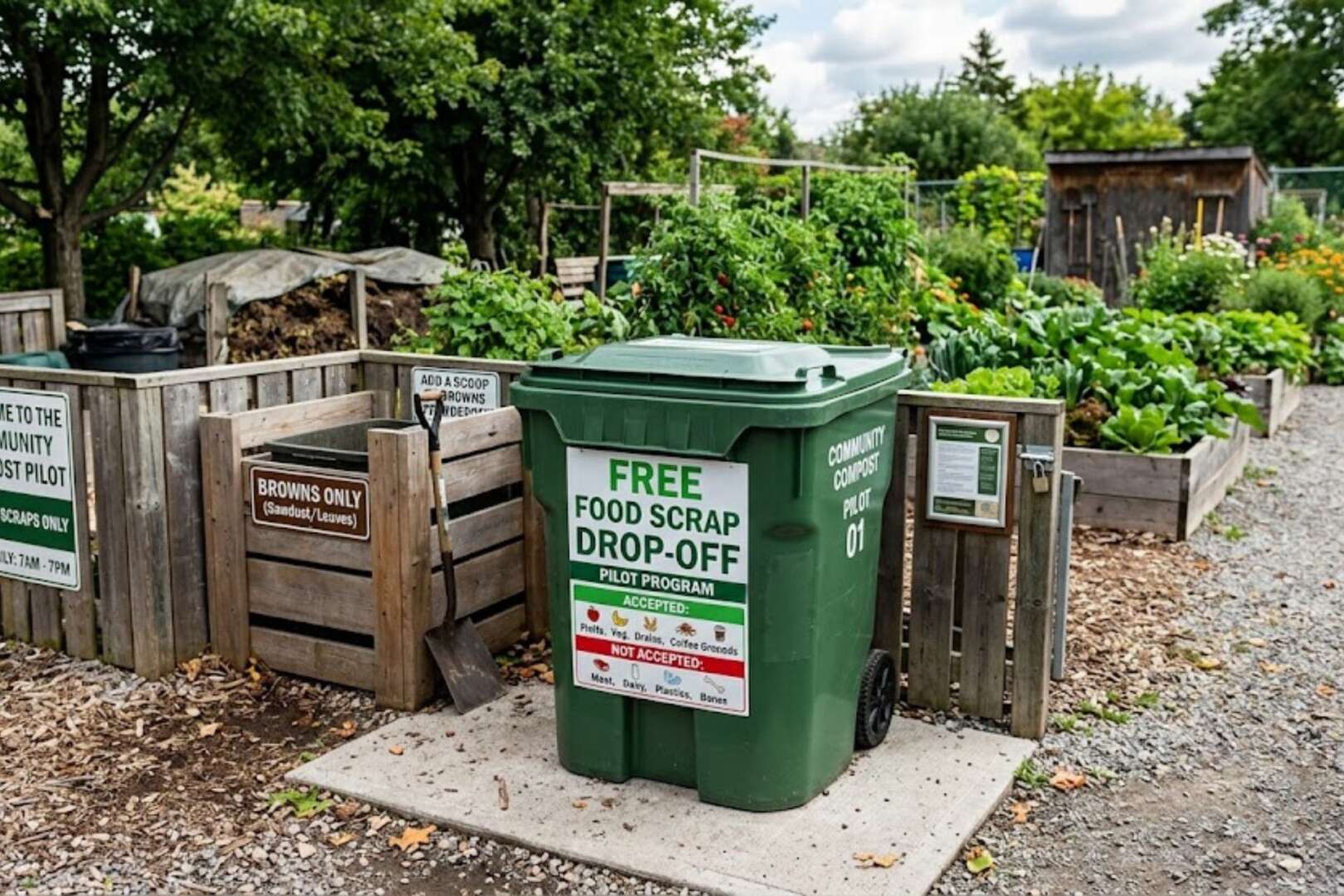
Residents participating in the pilot received a free kitchen collection bucket and temporary access to neighborhood compost drop-off sites. Food scraps collected at the sites were transported to local farms, where the material was composted and returned to the soil instead of entering regional landfills.
According to WVXU, nearly 1,300 residents enrolled in the pilot, helping divert roughly 96,000 pounds of food waste during the first year of operation. City officials said those results encouraged the expansion into additional neighborhoods.
Readers can learn more about the city’s composting efforts through the City of Cincinnati Office of Environment and Sustainability. Additional information about food waste reduction is available from the U.S. Department of Agriculture.
Community composting program expands to more neighborhoods
The community composting program will now reach additional Cincinnati neighborhoods following the successful pilot.
City officials said new drop-off locations will be introduced in:
- Lower Price Hill
- Westwood
- Mount Washington
The original pilot focused on Northside, Oakley and Hyde Park, Clifton, and the Downtown, Over-the-Rhine, and West End area. Organizers intentionally grouped multiple collection sites within each neighborhood to make participation more convenient for residents.
Queen City Commons said neighborhood-based collection helped build consistent participation because residents had nearby drop-off options instead of traveling across the city.
The nonprofit also provides educational resources explaining which food scraps residents can compost, helping reduce contamination while improving the quality of finished compost.
According to city officials, the collected organic material supports local agriculture by creating nutrient-rich compost that improves soil health.
The expansion reflects Cincinnati’s broader sustainability strategy, which includes reducing greenhouse gas emissions and diverting more waste from landfills.
Community composting program supports environmental goals
Organic waste represents a significant portion of household trash that ends up in landfills each year.
When food waste decomposes without oxygen inside landfills, it produces methane, a greenhouse gas that contributes to climate change. Composting instead allows food scraps to break down naturally while producing valuable soil amendments.
The U.S. Environmental Protection Agency identifies composting as one of the most effective ways communities can reduce landfill waste while supporting healthier soils and reducing greenhouse gas emissions.
The Cincinnati program accepts many common kitchen scraps, including:
- Fruits and vegetables
- Coffee grounds
- Eggshells
- Bread
- Rice
- Pasta
- Other accepted food scraps
Participants should avoid placing non-approved materials into collection bins because contamination can affect compost quality.
Officials encourage residents to review accepted materials before visiting neighborhood collection sites.
The city hopes expanding convenient drop-off locations will encourage additional households to begin composting.
Community composting program builds on pilot success
The expansion demonstrates how local partnerships can help cities address environmental challenges while encouraging community participation.
City leaders said working with Queen City Commons allowed Cincinnati to test neighborhood-based compost collection before expanding citywide. The pilot also provided valuable data on participation, collection logistics, and public education.
According to WVXU, organizers found that introducing several collection sites within the same neighborhood increased accessibility and helped residents develop regular composting habits.
The expansion also supports Cincinnati’s climate and waste reduction initiatives by reducing the amount of organic material sent to regional landfills.
As additional neighborhoods join the program, officials expect more residents to participate and further reduce food waste across the city.
The city continues encouraging residents interested in composting to sign up through the Office of Environment and Sustainability and review available collection locations before participating.
Also read:
Cincinnati recycling centers expand amid new waste reduction goals
FAQs
Why is Cincinnati expanding its community composting program?
The city is expanding the program after a pilot demonstrated strong community participation and significant food waste diversion. Officials said the results support adding more neighborhood drop-off locations.
Which neighborhoods will receive new compost drop-off sites?
The expansion includes Lower Price Hill, Westwood, and Mount Washington. These neighborhoods will join existing compost collection areas established during the pilot program.
What happens to the food scraps collected through the program?
Queen City Commons collects the food scraps and delivers them to local farms for composting. The finished compost is used to improve soil rather than sending organic waste to landfills.
Who can participate in the community composting program?
Residents in participating neighborhoods can enroll through the City of Cincinnati’s Office of Environment and Sustainability. Participants receive information about accepted food scraps and designated neighborhood drop-off locations.