
Share This Article
Article Summary
In May 2026, the EPA awarded Cincinnati a $4.9 million grant to modernize its recycling infrastructure and replace 80,000 aging residential carts. The rollout, beginning in 2027, will expand curbside access to 5,000 underserved households and recycle the old bins into new ones. Supported by private-sector upgrades featuring AI sorting technology, these municipal improvements are designed to help the city achieve its target of 50% waste diversion by 2030.
Major upgrades to Cincinnati recycling centers will divert more waste from local landfills.
Expanding Cincinnati recycling centers helps the city reach its ambitious sustainability targets.
Local leaders are investing heavily in local waste reduction efforts. Recent moves by the city and private companies highlight this green transition. Significant upgrades are coming to Cincinnati recycling centers over the next few years. These improvements will keep millions of tons of waste out of landfills. The community stands to benefit from cleaner neighborhoods and increased access.
A major catalyst for this push is a massive federal grant. The U.S. Environmental Protection Agency recently awarded the city nearly $5 million. This funding targets the city’s curbside collection systems directly. It represents one of the largest infrastructure investments in decades. The money will help modernize aging equipment and expand residential access.
Upgrading Cincinnati recycling centers with federal funding
City officials announced the $4.9 million EPA grant in late May 2026. The Solid Waste Infrastructure for Recycling grant addresses aging residential equipment. It will replace roughly 80,000 old carts across the municipality. Many existing carts are over a decade old and breaking down. Replacing these broken bins ensures residents can participate easily.
The federal funds go beyond simply replacing old plastic bins. The program will reach 5,000 additional households in underserved neighborhoods. Historically, some areas experienced very low participation rates. Expanding access provides equitable services across all local zip codes. The rollout for new carts begins in the summer of 2027.
The city also plans to recycle the old, damaged carts. Facilities will break down the old plastic to create new containers. This closed-loop system highlights true environmental responsibility in action. Residents can expect comprehensive community outreach beginning in late 2026. Education campaigns will reinforce best practices for proper sorting.
ALSO READ: Cincinnati recycling carts grant expands access across neighborhoods
How Cincinnati recycling centers support zero waste goals
These operational changes tie directly into the Green Cincinnati Plan. This plan sets a goal of 50% waste diversion by 2030. Reaching this target requires immense cooperation from the public. Upgraded Cincinnati recycling centers serve as the foundation for these efforts. Currently, residents achieve a diversion rate of around 21%.
Diverting waste provides immediate and measurable environmental benefits. For instance, in 2024, the city kept nearly 20,000 tons of material out of landfills. Consequently, this effort conserved enough energy to power every local home for five days. Furthermore, it also prevented massive amounts of greenhouse gas emissions. Going forward, improved infrastructure will push these numbers even higher in coming years.
To accelerate this progress, city leaders are exploring additional ways to capture usable materials. Specifically, multi-family housing complexes will see expanded access to disposal units. Additionally, officials are installing more corner cans in business districts. As a result, this makes it easier for pedestrians to sort their trash properly. Ultimately, every new bin helps the city inch closer to its 2030 target.
Private sector growth across waste management Ohio
The private sector is also pushing the boundaries of local infrastructure. Rumpke Waste & Recycling is driving major industry advancements. The company recently launched a massive expansion project at its local plant. This 76,400-square-foot renovation drastically improves material recovery capabilities. Construction crews are building out new maintenance bays and sorting areas.
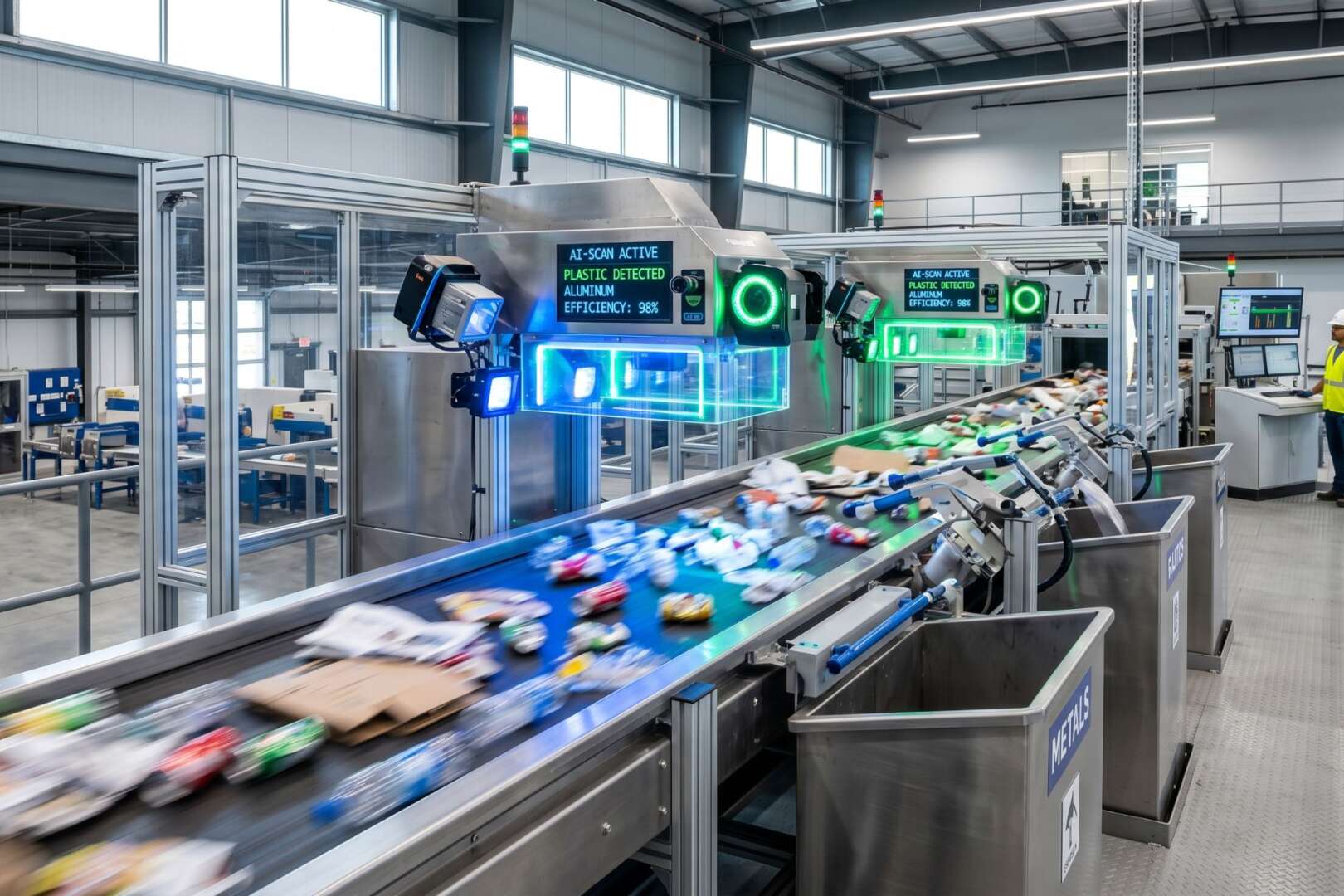
This project incorporates cutting-edge technology from leading equipment manufacturers. The expanded facility utilizes advanced optical scanners and artificial intelligence. These high-tech systems inside Cincinnati recycling centers can sort materials at incredibly fast speeds. The AI units identify valuable plastics and metals with precision. Faster sorting means less contamination and higher recovery rates.
This development cements the region as a leader in waste management ohio. Rumpke’s local footprint now features compressed natural gas fueling infrastructure. It also includes an expanded tipping floor for municipal solid waste. The company continues to partner with expert construction firms to build these sites. These partnerships deliver state-of-the-art facilities for local communities.
Expanding recycling programs Cincinnati residents rely on
Convenience is a major factor in driving public participation. New transfer depots make it easier for haulers and residents to unload materials. According to local news reports, Rumpke recently opened a massive transfer depot in nearby Clermont County. The 43,000-square-foot site accepts waste from commercial and residential sources. It includes a free community drop-off area for everyday recyclables.
This network of facilities handles massive volumes of daily material. The new depots transport recyclables directly to central processing plants. Better logistics reduce the carbon footprint of garbage trucks navigating city streets. The recycling programs cincinnati utilizes rely heavily on these efficient transport networks. Fast transport ensures materials reach end users quickly and efficiently.
Technological upgrades at Cincinnati recycling centers are happening across the entire regional network. Some processing plants now use advanced X-ray systems on the sorting line. These scanners detect dangerous items like lithium-ion batteries and propane tanks. Identifying hazards prevents catastrophic fires inside the processing plants. Protecting workers is just as important as protecting the environment.
Future sustainability projects driving the circular economy
The future relies heavily on community education and commercial partnerships. Local advocates want to attract manufacturers that use recycled materials. Bringing end users to the region creates a true circular economy. It cuts down on shipping costs and provides local green jobs. These sustainability projects will define the next decade of local growth.
Organic waste is the next major frontier for local diversion efforts. Food scraps and yard trimmings take up massive amounts of landfill space. The Green Cincinnati Plan includes recommendations for expanding local composting facilities. Diverting organics could drastically reduce the city’s total landfill tonnage. Planners hope to achieve zero waste citywide by 2040.
Key rules for recycling programs Cincinnati residents must follow
Understanding what goes into the bin is crucial for long-term success. However, many residents still struggle with proper sorting techniques at home. Therefore, the upcoming educational push will focus heavily on reducing bin contamination. After all, throwing the wrong items into the cart slows down the entire process. To address this, the city wants to make the rules incredibly simple to follow:
-
First, always empty and crush plastic bottles before disposal.
-
Next, leave lids attached to plastic tubs and jugs.
-
Crucially, never place medical sharps or needles in the bins.
-
Similarly, keep all plastic bags out of the curbside containers.
-
Finally, flatten cardboard boxes to save space in the cart.
By following these simple rules, residents ensure that the machinery keeps running smoothly. Plastic bags, in particular, are extremely harmful to the automated sorting lines. Because they tangle in the gears, they force costly machine shutdowns. Furthermore, the new AI scanners can only do so much if the stream is highly contaminated. Ultimately, proper home sorting remains the first line of defense.
Expansion timeline and statewide Iimpact
Moving forward, the overall expansion timeline stretches across the next three years. Initially, the design and manufacturing of the new carts will take several months. Subsequently, delivery to the first targeted neighborhoods begins in late 2027. From there, full citywide implementation will continue steadily through 2029. Consequently, patience is required as the city scales up this massive operation.
Meanwhile, environmental groups across the state are watching this rollout closely. Since the city frequently serves as a model for waste management in Ohio, successful implementation here could inspire similar programs in Columbus and Cleveland. Moreover, sharing best practices helps the entire state reduce its environmental impact. As a result, state leaders are eager to see the final diversion numbers.
Overall, local officials remain optimistic about the long-term impacts of these investments. Indeed, the combination of federal dollars and private sector innovation is powerful. Today, upgraded Cincinnati recycling centers are no longer just a distant goal. Instead, they are actively being built and refined every single day. Without a doubt, the region is well on its way to a sustainable future.
FAQs
What is the $4.9 million EPA grant being used for?
The federal funding will replace roughly 80,000 broken or aging residential recycling carts across Cincinnati. It will also expand curbside collection access to 5,000 households in historically underserved neighborhoods. To maintain a closed-loop system, the city plans to recycle the damaged plastic bins to manufacture the new ones.
What are Cincinnati's long-term waste reduction goals?
The Green Cincinnati Plan sets a formal goal to achieve a 50% waste diversion rate by the year 2030. Planners are working to eventually reach zero waste citywide by 2040 by expanding programs like organic waste composting. Currently, the city’s diversion rate sits at approximately 21%.
How are local recycling facilities upgrading their technology?
Private companies like Rumpke Waste & Recycling are installing advanced optical scanners and artificial intelligence units inside their processing plants. These systems sort materials faster and identify valuable plastics and metals with much higher precision to reduce contamination. Facilities are also utilizing X-ray scanners to detect and remove hazardous items like lithium-ion batteries before they cause fires.
What rules should residents follow for curbside recycling?
Residents must keep all plastic bags, medical sharps, and needles out of their recycling bins to prevent machine shutdowns and contamination. Plastic bottles should be emptied and crushed, lids left on tubs, and cardboard boxes completely flattened to save space. Proper at-home sorting remains the most critical step in keeping the automated sorting lines running efficiently.