



Share This Article
Article Summary
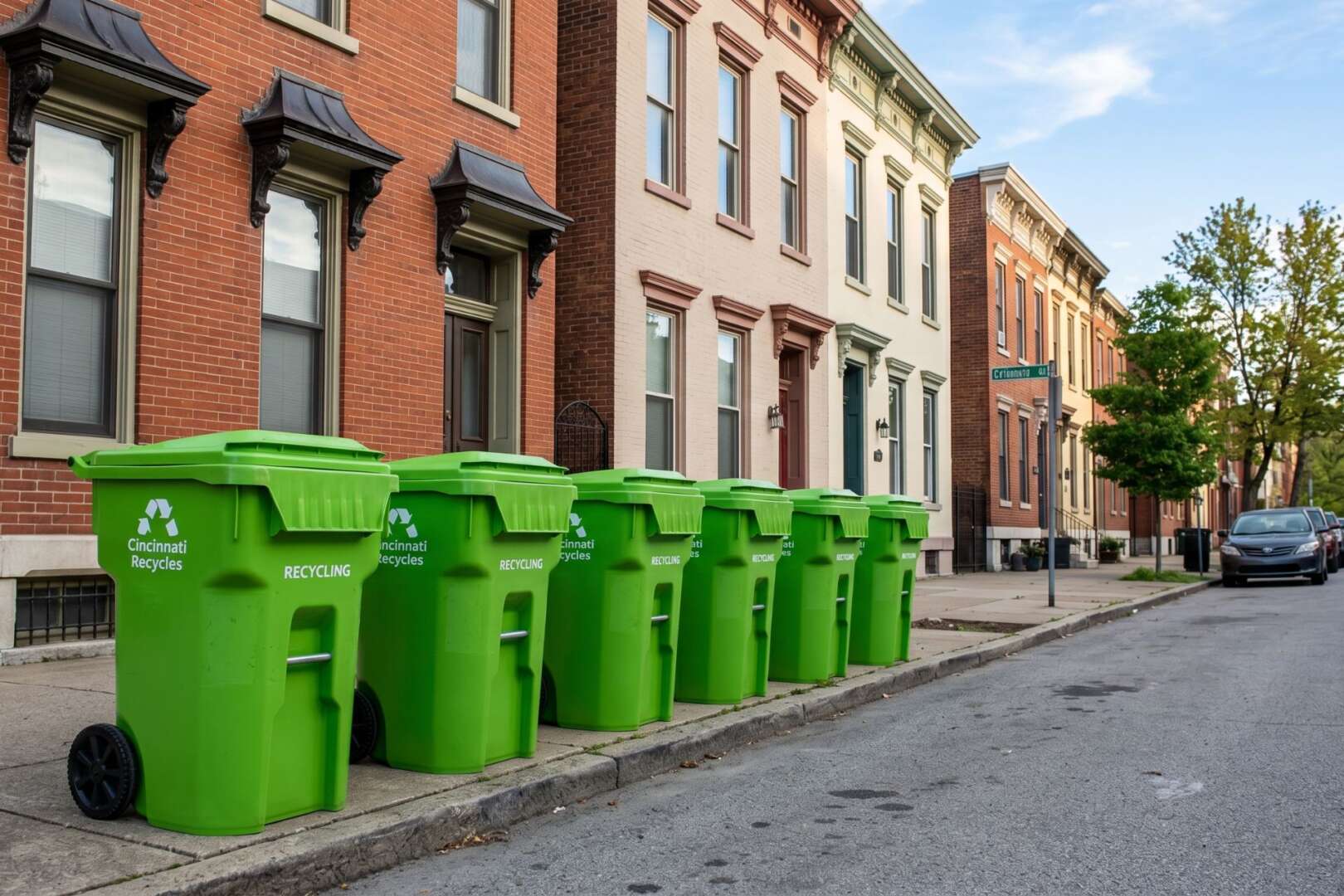
Cincinnati will use a $5 million federal grant to replace approximately 80,000 aging recycling carts and expand curbside recycling access to about 5,000 additional households. City officials said many current carts have exceeded their warranty lifespan and now require costly repairs. The funding comes through the U.S. Environmental Protection Agency’s recycling infrastructure program and supports Cincinnati’s broader sustainability goals. Officials also plan to expand recycling education efforts and improve service access in underserved neighborhoods.
Cincinnati recycling carts project aligns with broader sustainability goals
The recycling cart initiative forms part of Cincinnati’s broader climate and sustainability strategy. The Green Cincinnati Plan includes goals tied to waste reduction, greenhouse gas emissions, clean energy, and neighborhood resilience.
Officials said improved recycling infrastructure could help reduce landfill usage while lowering emissions associated with waste disposal. Recycling materials such as aluminum, cardboard, and plastics generally consumes less energy than producing new raw materials.
The city has already launched several smaller recycling pilot programs in recent years. Those projects included adding recycling corner cans in neighborhoods and testing expanded recycling access in multi-family housing developments.
Regional news outlets also highlighted the significance of the federal grant. According to reports from WVXU and local environmental organizations, Cincinnati’s aging recycling system had become increasingly difficult to maintain because replacement parts and repairs added recurring operational costs.
Waste management experts say cities across the Midwest face similar infrastructure issues. Many municipalities introduced automated curbside recycling during the 2000s and early 2010s, meaning large portions of equipment now approach the end of their usable lifespan.
The grant may also help stabilize future sanitation costs. Replacing carts in one coordinated project often reduces emergency repair expenses and improves collection efficiency for sanitation crews.
How the recycling expansion could affect Cincinnati residents
Residents may notice several immediate changes once the rollout begins. Households receiving new carts could benefit from improved durability, larger storage capacity, and easier mobility during collection days.
The expansion may also encourage higher participation among residents who previously lacked reliable recycling access. Environmental groups frequently note that convenience plays a major role in whether households recycle consistently.
Potential impacts include:
- Increased neighborhood recycling participation
- Reduced landfill waste over time
- Lower maintenance costs for the city
- Expanded environmental services in underserved communities
- Improved sanitation efficiency during collections
City officials expect implementation planning to continue through 2026 before large-scale cart distribution begins in 2027.
The initiative also arrives as many local governments face growing pressure to modernize environmental infrastructure while meeting sustainability goals. Federal grants have become increasingly important for cities seeking upgrades without increasing local taxes.
Cincinnati leaders said the project represents a long-term investment in cleaner neighborhoods and more efficient waste management systems. Officials believe the combination of new carts, expanded access, and public education could help significantly improve recycling participation during the next decade.
FAQs
What will the federal recycling grant fund in Cincinnati?
The grant will fund the replacement of around 80,000 existing recycling carts and provide roughly 5,000 new carts to households without curbside recycling access. The project will also support recycling education and outreach efforts.
Why is Cincinnati replacing its recycling carts?
Many of the city’s current recycling carts were distributed during the early 2010s and have exceeded their expected lifespan. Officials said broken lids, cracked containers, and damaged wheels have increased maintenance and repair costs.
When will residents receive the new recycling carts?
City officials expect planning and coordination to continue through 2026, with broader cart distribution beginning in 2027. Residents in underserved neighborhoods may receive priority access during the expansion phase.
How does the project support Cincinnati’s environmental goals?
The initiative supports the Green Cincinnati Plan, which aims to increase waste diversion and reduce landfill use by 2030. Officials said expanding recycling access and improving participation rates could help the city reach those targets.


